


by Marcelo Hailer
The arrival of Senator Flávio Bolsonaro in the United States, following his defeat in the presidential election to President Luiz Inácio Lula da Silva, has sparked a wave of indignation across social media in the United States.
Users have taken to the hashtag #DeportTheBolsonaros to demand that the Donald Trump administration deport the senator and his family members, who arrived in Miami on Wednesday, October 28.
The campaign has gained traction amid reports that the White House not only authorized the Bolsonaro family’s entry into the country, but also intends to facilitate their path toward permanent U.S. residency.
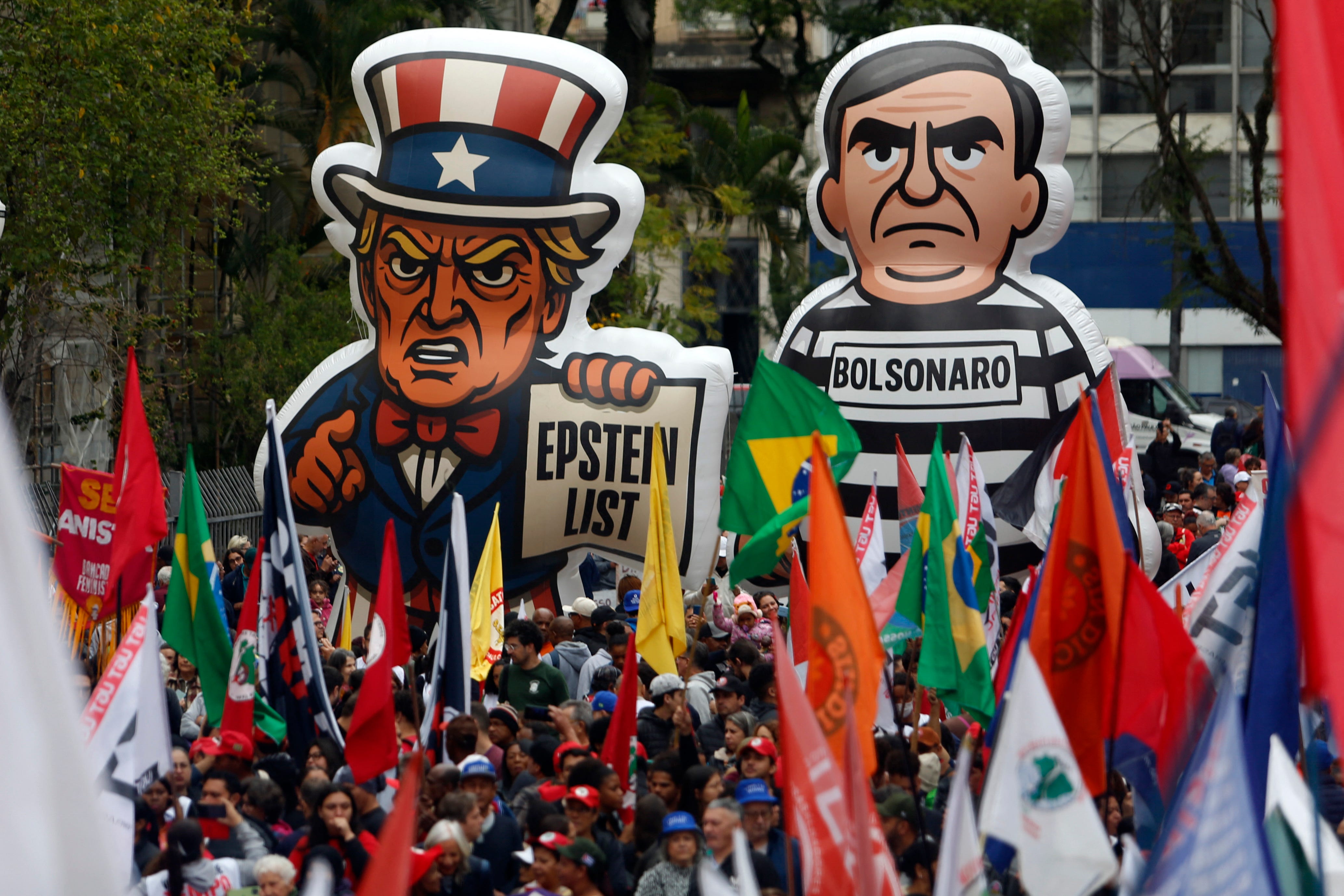
Supporters of President Luiz Inacio Lula da Silva protest against Trump and Bolsonaro on September 7, 2025. (Photo by MIGUEL SCHINCARIOL/AFP via Getty Images)
White House Assisted Flávio Bolsonaro in leaving Brazil
Public outcry intensified following a report published this Thursday, October 29, by The New York Times, which revealed details regarding the involvement of Trump administration officials in Flávio Bolsonaro’s departure from Brazil.
According to the newspaper, Jason Miller, a White House communications official and ally of the Bolsonaro family, arranged the private jet used by the senator, his wife, and his two daughters.
The aircraft departed from Argentina, made a refueling stop in Ecuador, and continued on to Miami.
The New York Times further reported that the Trump administration authorized the entry of the senator and his family through an immigration mechanism that allows for a temporary stay in the country.
U.S. officials also indicated that Flávio may be eligible to apply for permanent residency, or “green card,” through a process that could potentially be expedited.
Internet users accuse Trump of hypocrisy regarding immigration policy
Another point fueling outrage on social media is the contrast between the treatment afforded to the Bolsonaro family and the immigration policy adopted by the Trump administration.
Internet users accuse the U.S. president of hypocrisy for facilitating the entry and stay of a foreign political ally, while his administration maintains an immigration policy marked by the aggressive tactics of U.S. Immigration and Customs Enforcement
For critics, this episode highlights the disparity in treatment between poor immigrants, who are subjected to enforcement and deportation operations, and members of politically influential families who enjoy the support of the White House.

This article was originally published by Revista Forum. It was translated by Panamerican Dispatch. You can read it in its original Portuguese language here.