


by Laís Gouveia
No doubt you’ve seen it yourself, or read about it: Meta, the tech giant behind Facebook, Instagram and WhatsApp, manipulating engagement on certain accounts or banning pages and posts outright to limit the reach of specific political groups.
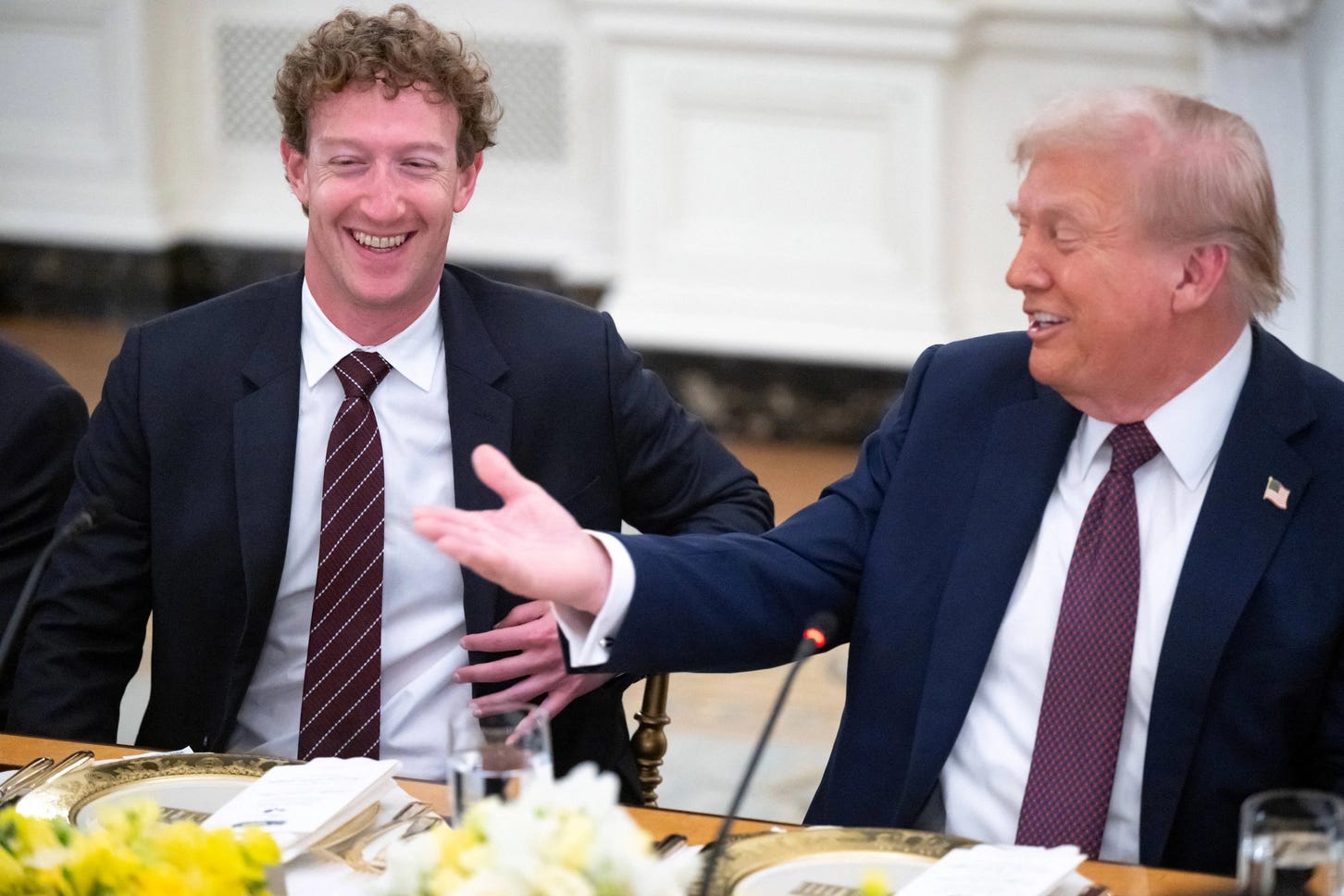
META owner Mark Zuckerberg chuckling with authoritarian US President Donald Trump (Saul Loeb/Getty Images)
Here’s something that happened to me. I recently set up a second Instagram account. I never interacted with, followed or liked any far right content. I only followed progressive accounts: Brasil 247’s page, the Landless Rural Workers’ Movement, Lula and a few others. So what showed up first in my feed? A reel from Lucas Pavanato. Yes, the same far right extremist who won more than 3 million votes for federal deputy on the strength of his viral social media clips. Let’s be honest about how he got those millions of views. It wasn’t charisma, and it certainly wasn’t political substance.
Jeferson Miola, a columnist and political analyst at Brasil 247, shared an account of his own: “Instagram took down the page of SAJU, the legal aid service run by the law school at the Federal University of Rio Grande do Sul,” he said. “SAJU was founded in 1950, and it provides free legal help to low income people. Instagram removed the page after it posted support for Lula’s reelection. That’s a university institution being shut down for political and ideological reasons. It’s a clear restriction of freedom of expression.”
When media personality Fábio Porchat, who has 7.5 million followers on Instagram alone, posted a video video calling out abuses at senatorial candidate Michelle Bolsonaro’s prosperity gospel church, Lagoinha, Instagram pulled it offline with no explanation. It only went back online after a wave of public pressure.
I could list case after case all day. But one account stood out to me in particular: someone who actually works at Meta Brazil. I’m protecting her identity, as journalism allows, so I’ll call her Lira. Here’s what she told me:
“At Meta, there’s a whole team of human moderators who review content. They decide what gets approved and what gets flagged, whether it’s political violence, sexual content, or anything else that crosses their line. These are people with judgment and critical thinking, making real decisions, even while working within the platform’s guidelines. Right in the middle of Brazil’s election season, a large number of them were laid off and replaced almost immediately by AI systems. That means decisions are now coming from a single automated command, possibly issued from the US, designed to boost certain content while burying the rest.”
It’s no secret that Meta has been cutting jobs worldwide. What’s not public is which jobs these were, what those employees actually did, or why the company chose this specific moment in Brazil’s political calendar to make the switch.
There’s a bigger issue here too. AI doesn’t just follow orders, it scales them, instantly and at massive reach, whether the intent behind them is good or bad. All it takes is one command. Maybe from one billionaire.
Zuckerberg’s Unapologetic Support for Trump
Lira’s story connects a lot of dots. Pavanato showing up in my feed, Porchat’s video disappearing, a university page getting banned: all of it could trace back to a single AI instruction, one that executes instantly with no human review at all.
In 2025, Meta’s CEO doubled down on his alignment with the Trump administration, the same administration that openly admits to meddling in Brazil’s politics. “The government can either be actively against you, adding friction and getting in your way, or it can actively help you break down barriers,” Zuckerberg said. Asked about backing Trump specifically, he called it “the right thing to do.”
This partnership isn’t subtle. The support runs both ways, and there’s a real appetite here to control entire countries, Brazil especially. Brazil’s Supreme Federal Court and federal government still try to regulate social media and hold Big Tech accountable to the Constitution, as we saw recently with Discord. For Meta, getting Flávio Bolsonaro into the presidency would mean restoring the lawless digital free for all his father presided over. That’s not just a preference. It’s a profitable mission for Meta, and one that’s more alive than ever. After all, how do you think those viral, extremist friendly clips that get far right candidates elected actually come about, if not with some help from Big Tech?
Laís Gouveia has been a reporter at Brasil 247 since 2018. Before that, she was educational policy director at the National Student Union (União Nacional dos Estudantes/UNE) and an editor at Portal Vermelho.
This article originally ran at Brasil 247, was translated, with consent, by Panamerican Dispatch, and can be read in its original Portuguese here.