


by Jamil Chade
The Trump administration set aside $1 million to fund a campaign against Brazil’s Supreme Court. The British newspaper The Guardian published the revelations on Thursday, showing how funds originally earmarked by the United States for its global human rights agenda were redirected to causes favored by the American far right.
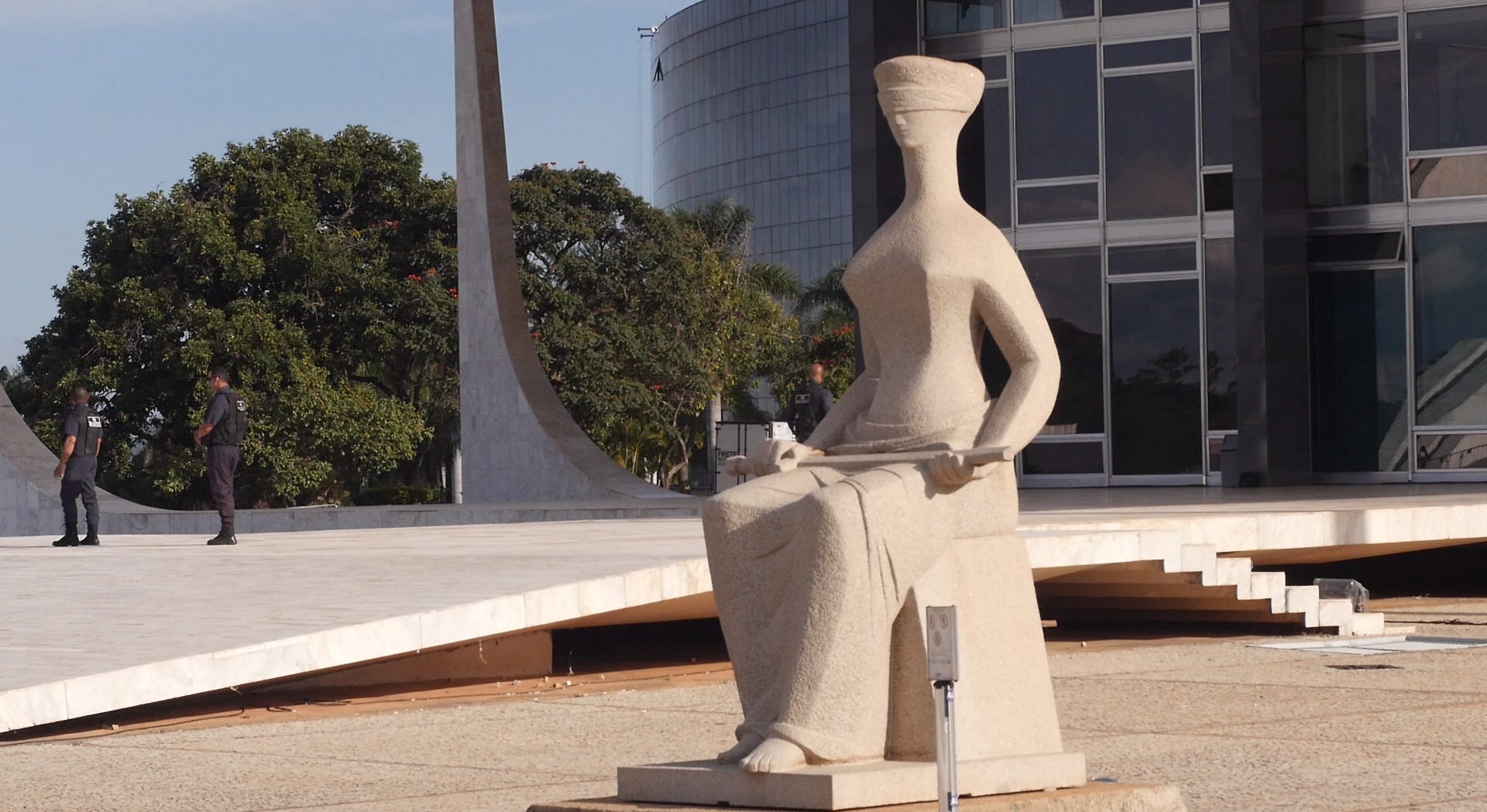
(A statue outside the Supreme Court in Brasilia. Photo:Brian Mier)
According to the report, a $1 million grant titled “Countering Lawfare and Censorship in Brazil” would fund civil society groups opposed to what they describe as judicial overreach and censorship by Brazil’s Supreme Court.
“The Trump administration sanctioned Brazilian Justice Alexandre de Moraes last year, after pressure from Eduardo Bolsonaro, the former president’s son,” the article noted.
According to the newspaper, a Democratic congressional aide said that Sen. Jeanne Shaheen, a member of the Senate Foreign Relations Committee, had been blocking 10 disbursements totaling $22 million. Those funds were meant for projects in Brazil, South Africa and Nigeria, as well as for promoting right-wing ideology in the United Kingdom and Europe.
This week, Shaheen sent a letter to the Trump administration denouncing its interference in Brazil’s election and demanding that the White House commit to recognizing the outcome of the vote.
“Throughout President Trump’s second term, we have observed U.S. officials engaged in a campaign of interference and destabilization in Brazil,” the senator wrote in the letter. “This effort intensified dramatically during the summer of 2025, when the Administration imposed targeted tariffs and sanctions in an attempt to influence the Brazilian Supreme Court’s verdict in the trial of former President Jair Bolsonaro, who is accused of trying to foment a military coup to remain in power,” she said.
According to the aide cited by the newspaper, Secretary of State Marco Rubio personally signed a memo overriding the senator’s holds and authorizing the funds to be allocated.
Destabilizing the Supreme Court
For observers and diplomats, destabilizing Brazil’s Supreme Court has become a priority for the far right, both in Brazil and abroad. The movement sees the court as an obstacle to implementing an ultraconservative agenda in the country and to regaining a free hand on every front.
The money comes from the Human Rights and Democracy Fund, created to finance Trump’s conservative agenda around the world and, according to critics, to target any form of opposition.
“The largest disbursement, worth $40 million, went to a consortium led by the Victims of Communism Memorial Foundation, an anti-communist nonprofit that had previously received grants worth far smaller amounts,” the report noted.
A State Department background check document reviewed by The Guardian shows prior contracts between the foundation and the department totaling $96,997 over the past five years, all of them in fiscal year 2022. The document also notes that the organization underwent a vetting process in 2019 related to tickets for the foundation’s gala event.
The document further identifies Andrew Bremberg, a former White House domestic policy adviser under the Trump administration and former U.S. ambassador to the United Nations office in Europe, as a “senior leader” of the foundation.
This article first ran in ICL, was translated by Panamerican Dispatch, and can be read it its original Portuguese, here.