


by Anne Silva
The first commercial shipment of rare earths extracted outside of Asia is headed to the U.S. Department of Defense.
The rare earth minerals were extracted from the Pela Ema mine, in Minaçu, in the state of Goiás, Brazil. Brazil has the second-largest rare-earth reserves in the world, after China.
The operation is managed by Serra Verde, which was acquired in 2026 by the U.S. company USA Rare Earth.
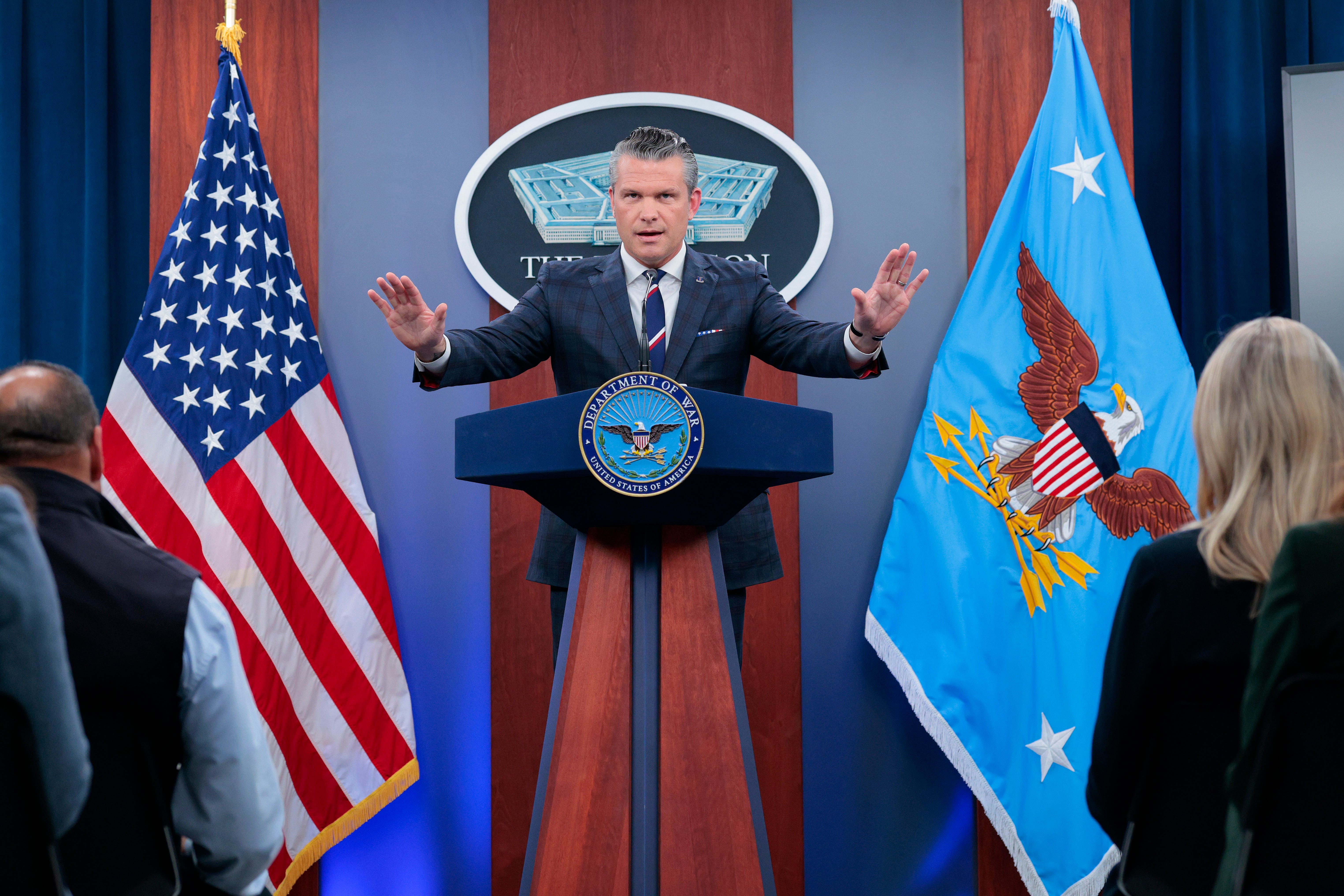
U.S. Secretary of War Pete Hegseth speaks during a news conference at the Pentagon on November 10, 2026, in Arlington, Virginia. (Photo by Chip Somodevilla/Getty Images)
It marks the start of a 15-year supply agreement under which the U.S. government will acquire 100% of the production from the project’s first phase.
The beginning of shipments was announced on November 9, 2026, by USA Rare Earth, which is listed on the Nasdaq.
According to the firm, commercial shipments began in October, with the first sales recorded in November. The buyer is identified as US SIIE, LLC, a special-purpose vehicle funded by the U.S. government to facilitate the purchase of these Brazilian rare earth products. It received a $750 million investment from the U.S. Department of Defense.
This initiative is strategic for the United States, which is seeking to build a supply chain for critical minerals that is less dependent on China, specifically for materials used in the manufacture of high-performance permanent magnets. These magnets are essential for defense systems, electric motors, wind turbines, robotics, medical equipment, electronics, and other strategic technologies.
Serra Verde’s Pela Ema is considered the only ionic clay mine in commercial production outside of Asia capable of supplying the four key magnetic rare earth elements, neodymium, praseodymium, dysprosium, and terbium, including heavy rare earths.
The projection for the fourth quarter of this year is for 325 metric tons of total rare earth oxides to be sold by the mining company and be purchased by buyers in the United States through US SIIE, LLC.
According to documents released by the company and filed with the U.S. Securities and Exchange Commission, the U.S. government has invested $1.55 billion to secure the elements.
The package consists of three main components: a $750 million investment from the U.S. Department of Defense into the purchasing intermediary, a $500 million bank credit line to fund the company’s working capital, and a commitment from the U.S. government to purchase at least $300 million worth of rare earth products over the next five years.
In April 2026, Serra Verde reported that it had secured a $565 million financing package from the U.S. International Development Finance Corporation (DFC) to support the optimization and expansion of its operations in Goiás. That entity is a U.S. government development finance agency.
The DFC website proudly states, “We mobilize private capital to advance U.S. foreign policy and economic development around the world.”
The DFC financing is focused on addressing the company’s operational requirements, while the capitalization of USA Rare Earth was structured to support the procurement and commercialization of the mine’s output.
In a financial update released on November 9, USA Rare Earth estimated that sales from the Serra Verde operation could reach a market value of up to $31.5 million in the fourth quarter, based on average benchmark prices for rare earth products.
The announced goal is to reach an operational capacity equivalent to approximately 4,000 metric tons of total rare earth oxides per year by the second quarter of 2027. The second phase of the expansion program is also underway, with the objective of achieving an annualized rate of approximately 6,400 metric tons of total rare earth oxides by the end of 2027.
According to the United States Geological Survey, in its 2026 report, Mineral Commodity Summaries, Brazil produced 2,000 metric tons of rare earths in 2025, up from 560 metric tons in 2024. China, meanwhile, produced approximately 270,000 metric tons in 2025.
In a statement regarding the operation, the Ministry of Mines and Energy highlighted that Serra Verde produces rare earth carbonate and that the company intends to evaluate investments to expand processing and advance the separation of these elements within Brazil.
The funding from the United States is intended to secure the supply of strategic inputs for the country’s industrial and military sectors. This initiative comes amid a trade and technological dispute with China, which includes U.S. export control measures and trade restrictions on Chinese products affecting companies in the rare earth sector, such as MP Materials and USA Rare Earth itself.
This November, China extended the suspension of export controls on rare earths and other strategic materials for another two months. These measures could restrict the supply of these products to the U.S. market.
This article was originally published by Revista Forum. It was translated by Panamerican Dispatch. You can read the original, in Portuguese, here.