


by Plínio Teodoro
Former Paraguayan President Santiago Peña was moved from house arrest to a military unit within the Armed Forces overnight on Friday, October 6. The relocation followed an incident in which protesters surrounded his residence in Asunción, demanding his incarceration in a formal prison facility, which led to clashes with the police.
Peña was removed from office hours earlier, after the Senate voted unanimously to impeach him. The impeachment stemmed from his alleged involvement in the collapse of Ueno Bank, an institution that blocked access to funds for approximately 40% of the Paraguayan population.
The case bears similarities to the financial scandal in Brazil involving Daniel Vorcaro’s Banco Master, which implicated former presidential candidate Flávio Bolsonaro, a significant portion of the Bolsonaro movement and the political right in Brazil.
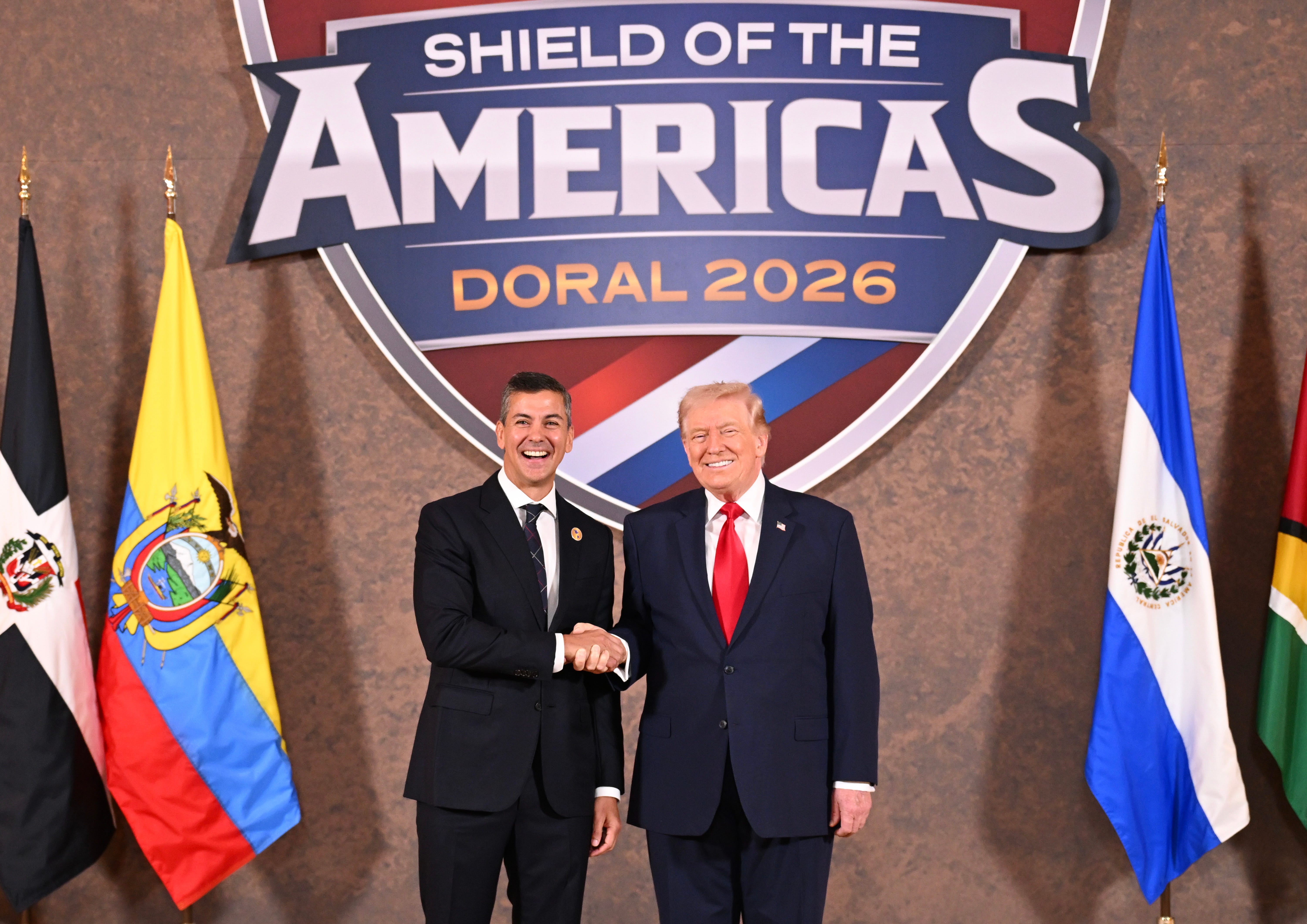
U.S. President Donald Trump greets Santiago Peña, President of the Republic of Paraguay, as he hosts the “The Shield of the Americas Summit” at the Trump National Doral Golf Club on March 7, 2026 in Doral, Florida. (Photo by Roberto Schmidt/Getty Images)
According to the Argentine digital news outlet Infobae, the military organized Peña’s extraction from his home in the La Piedad neighborhood of Asunción, using three pickup trucks for the transfer. The operation took place shortly before midnight, after escalating tensions near his residence made it untenable for the former president to remain there.
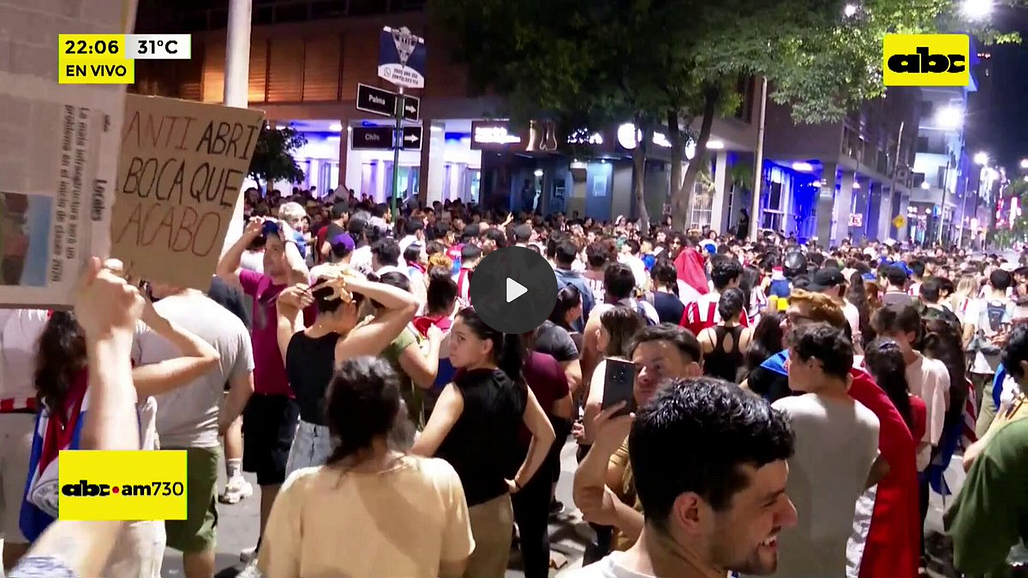
Footage captured by the Paraguayan newspaper ABC Color shows individuals throwing eggs and shouting insults at the vehicle transporting Peña as the convoy departed. The same outlet reported that Paraguayan intelligence identified the infiltration of agitators within the crowd, individuals who had previously been participating in a protest in the city center and allegedly moved to the residence with the intent of inciting violence.

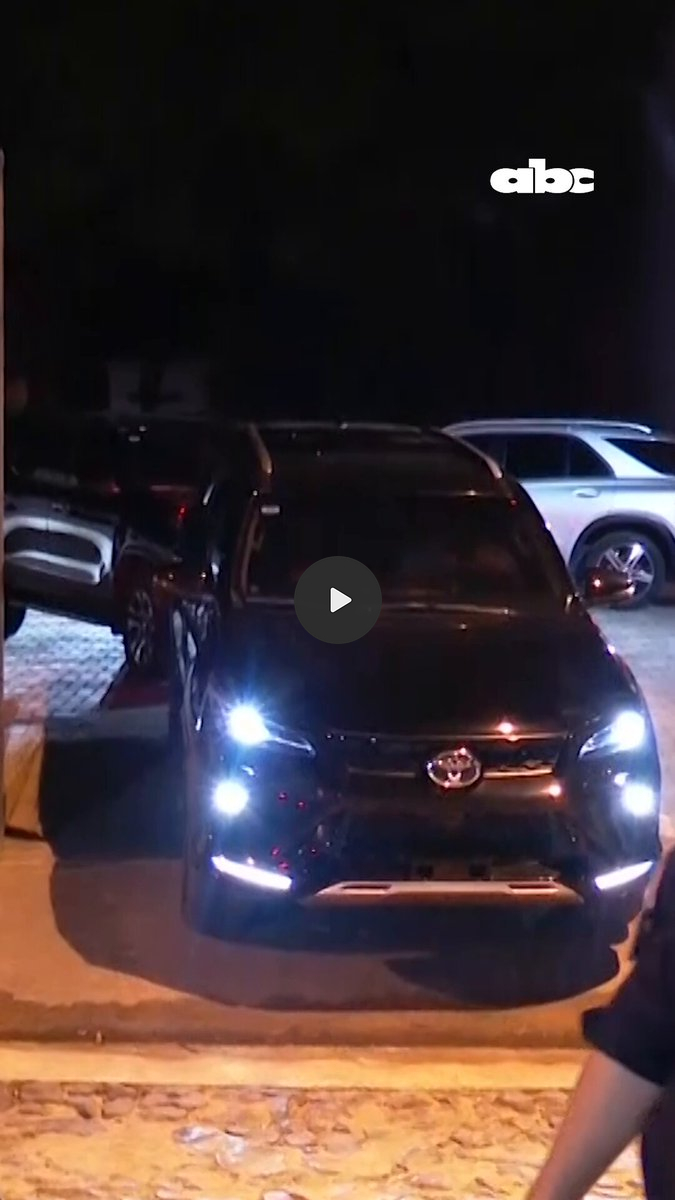
During the clashes between police and protesters, Commissioner Pedro Barbera, head of the 10th Police Precinct, sustained an injury to his eyebrow. Those present demanded that Peña be sent to the Tacumbú National Penitentiary rather than being held under house arrest.
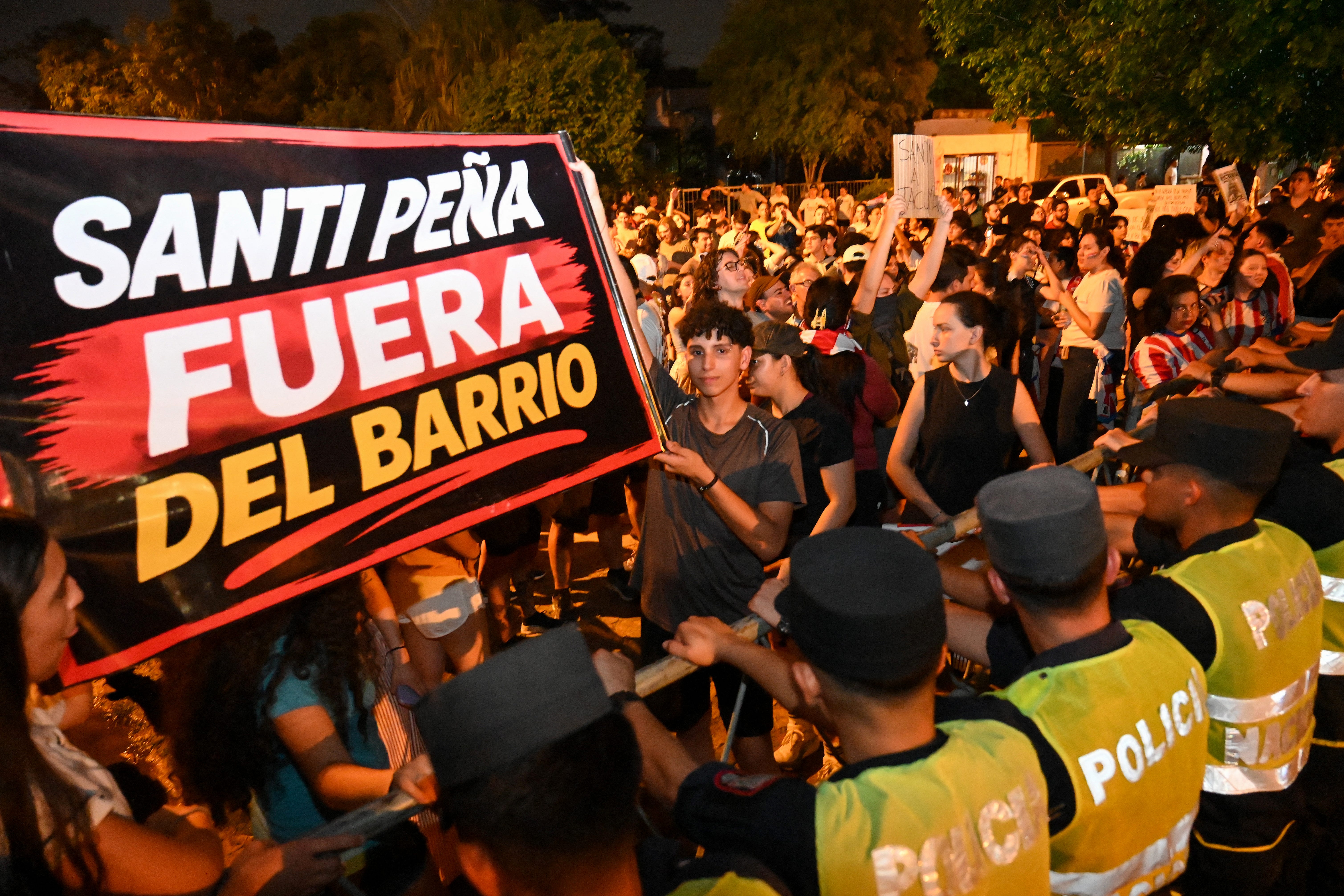
People take part in a protest outside the home of impeached Paraguayan President Santiago Peña after he was placed under house arrest over a banking crisis in Asuncion on November 6, 2026 (Photo by DANIEL DUARTE / AFP via Getty Images)
Impeachment and House Arrest
Peña’s removal from office was finalized by the Paraguayan Senate in a unanimous vote on Friday, October 6. The former president had attempted to submit his resignation prior to the trial, but the request was rejected, and the proceedings continued until the impeachment was approved.
Minutes after the Congressional decision, prosecutors specializing in economic crimes and anti-corruption efforts requested his immediate arrest. The Public Prosecutor’s Office subsequently ordered that he be placed under house arrest, citing Peña’s alleged involvement in the collapse of Ueno Bank.
This measure was merely the first step in the criminal prosecution.
Peña was summoned to appear before the prosecutor’s office on Saturday morning, October 7, at 11:00 a.m. local time for his first formal hearing in the case.
During this hearing, he is to be questioned over alleged crimes including breach of trust, influence peddling, and embezzlement. The speed with which the Public Prosecutor’s Office acted following his impeachment reflects the scale of the scandal and the political and social pressure that had mounted in the preceding days.
The Ueno Bank Scandal
The crisis was triggered by the closure of Ueno Bank on Tuesday, October 3, three days before the president’s impeachment. The Central Bank of Paraguay initiated liquidation proceedings for the institution after discovering a deficit in its solvency ratios, linked to loans granted to companies affiliated with the bank’s own controlling group.
The bank belonged to the Vázquez Group, in which Peña held shares until March of last year. The institution held approximately US$ 850 million in public deposits, including funds from the Social Security Institute, and served about 3 million clients. That is equivalent to nearly 40% of the Paraguayan population.
The opposition did not spare the former president. Lawmakers accused him of conflicts of interest, regulatory manipulation, the misappropriation of social security funds, and institutional cover-ups by the Central Bank.
“Never before has anyone harmed 3 million people in the Republic of Paraguay in a single day, yet you managed to do just that,” said opposition lawmaker Rocío Vallejo during a session, shortly before filing a formal accusation against Peña.
A protester, interviewed by Reuters outside the former president’s residence, summed up the sentiment on the streets.
“Overnight, people have been left going hungry,” he said. “People who can no longer even afford a bus fare. Why? Because of Santiago Peña and the entire Vázquez group.”
Peña’s legal status at the military unit, the Presidential Escort Regiment, remains unclear on several key points. As of the time of publication, there has been no confirmation that the judiciary or the Public Prosecutor’s Office formally authorized this change in the place of detention. Nor have the conditions under which the former president will be held at the military facility been disclosed.
His transfer to a unit tasked with the security of heads of state and former presidents, rather than to a standard prison, is a development that public pressure on the streets of Asunción had already signaled would fall short of the demand for accountability.
Paraguay Has a New President
The Paraguayan Congress has sworn in the former vice president, Pedro Alliana, as the new head of state. Alliana was spared from impeachment proceedings in the Chamber of Deputies, which allowed him to assume the presidency amidst the crisis.
Paraguay now faces the challenge of rebuilding institutional trust, as millions of account holders await the return of their frozen funds and criminal proceedings against Peña take their first formal steps.
This article was originally published by Revista Forum. It was translated by Panamerican Dispatch. You can read the original, in Portuguese, here.