


by Ivan Longo
Revista Fórum
The pushback needed for President Luiz Inácio Lula da Silva’s campaign to turn the tide in the election’s runoff may have just begun in the city of Niterói in the state of Rio de Janeiro.
Students from the Fluminense Federal University (known in Brazil as UFF) took to the streets on Monday, October 5, one day after the first round of the presidential election, to demonstrate in support of Lula’s re-election and in opposition to Flávio Bolsonaro.
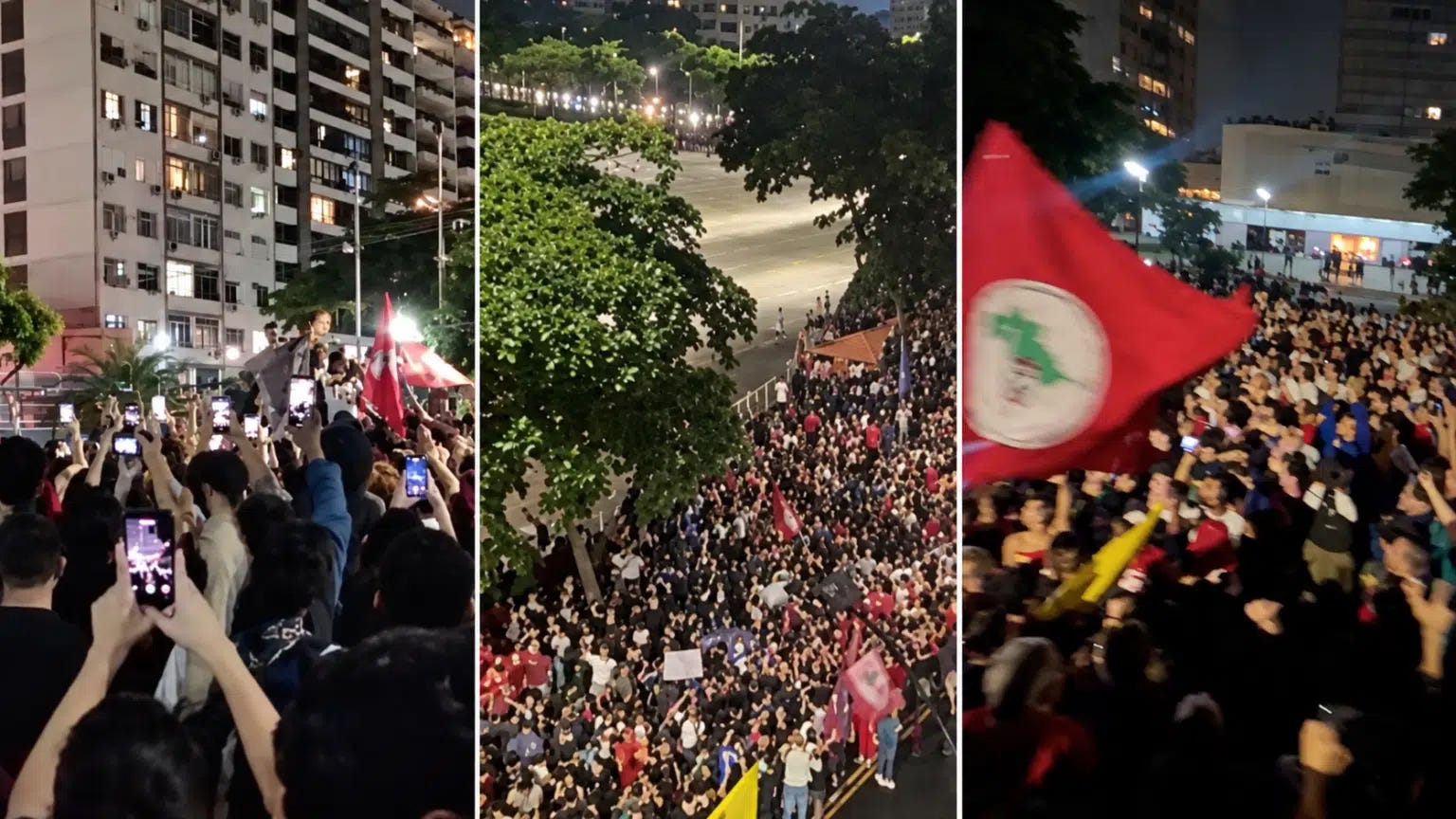
Screenshots of videos from the October 5 manifestations in Niterói. (Revista Fórum)
The political significance of the event goes beyond its size. The mobilization originated within the university itself, led by student groups such as the Evaristo da Veiga Academic Center (CAEV) at UFF Law School, as an immediate reaction to the election results.
This was not a massive national rally organized by political parties or the presidential campaign leadership. Instead, it was driven by students who, faced with the lead Flávio Bolsonaro secured in the first round, decided to channel their frustration into mobilization.
“The shock and dismay over Sunday’s results must transform into a movement,” read the call to action issued by CAEV, which scheduled the gathering for 7 p.m. on Monday.
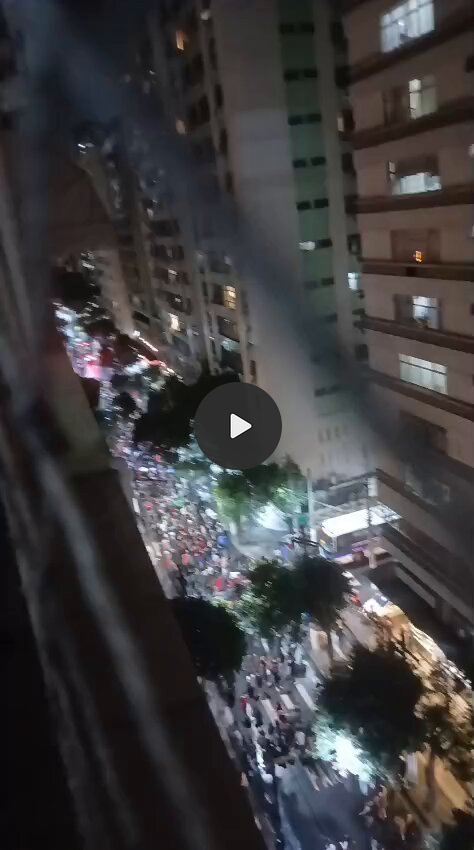
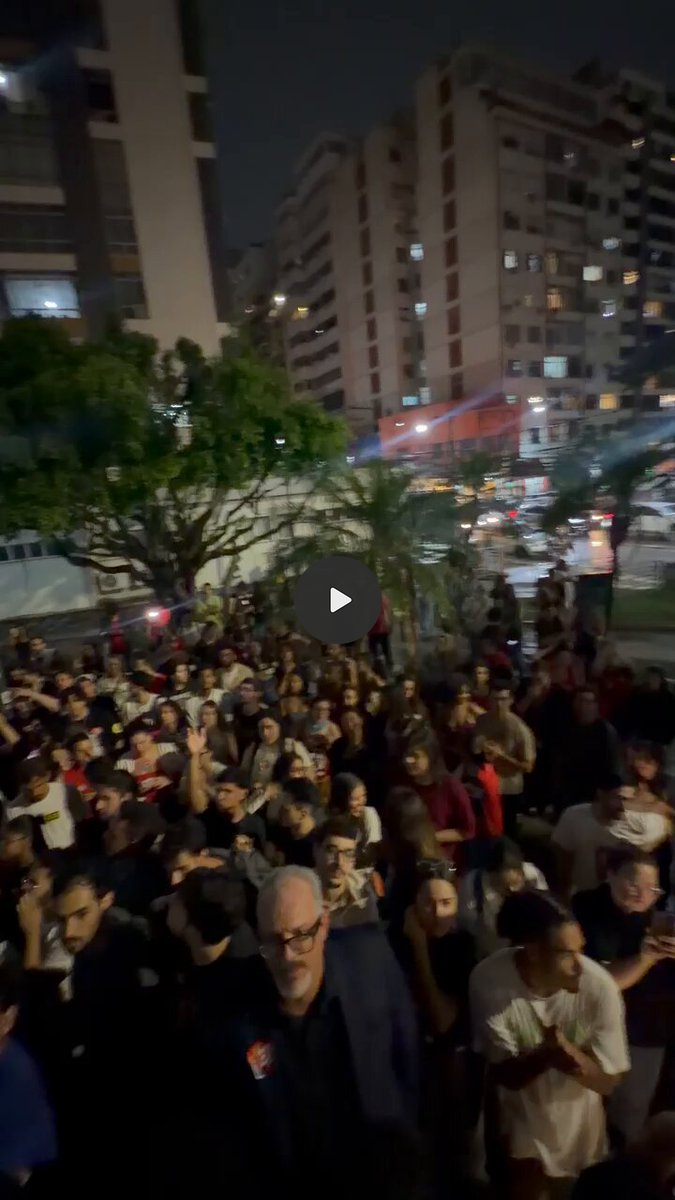
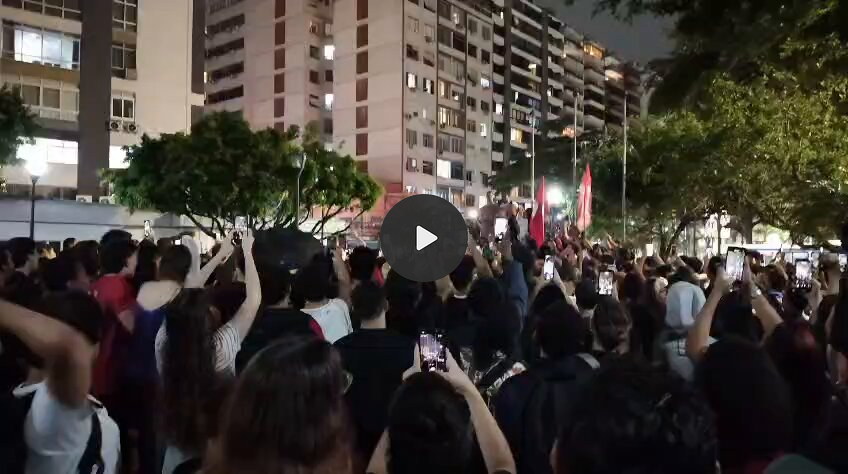
Carrying banners and placards and chanting slogans, the students marched through various parts of Niterói. The demonstration passed through the Gragoatá and Ingá neighborhoods, home to UFF Law School, and continued through Icaraí. Along the route, they chanted in support of Lula, against the Bolsonaros, and against Flávio Bolsonaro’s announced intention to grant amnesty to his father, Jair Bolsonaro, who is currently serving a 27 year prison sentence for plotting a coup after losing the 2022 presidential election.
A banner reading “UFF Antifascist” was hung at the entrance to the Law School.
In front of the campus building in the Ingá neighborhood, a student led a chant that was repeated by the other demonstrators:
“The students of Niterói are sending a message to bolsonarismo. We will not back down. It’s Lula. Not Bolsonaro. Not him. Never him. It’s Lula.”
At another point, the chant was direct:
“No amnesty.”
Watch videos of the demonstration:







Reaction to the Election Results
The demonstration took place less than 24 hours after a first round of voting that left Lula’s campaign facing a more difficult scenario than anticipated.
Flávio Bolsonaro finished the vote with 47.03% of valid votes, about 56.1 million votes. Lula received 45.16%, or approximately 53.8 million.
The margin between the two was just over two million votes.
At the same time, around 33 million voters did not go to the polls on Sunday, October 4. Those non-voters are central to campaign strategies for the runoff election.
It is in this context that demonstrations like the one at UFF gain importance.
The movement did not stem from a pre-planned national agenda for the post-election period. The call to action was issued by student organizations themselves in response to Sunday’s results, explicitly advocating that the shock caused by the election outcome be channeled into political organization.
The organizations also stated that the weeks leading up to the runoff, scheduled for October 25, must be used to expand mobilization efforts.
“Backing down is not and never has been an option,” the call to action stated.
Universities in the Crosshairs of the Bolsonaros
The students’ reaction also reflects the clash between former President Jair Bolsonaro and Brazil’s public universities.
During that period, federal universities faced budget cuts, while the former president himself repeatedly attacked institutions of higher education and their students.
The demonstration in Niterói recalled this history by placing the defense of public universities at the heart of the mobilization against the potential return of a Bolsonaro to the presidency, this time through Flávio Bolsonaro’s candidacy.
UFF has approximately 50,000 students and campuses in Niterói, as well as in municipalities across Rio de Janeiro state.
This article first ran in Revista Fórum, was translated by Panamerican Dispatch, and can be read in its original Portuguese here.