


by Michael Fox
From The World
Hundreds of supporters of Brazilian President Luiz Inácio Lula da Silva gathered around a bar as the results rolled in. Far-right Senator Flávio Bolsonaro was ahead by a sliver. But then Lula took the lead.
The crowd exploded.
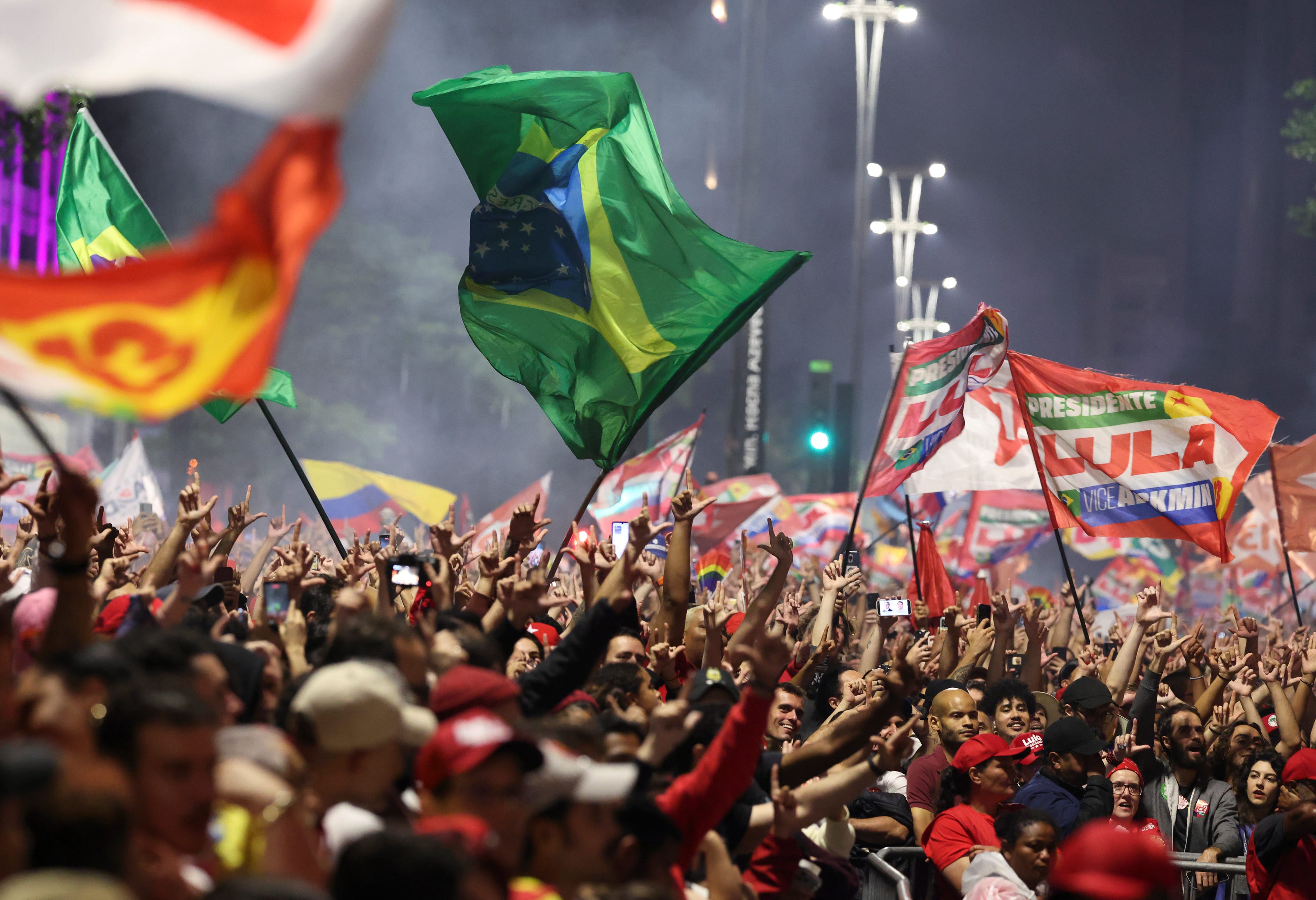
Supporters of President Luiz Inacio Lula da Silva of Brazil celebrate his victory on October 25, 2026 in Sao Paulo, Brazil. (Photo by Alexandre Schneider/Getty Images)
Nicolas Braga, a Lula supporter, was there, with tears pouring down his cheeks.
“Man, it’s so emotional,” he said. “We don’t want prejudice. I’m gay, and I’m so happy seeing this.”
Braga continued by saying that Lula fights against prejudice and that “he stands for the poor, helps gays and the most marginalized.”
“I am so happy because they represent me,” he said.
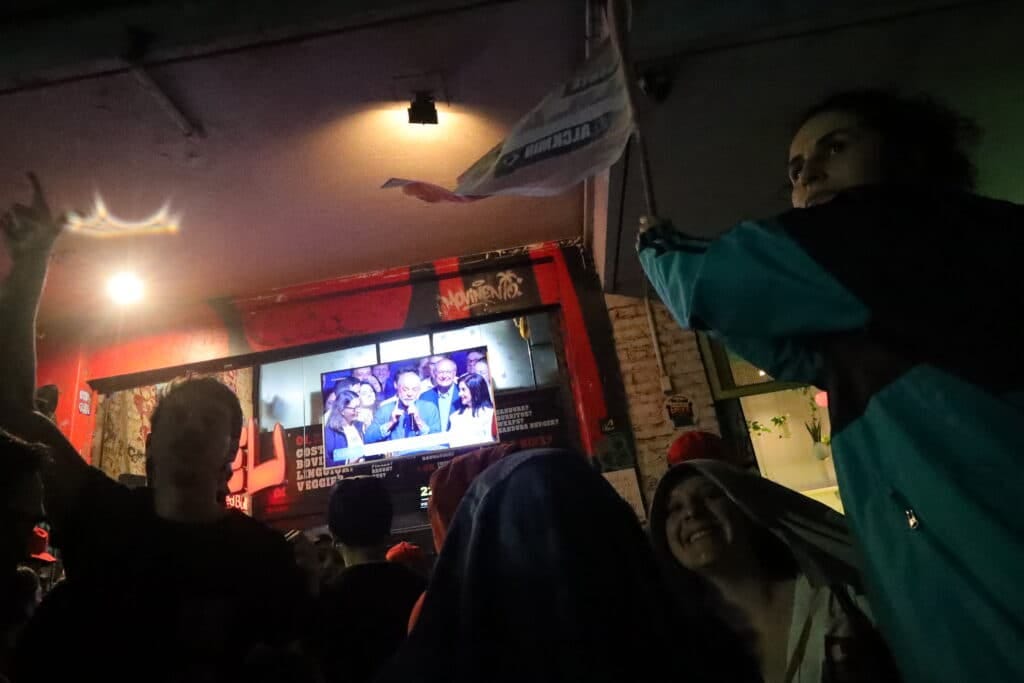
Supporters of President Lula watch his speech following the election result on Sunday night, October 25 (Rosa Fox / The World)
Lula defeated Flávio Bolsonaro by a narrow 3.5-point margin. But it was a huge victory — this was the first time in Brazilian history that a candidate lost the first round and won it in the second.
During a speech in São Paulo after the results were released, Lula said he was going to invest in Brazil’s future.
“I will continue to make a revolution in Brazilian education,” he said.
Lula’s victory came on the heels of three weeks of endless campaigning by his supporters, both on and offline. People traveled from across the country to return home and vote where they were registered.
Flávio Bolsonaro, the son of Trump ally and former President Jair Bolsonaro, had promised to crack down on crime, battle the high cost of living and cut government spending — an enticing equation to many people in Brazil. And not just those on the far-right.
Roberta Soares and Ricardo Rolando came to the polls with their two kids, dressed in yellow and green, the colors of both Brazil and Flávio Bolsonaro. They said they voted for Lula in the past and benefited from his government programs, but were concerned about crime and liked Bolsonaro’s vow to support entrepreneurs. They wanted someone new.
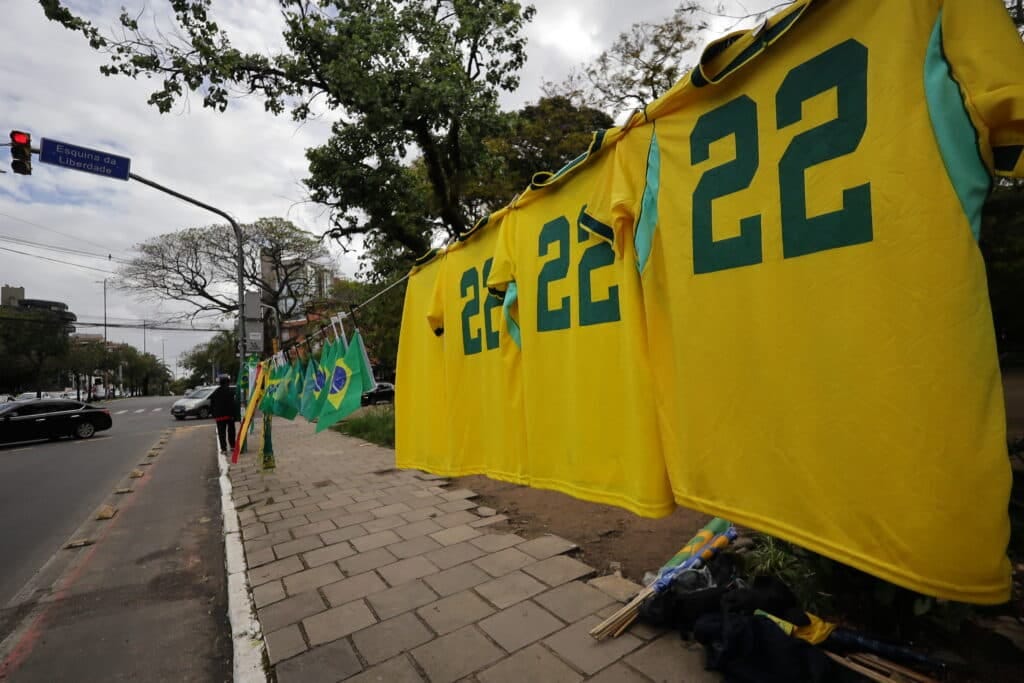
Brazilian soccer jerseys line a wall with the number 22 for Bolsonaro’s Liberty Party. (Michael Fox/The World)
“Our kids are our future, so we want change,” said Rolando, “so that we can provide them with a better future, and when they get there, they’ll be much better off.”
A bright future is also what Lula supporters hoped for. But many people The World spoke with said they were terrified of what that might look like under Flávio Bolsonaro.
Milena Rosario da Silva, a literature student who helped get out the vote for Lula in recent days, said that her “biggest fear was that “[Flávio] would destroy everything that had already been built.”
“Our judicial system. Education. Our universal healthcare system,” she said. That’s why we had to fight.”
Many at the polls wore red, Lula’s color. Some even carried Lula flags, which are permitted under Brazilian law. They said they were voting for Lula in defense of democracy. That’s in part because Flávio’s father, then-president Jair Bolsonaro, refused to accept his electoral loss to Lula in 2022. Last year, Jair Bolsonaro was jailed for 27 years for attempting a coup.
Last night, it seemed Flávio Bolsonaro might try to follow in his father’s footsteps.
“We are going to ask for these elections to be annulled,” he said.
He told the press he refused to recognize the election results, blaming confusion at the polls.
Both Flávio’s and Lula’s campaigns asked for extended polling hours because of transportation and weather conditions in various states. The Supreme Court agreed and ordered polls to run two hours longer in those areas. But many polls still closed at 5 p.m., leading to confusion.
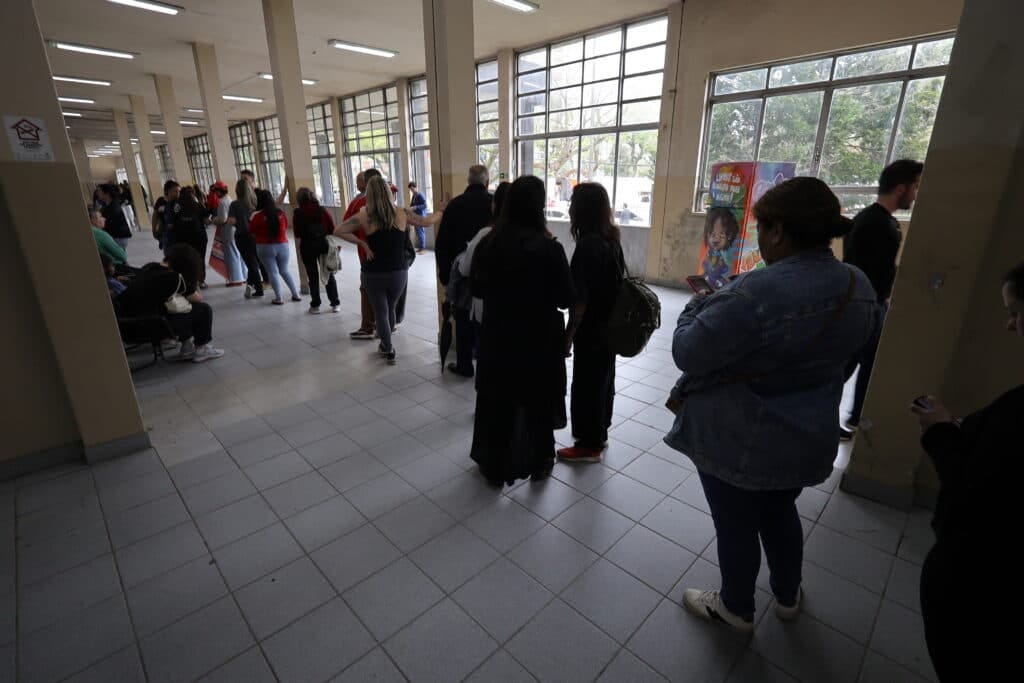
Voters in line in Porto Alegre, Brazil (Michael Fox/The World)
It’s currently unclear what the young Bolsonaro’s challenges might mean. But one thing is for sure: This election was make-or-break for the region, according to Fabio de Sa e Silva, professor of Brazilian Studies at the University of Oklahoma.
“For the region, it means that we still have somebody who will champion ideas such as national sovereignty,” he said.
Far-right allies of US President Donald Trump have won elections up and down Latin America — like Colombian President Abelardo de la Espriella, or El Tigre.
“El Tigre, I endorsed him,” said Trump at a press conference earlier this year. “He was in 10th place, and he won the election.”
Lula’s victory was the first time a country did not vote for the far-right in recent years.
“But also, multilateralism and cooperation, rather than coercion and just submission, right, to a more powerful country, as I think it would be the agenda that Flávio would stand up for,” de Sa e Silva said.
Flávio Bolsonaro traveled to the United States a half dozen times this year. And Trump also endorsed his campaign.
Lula’s second term will begin on Jan. 1, 2027.
This article was originally published by The World. It has been reprinted here with permission.