


by Ana Beatriz Garcia
A cryptocurrency website has started offering free tokens to users who share social media content urging people to vote for presidential candidate Flávio Bolsonaro. The initiative is called B22, a reference to the senator’s last name and ballot number.
According to the website, the digital currency is distributed to people who promote the project on social media. Some of the promotional content includes videos that directly link buying or sharing the token to supporting Flávio Bolsonaro at the polls.
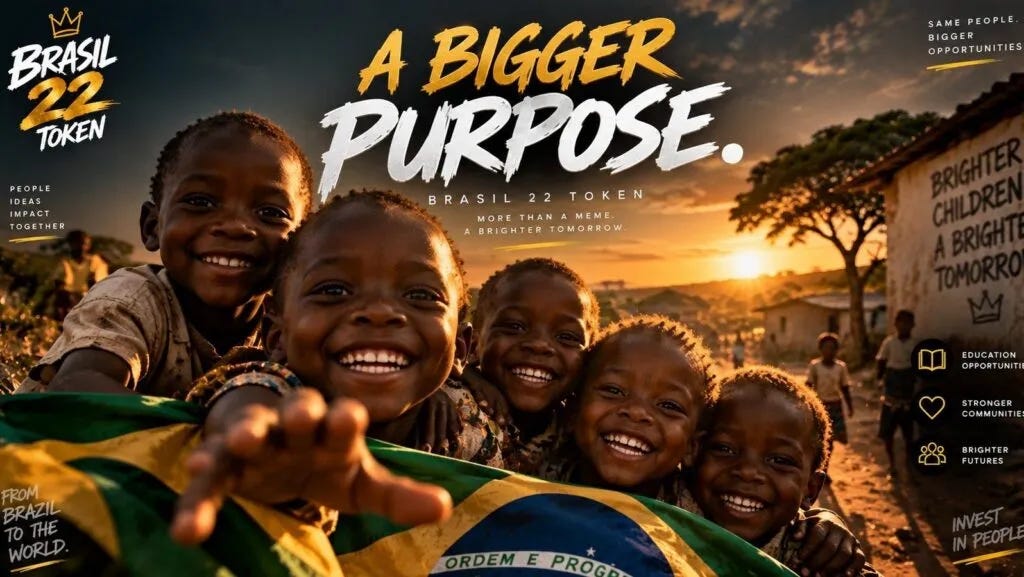
Jair Bolsonaro froze the social housing budget and put Brazil back on the UN’s World Hunger Map, but a mysterious start up’s partnership with a sleazy looking Ugandan charity organization is promising to built one house if you help them spread electoral propaganda for Flávio. (social media)
The campaign is also being promoted by the Instagram account connected to the Ugandan children’s charity HypersKids Africa, which has about 12.9 million followers. One video shows children in Uganda wearing B22 branded t-shirts and repeating messages of support for candidate number 22. That post has drawn more than 1 million views.
Token Tied to Election Campaign
According to the site, participants need to share content about B22 in order to receive the tokens. The page presents the initiative as a community that combines support for candidate number 22 (Bolsonaro) with fundraising for social projects benefiting children in Uganda.
The site says part of the money raised from selling the cryptocurrency will go toward building a [single] house in Kampala. Even so, the token’s promotion is paired with messages that directly reference the candidate and ask people to vote for Flávio Bolsonaro.
In social media posts, accounts involved in promoting B22 have also linked the cryptocurrency’s performance to support for the candidate.
The company behind the website says it has no official ties to any politician. Folha de S.Paulo newspaper reached out to Flávio Bolsonaro’s campaign for comment but had not received a response by the time this story was published.
Experts Point to Possible Irregularities
Election law experts consulted by Folha say the initiative could raise questions about campaign advertising and financing rules. One possibility they point to is that this could amount to an improper corporate campaign donation, if it’s shown that the structure was used to benefit the candidate electorally.
Brazil’s election laws set specific rules for campaign advertising and financing, including rules governing where the money used to promote a candidacy comes from.
Experts also noted similarities between this strategy and promotional tactics used in past campaigns involving viral video clips tied to former candidate Pablo Marçal. In this case, though, any potential liability would depend on determining who built the structure behind B22, who is funding it, and what the actual relationship is between the project and the campaign.
Children in Uganda Appear in Promotional Videos
B22’s international reach has largely come through the HypersKids Africa account, which focuses on social projects involving children in Uganda.
In one promotional video, children are shown dancing in B22 branded t-shirts, taking part in a message that links the cryptocurrency to voting for candidate number 22. The video also names specific politicians and asks viewers to buy and share the currency.
Using children in promotional content, alongside a social assistance initiative, is happening alongside the spread of an explicitly political message. Researchers consulted by Folha said this combination of financial incentive, humanitarian framing and political promotion deserves scrutiny from election authorities.
How B22 Works
Cryptocurrencies are digital assets recorded on blockchain networks. In B22’s case, users receive units of the token as an incentive for promoting the project.
This setup can generate a financial gain for anyone holding the token if its price rises. In other words, the project combines the economic incentive of a potential price increase with the spread of campaign content favorable to the candidate.
The initiative launched on Tuesday, just days after the runoff campaign began.
This article first ran on the Brazilian labor union platform TVT News, was translated with authorization by Panamerican Dispatch, and can be read in its original Portuguese here.