


by Brian Mier
This Sunday, the fact that Lula brought out the largest crowd to São Paulo’s Paulista Avenue since the Diretas Já movement in the waning days of the U.S.-backed military dictatorship, with estimates of over 1 million, has rightfully occupied a lot of headline space, even in bourgeois media outlets like Globo which notoriously lies about crowd size at leftist marches and protests.
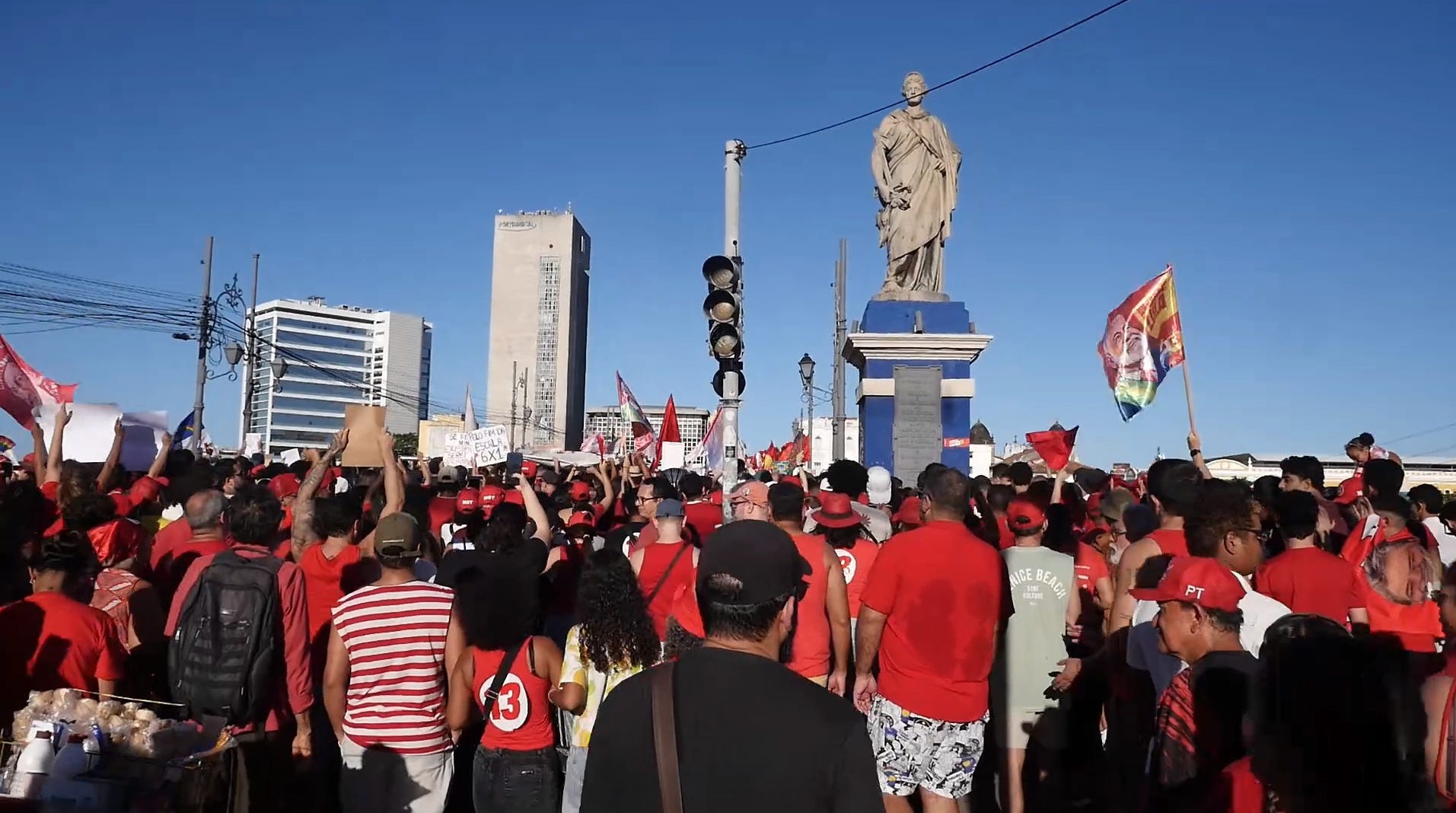
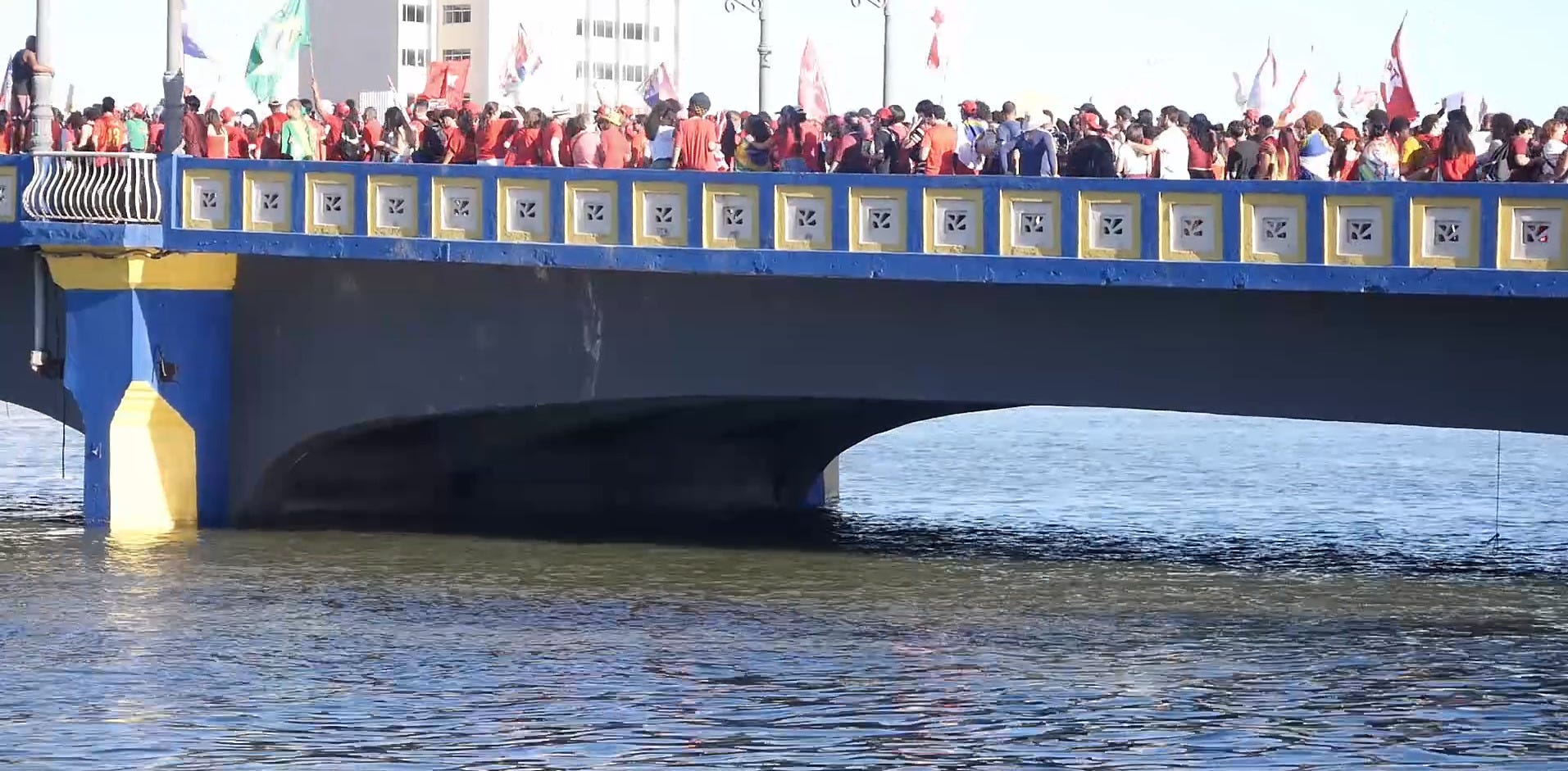
Crowd moving onto Buarque do Macedo Bridge
But across Brazil, scores of other campaign marches have brought out huge crowds in the past few days, even in small and mid sized cities, like the conservative city of Uberlândia, which saw 50,000 people come out to show their support for Lula on October 8.
This Sunday I headed to May 13 Park in Recife’s Santo Amaro neighborhood to cover a Lula rally for TeleSur that had been organized by labor unions, the Workers’ Party and social movements like UNE, the National Union of Students (União Nacional dos Estudantes). I had covered Lula’s surprise visit to Recife on September 25 and witnessed the hastily assembled crowd of 80,000 firsthand. Within minutes of arriving at the park, I knew this one was going to be much bigger.
As I nudged my way through the crowd with my camera equipment, I saw Mayllane Silva, state director of UNE, Brazil’s oldest social movement, which is historically connected to the Communist Party of Brazil (PCdoB). I asked her why UNE helped organize the rally.
“UNE is out on the streets today because we believe President Lula’s reelection is essential to defending education in our country,” she said. “We can’t leave education in Flávio Bolsonaro’s hands, given that he wants to take our universities out from under the Education Ministry. He wants to tear down education in our country. That’s why UNE isn’t just out on the streets here in Pernambuco, but all across Brazil, to say we want President Lula reelected president so we can defend our education system.”
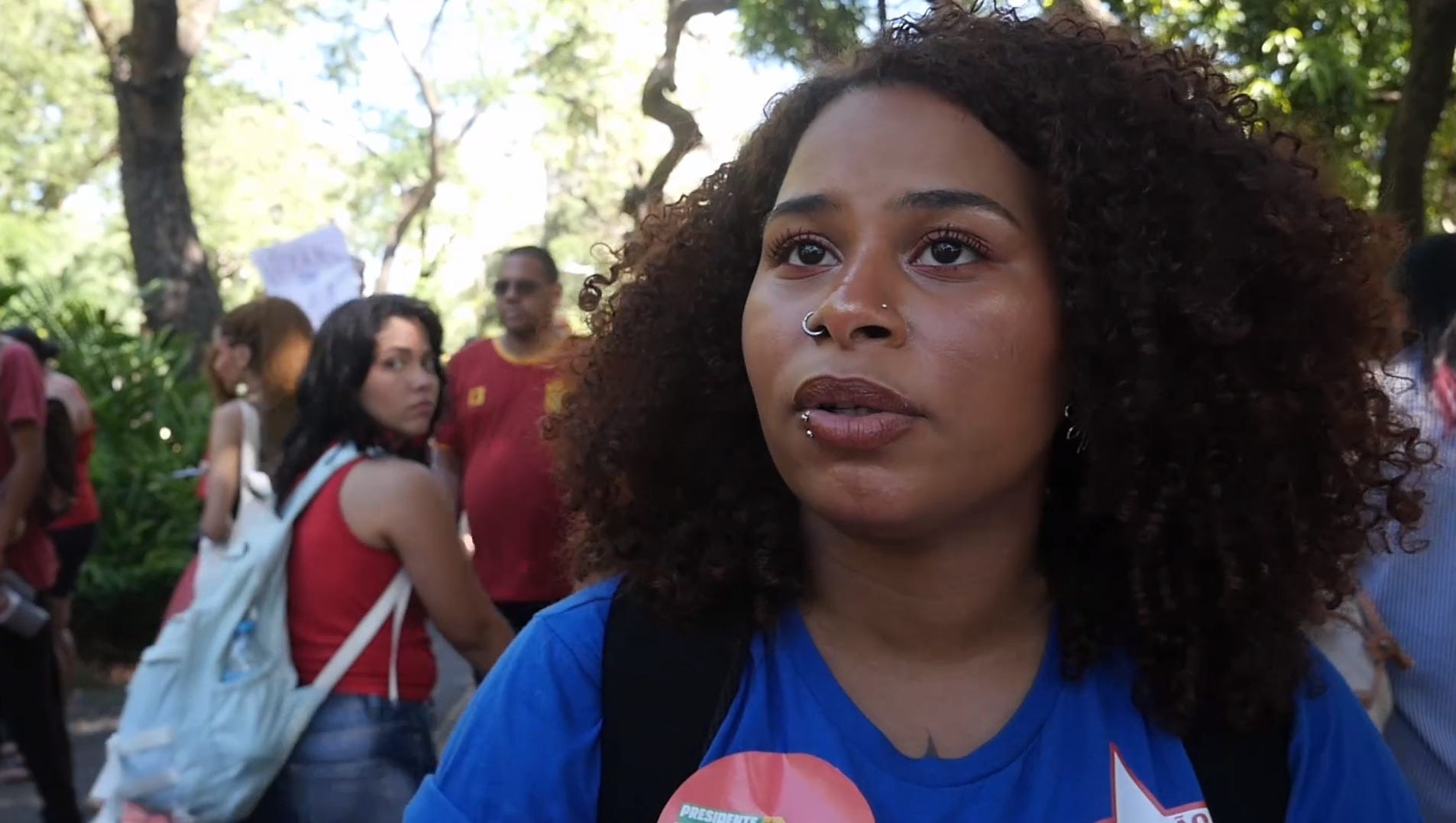
Mayllane Silva - Director of UNE Pernambuco
During the presidency of Flávio Bolsonaro’s father, Jair, the government gutted funding for the federal public university system, leaving many of Brazil’s most prestigious public schools, like the Federal University of Rio de Janeiro, on the verge of bankruptcy. The large number of young people present was certainly tied to the fight to protect public education against more of the Bolsonaro family’s market friendly spending cuts, but it was clear that the fight was bigger than that.
A young man named Álvaro Luís told me, “We’re here for all of the minority groups that suffer daily attacks from bolsonarismo. We’re here to fight for those who are unprotected. We are here for the Afro-Brazilians, the working class, for the LGBT community, for women and children, and for a better future for our country.”
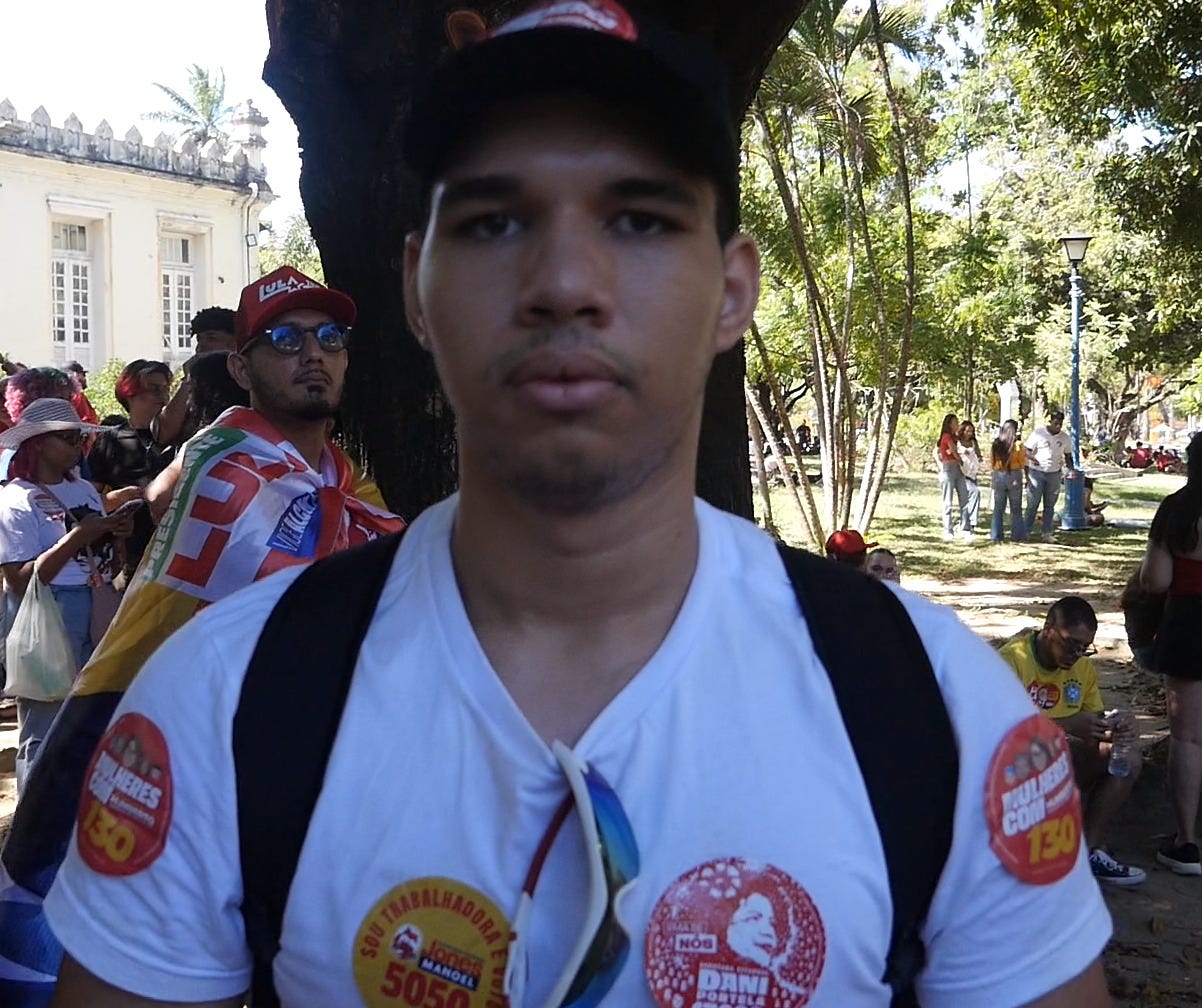
When President Lula was first elected in 2002, less than 4% of Brazil’s public university students were Afro-Brazilian, and the vast majority had graduated from prestigious private high schools. The Workers’ Party introduced an affirmative action system that represented an improvement over the U.S. model, because it based university entrance quotas on social class and graduating from public elementary and high schools, as well as on race. Today the share of Afro-Brazilian students matches their share of the population at large, roughly 52%. Millions of low income young people became the first in their families to attend college, and many now worry that under Bolsonaro, university will regress into being an elite privilege.
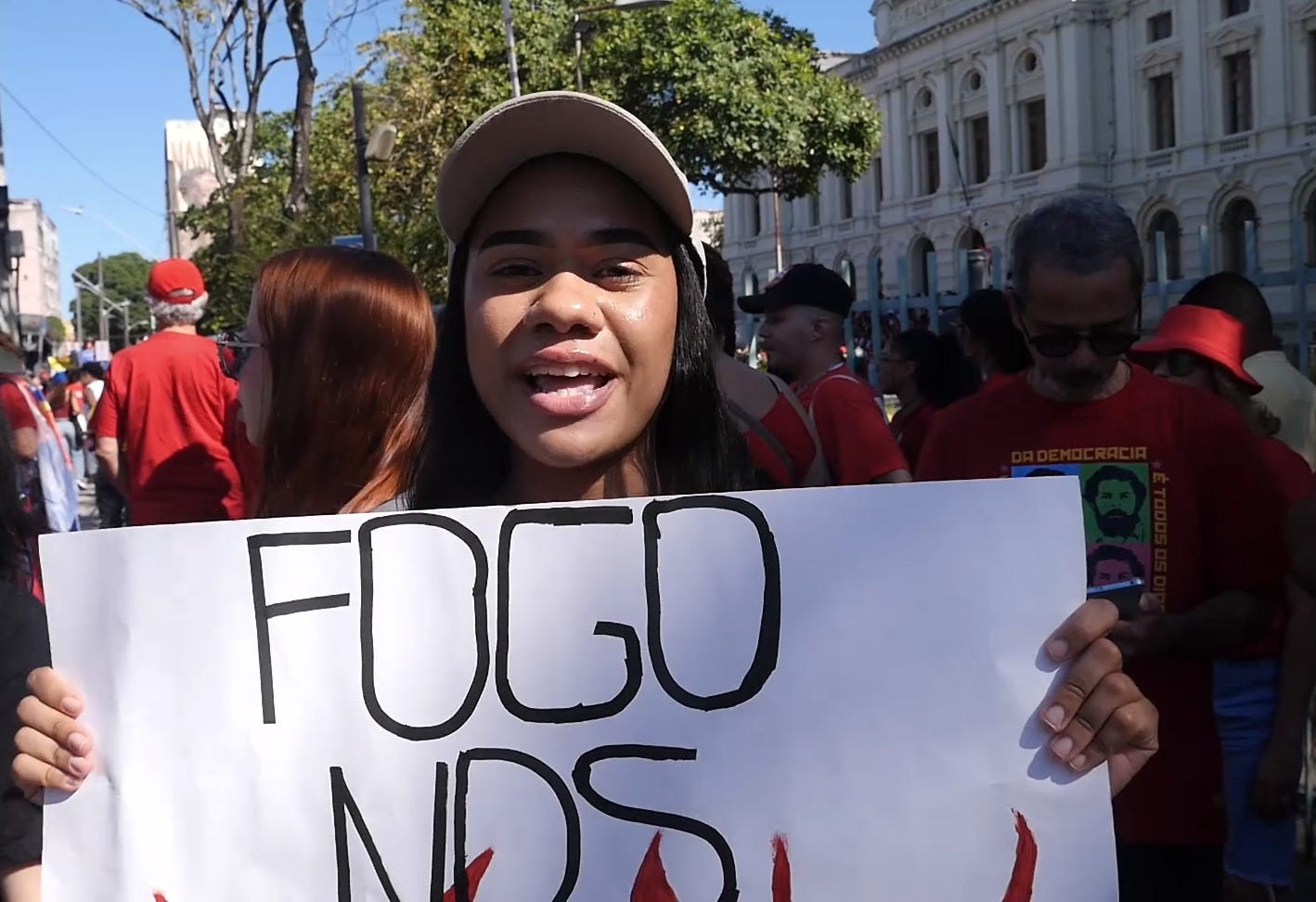
I approached a young woman who was holding a handmade sign that said, “Fire on the Racists,” and asked why she had come out. “My name is Alana Lima. I have a bachelor’s degree in journalism from the Federal University of Pernambuco, and I was an affirmative action student. I am the daughter of a woman who worked as a kitchen maid and a man who didn’t finish elementary school. I am here today because I know the power that education has to transform people’s lives, and I don’t want this right, which was denied to our ancestors, to be denied to future generations.”
I’ve been covering protests and rallies in Recife for five years now, and this was the largest I had ever seen. Although no size estimate has been made by any credible source at the time of writing this article, I estimate that it was easily twice as large as the crowd of 80,000 that came out to see Lula in person on September 25. Drone footage shows the crowd simultaneously filling the Princesa Isabel Bridge, which connects the Santo Amaro neighborhood to Antônio Vaz Island, crossing the island, and at the same time occupying the entire Buarque do Macedo Bridge to Recife Antigo Island.
As the march reached its final destination at Marco Zero, the original founding point of Recife, newly elected and reelected lawmakers from the Workers’ Party (PT), the Communist Party of Brazil (PC do B) and the Socialism and Freedom Party (PSOL) made speeches reminding the crowd of what will be lost if Bolsonaro takes a chainsaw to the national budget like the ones wielded by Milei and Musk.
Drone footage of Buarque do Macedo Bridge
Jones Manoel, who was recently elected federal deputy for PSOL, said, “Federal investment in our state will dry up, and important public assets like the Abreu e Lima refinery could end up privatized. So it’s essential that all of Pernambuco’s working class mobilizes to guarantee President Lula’s reelection.”
Even with the size of the rally, the maracatu drum groups, and the humorous chants against Flávio Bolsonaro that seemed to energize the crowd, there was a palpable underlying tension. Toward the end, I ran into a friend who works at one of the Lula administration’s national ministries. Midway through a cheerful exchange of pleasantries, her smile vanished for a second. “I’m really nervous about this,” she said.
Brazil’s presidential runoff will take place on October 25.