


by Júlia Motta
In recent days, Meta has censored 1,088 accounts supporting President Luiz Inácio Lula da Silva across its social media platforms (WhatsApp, Facebook, and Instagram), according to a survey conducted by the organization CTRL+Z, which focuses on confronting Big Tech and holding it accountable in Brazil.
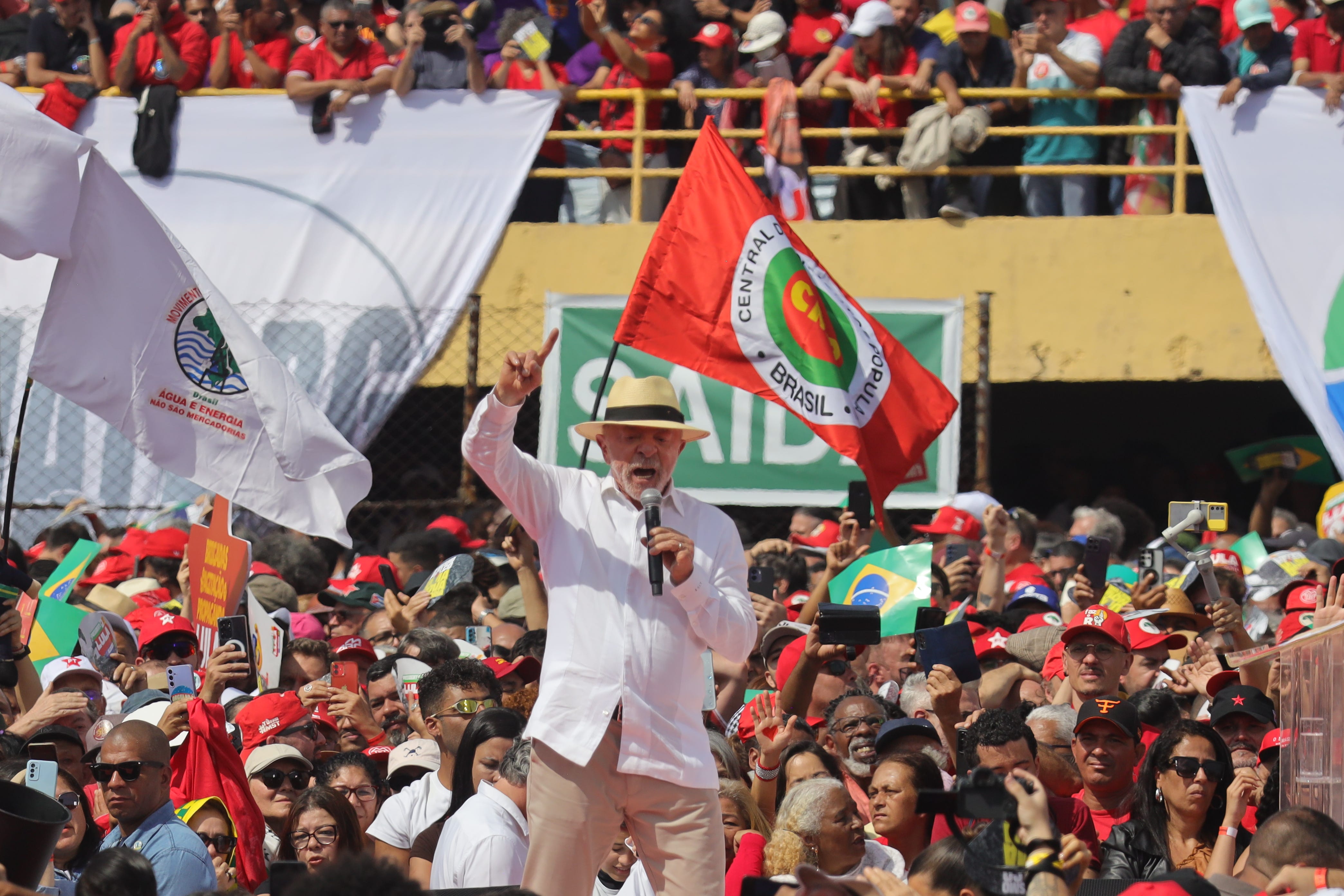
Brazilian President Luiz Inácio Lula da Silvia speaks before a packed crowd during a rally in Sãop Paulo in August 2026 (Michael Fox)
Since the start of the Brazilian electoral period, the tech giant, Meta, has faced accusations of taking down or reducing the reach of accounts belonging to politicians, social movements, and influencers who support President Lula.
The research, which Revista Fórum had access to, detailed 1,088 reports of censorship, account bans, restrictions, or reduced reach during the election period. The impacted content primarily involved profiles supporting Lula. These cases directly impacted the coordination of the electoral campaign. While the majority of those affected were ordinary citizens, the list also includes dozens of influencers, communicators, researchers, students and social movements.
The organization also condemns that Meta preempted judicial action by unilaterally banning, restricting, or suppressing at least 17 profiles that the campaign of right-wing Senator Flávio Bolsonaro had requested be taken down.
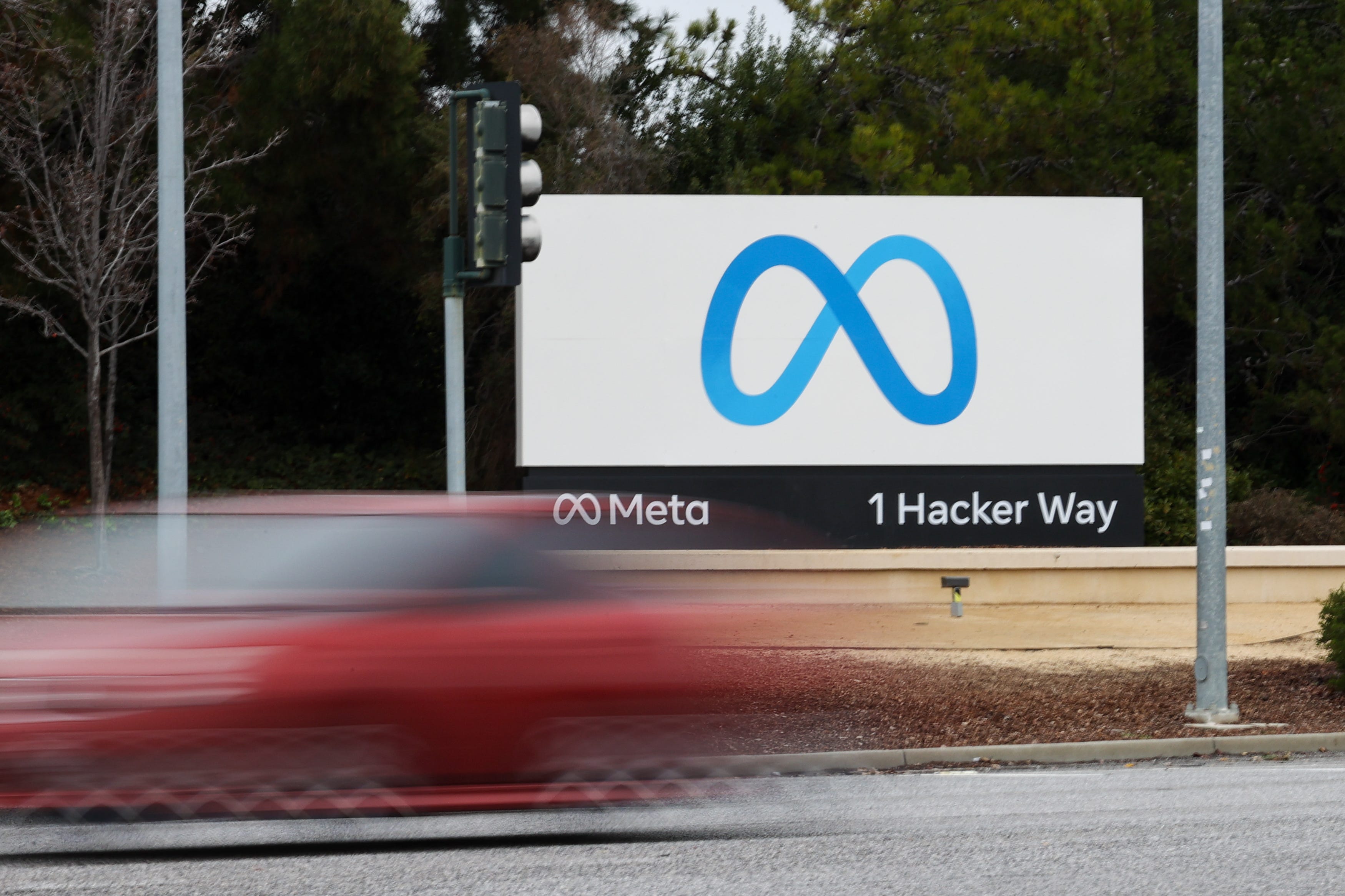
Meta sign is seen at its headquarters in Menlo Park, California, on December 29, 2022. (Tayfun Coskun/Anadolu Agency via Getty Images)
Complaints
The survey categorized the complaints into three types: reach suppression, functionality restrictions, and bans.
Reach Suppression: Loss of Reach + Downranking in Search Results
This accounts 36.8% of complaints. According to the organization, this is also the most subtle form of interference and the hardest to prove. In addition to ordinary users, large, verified profiles have reported experiencing a sharp drop in the reach of their posts. This is the case with Lula’s official account, @lulaoficial, which reported figures that were different than usual in some of its posts. One reel, for instance, garnered 783,000 likes, but only 679,000 views, on a profile with 16.9 million followers.
Influencer Gabriela Priolli also highlighted a video where the view count dropped from 12.7 million at 7:49 PM to 1 million at 10:28 PM. Musician Baco Exu do Blues also reported low view counts. On Thursday, October 8, Meta admitted there had been a glitch in video view counting, offering no further explanation or remedy.
Functionality Restrictions: Impacting accounts, reposts, comments, boosting, and blocking
This type of censorship follows closely after the previous. It accounted for 32% of reports. In these instances, the account remains active but becomes partially unusable. This happened to the @eutocomlula profile, used in Lula’s campaign, which was prevented from sending messages just one week before the first round of voting.
Professor João Cezar Castro Rocha also reported that a video of his criticizing Flávio’s campaign had its reach restricted due to claims of “unoriginal, low-quality content” and “QR Code usage.”
The verified profile @0gabrielpereira was also restricted after sharing information about pro-Lula rallies in Belo Horizonte.
Banning Accounts, Posts & Comments
These cases account for 22% of the reports. This category includes profiles that had posts removed, such as researcher Orlando Calheiros; journalist Guilherme Amado, whose video criticizing Flávio was blocked without explanation; Eduardo Moreira, whose video “unmasking Flávio” was blocked and reposted; Mídia Ninja, which had a post about the U.S. Embassy restricted citing electoral laws; and City Councilor Maíra (from the MST), who had a mobilization post removed.
About 10% of Cases Involve Account Bans.
Targets include student organizations from at least four states. Student unions at UFPR and UTFPR; UPE Paraná; UCE Santa Catarina; and student leadership at UFRGS, PUC-RS, and UFMG), social movements (MST Pará, PSOL Floripa, Coletivo Artêmista, Coletivo Maré 0800), news outlets, and ordinary citizens.
Of the 108 account bans, 17 involve profiles named in a lawsuit filed by Flávio Bolsonaro’s campaign, which asked the Superior Electoral Court to suspend accounts belonging to a network of 1,525 pro-Lula profiles.
Key targets
The survey indicates that at least 155 pages linked to social and student movements (15% of the reported cases) were targeted by Meta’s censorship actions.
There are 111 cases linked to social movements, affecting organizations such as MST Pará, MTST Formação, PSOL Floripa, Coletivo Maré 0800, and Coletivo Artêmista. The latter is an LGBTQIAP+ cultural hub that has existed for over a decade and saw several of its accounts taken down simultaneously. Meta’s justification was that the profile was disseminating “content violating policies regarding sexual content.”
The student movement, which organized a series of rallies in support of Lula during the runoff election, was also particularly affected by the wave of takedowns.
There are 44 cases, including coordinated bans affecting at least eight organizations: DCE UFPR, DCE UTFPR, UPE Paraná (@upeparana), UCE Santa Catarina (@ucenasruas), the Alfredo Balena Academic Directory (UFMG), student directories at UFRGS and PUC-RS, and AERJ (State Association of Student Representatives of RJ).
“Meta, Hands Off Our Election” Campaign
Against this backdrop, CTRL+Z launched the “Meta, Hands Off Our Election” campaign. It demands that Meta immediately restore suppressed profiles, create appeal channels, featuring human review, for journalists and social movements, provide notifications and detailed explanations regarding “shadowbans,” and fully explain the metric anomalies reported by profiles.
“These are necessary and urgent measures to ensure a fair and truly free electoral process,” the organization states.
Consequences of Censorship
CTRL+Z points out that, beyond the damage to the electoral process and citizens’ right to stay informed, Meta’s wave of censorship also has a range of consequences for users. At least 56 creators reported direct financial losses, such as the takedown of pages that served as sources of income. There are another 29 cases that caused harm to the organizations, where communities and social or political movements lost their points of contact with the public.
Many profiles also reported the need to switch accounts. This fragments communities, dilutes audiences, and imposes rebuilding costs that favor those with greater resources, namely, institutionalized campaigns rather than activists.
There is also the effect of self-censorship, with users wary of speaking out freely for fear of losing engagement or having their accounts penalized. At least 20 reports mention this effect.
Takedown Response Kit
In light of this situation, the organization is also providing Brazilians with a kit containing complaint templates for consumer protection agencies and the National Data Protection Authority so that cases can be escalated and accounts restored.
The kit also includes a template for filing a petition with the Small Claims Court. Among the documented cases, at least two users took legal action and succeeded in having their accounts reinstated.
They also launched an online petition to gather signatures and pressure Justice Kassio Nunes Marques, the president of the Superior Electoral Court, to adopt measures ensuring due process regarding content removals and transparency from Meta concerning its algorithmic mediation of the public sphere.
This document, along with evidence gathered during the election period, will serve as a basis for future legal actions. Monitoring is ongoing throughout the election. Cases are logged via the Digital Harm Archive, the email address denuncia@ctrlz.org.br, and through active searches for social media posts and comments.
This article was originally published by Revista Forum. It was translated by Panamerican Dispatch. You can read the original in Portuguese, here.