


by Plínio Teodoro
Meta, the parent company of Facebook, Instagram, and WhatsApp, said technical glitches impacted posts and ads from President Luiz Inácio Lula da Silva’s campaign, but has categorically denied any electoral interference benefiting other candidates.
Lula’s campaign petitioned the Superior Electoral Court and the National Agency for Data Protection last week, alleging “strong suspicions of an attempted interference in the Brazilian electoral process to benefit the candidacy of Flávio Bolsonaro.”
The Superior Electoral Court gave Meta 48 hours to respond, and the company submitted a document on Monday, October 12, reiterating the claim regarding technical issues and asserting that its algorithms are neutral and auditable.
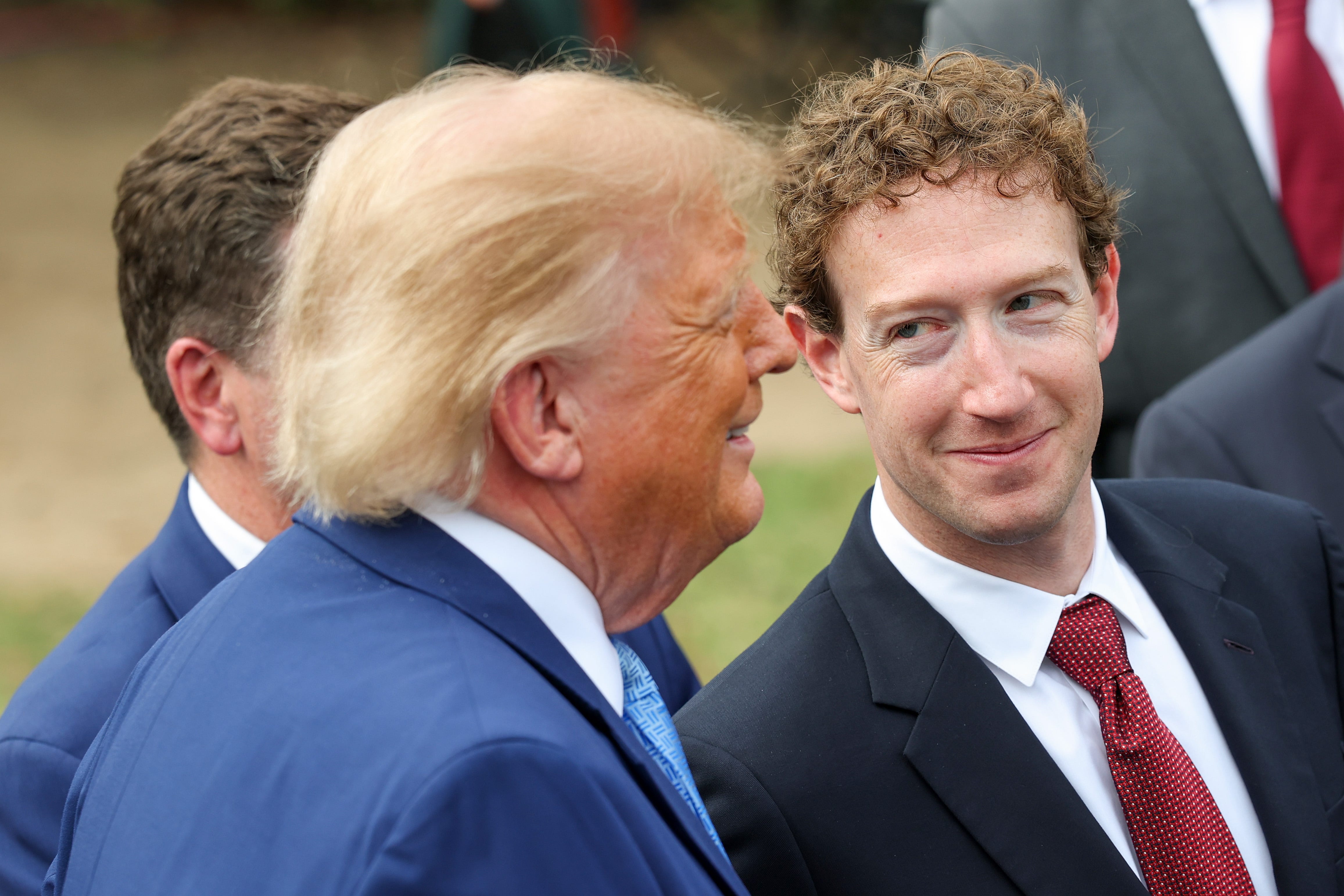
CEO of Meta Platforms Mark Zuckerberg looks at U.S. President Donald Trump during a press briefing with AI executives. (Kevin Dietsch/Getty Images)
Meta Acknowledges Glitches but Denies Interference
In a document submitted to the Superior Electoral Court, Meta acknowledged the occurrence of technical glitches that affected ads and posts from Lula’s campaign but rejected the campaign’s central accusation: that it was favoring the far-right candidacy of Flávio Bolsonaro.
“Facebook Brazil categorically rejects such a premise. The claim is false, unsubstantiated, and does not hold up when confronted with the facts and objective data presented herein,” reads a statement from the company, which is led by Mark Zuckerberg, who has allied himself with President Donald Trump in the US.
The company maintains that “Meta’s content distribution systems do not operate based on ideological criteria” and that “Meta does not operate its systems to disadvantage or favor candidates.”
According to the document, community standards apply equally to all users, and neutrality is described as a “design attribute of the systems themselves, with criteria that are objective, public, and auditable by the Electoral Court.” The company also stated that the technical issues mentioned did not exclusively affect Brazil or specific accounts.
What Meta failed to provide, according to Lula’s campaign, was concrete evidence that the glitches had affected other Brazilian candidates or other markets to a similar degree. The lack of verifiable data to support the claim of widespread impact is precisely the point Lula’s team disputes; this makes the “technical issue” explanation insufficient as a response to the formal complaint filed with regulatory agencies.
Accusations by the Lula campaign and the Involvement of Regulatory Agencies
On Saturday, October 10, Lula’s campaign filed a formal complaint with the Superior Electoral Court and the National Agency for Data Protection describing a pattern of issues that has persisted, according to the campaign, since last December: ad account failures, interruptions in view counts, and restrictions on boosting posts. Collectively, Lula’s team said, these incidents systematically reduced the president’s digital reach on Meta’s platforms.
To support the suspicion that their opponent was being favored, the Workers’ Party’s communications department conducted an analysis revealing a significant figure: Flávio Bolsonaro’s page recorded, on average, 2.96 times more engagement than Lula’s, despite having 17.2% fewer followers.
The PT campaign questions the company’s explanation: “The company claims that this ‘glitch’ affected other advertisers and markets but provided no evidence of this—let alone proof that the problem affected other candidates in Brazil as well. Once again, Meta claims it was a ‘technical issue’.”
The involvement of regulatory agencies signals that the dispute will not remain confined to the realm of public statements. By setting a 48-hour deadline for the company to respond, the Superior Electoral Court acknowledged the seriousness of the allegation during the pre-election period. The Data Protection Agency, for its part, has the authority to investigate how platforms handle personal data, opening up a regulatory front that runs parallel to the electoral process.
Meta’s Track Record in Elections and the Issue of Neutrality
Meta cites its own track record as a defense against claims of bias. In the document submitted to the Superior Electoral Court, the company states that its “institutional conduct across more than 200 elections since 2016—and in Brazil since 2018—is incompatible, both logically and historically, with the theory of deliberate manipulation in favor of a candidate.”
The company also says it has made investments exceeding $30 billion in security teams and technology over the past decade, including artificial intelligence systems and human analysis teams covering more than 70 languages.
The problem with this argument is that the company’s track record is not free from controversy. In March 2018, the company then known as Facebook Inc. acknowledged “failures” that allowed Cambridge Analytica to harvest data from tens of millions of users to target campaigns during the 2016 US presidential election—when Donald Trump was first elected—and the UK’s Brexit campaign. In July 2019, the company was fined $5 billion by the US Federal Trade Commission for allegedly misleading users regarding privacy controls over their information, a direct consequence of the scandal.
The current context adds a significant political dimension: following Trump’s inauguration in January 2025, Mark Zuckerberg announced he would work alongside the Republican leader against countries or governments advocating for social media regulation, a stance that repositions Meta within the global contest over digital sovereignty.
In Brazil, where the debate on platform regulation is ongoing, citing a “technical issue” to explain reach disparities during an election campaign cannot be accepted as a sufficient response—especially given a history that combines admitted failures, multi-billion-dollar fines, and the declared political alignment of the company’s top executive.
This article first appeared in Revista Forum, was translated by Panamerican Dispatch with authorization from the author, and can be read in its original Portuguese here.