


By Leonardo Attuch
In just 10 days, two events of enormous political significance may have marked a historic turning point. In Brazil, President Luiz Inácio Lula da Silva defeated Sen. Flávio Bolsonaro. That ended the possibility of the far right returning to power. In the United States, President Donald Trump suffered a major defeat in the midterm elections, losing control of the House and Senate to the Democrats.
Both results suggest that the political wave represented by MAGA, Trumpism and Bolsonarism may have reached its limits. Hate speech, the exploitation of social divisions and aggressive nationalism no longer appear enough to secure electoral victories.
Trump’s defeat is especially significant. He promised prosperity and peace. He delivered inflation, higher fuel prices and a war against Iran. American voters have begun to hold him accountable for the gap between his promises and reality.
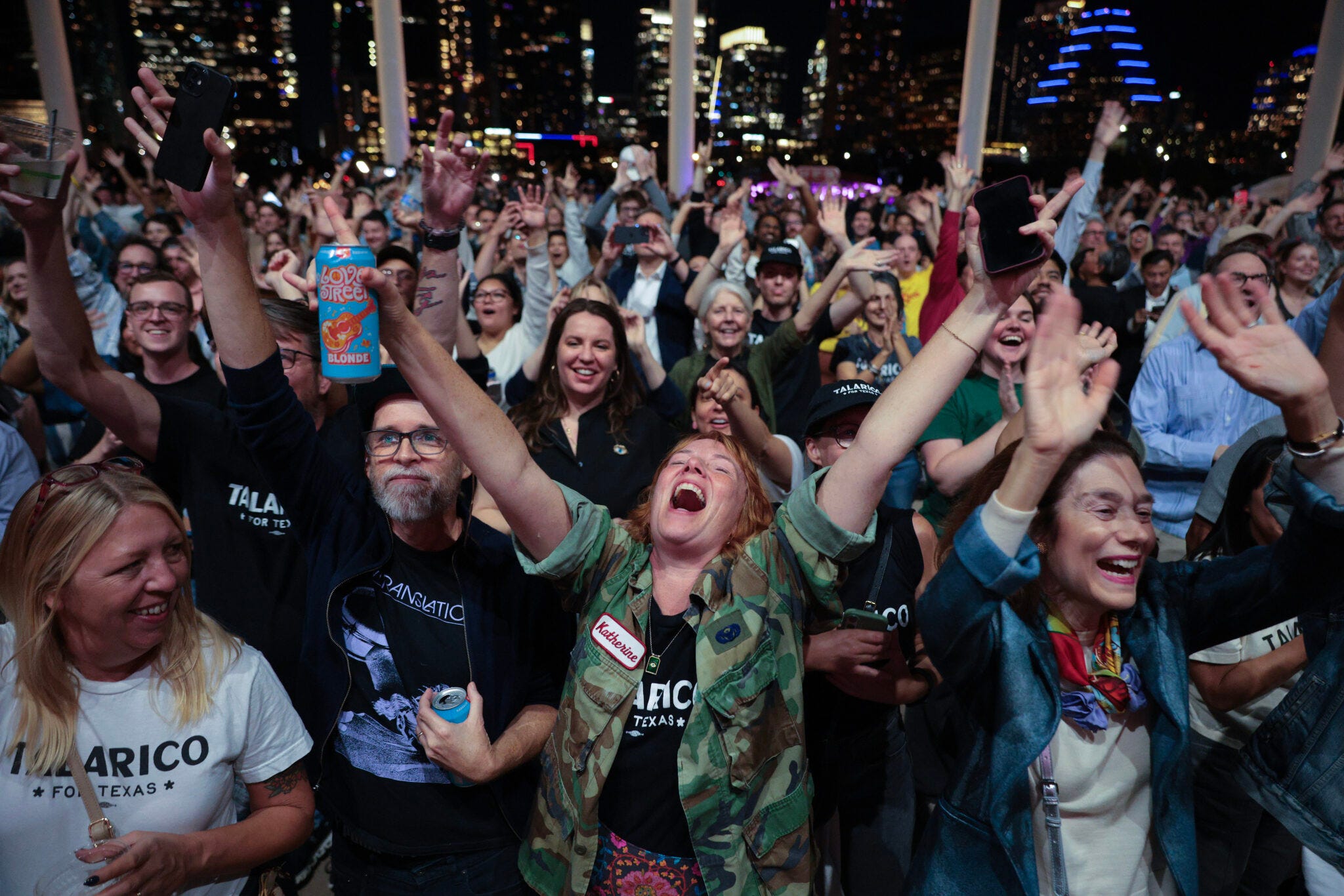
Texas democrats celebrate senate victory ofJames Talarico (Chip Somodevilla/Getty Images)
Lula’s victory has an international dimension. It represents a stronger Global South, multipolarity and the sovereignty of peoples in the face of Washington’s hegemonic ambitions. It is also a victory for humanist values over predatory capitalism, extreme concentration of wealth and the logic of endless wars.
Lula showed that it is possible to confront the far right with a project built on social inclusion, democracy and international cooperation. His reelection strengthens the BRICS and expands the possibilities of building a more balanced world order.
Trump’s weakening is likely to have consequences across Latin America. One of the leaders most exposed to the shift is Argentine President Javier Milei, who will run for reelection in 2027.
Milei built his political identity in close association with Trump. He shares Trump’s aggressive rhetoric and defends economic policies that favor big business. If MAGA loses strength internationally, Milei may face additional difficulties sustaining his project.
Of course, Argentina’s election will depend above all on the country’s own economic and social conditions. But the international environment also matters. The scenario that favored Milei’s rise may be starting to unravel.
Lula’s victory and Trump’s defeat do not mean the end of the far right. But they show that its expansion is not inevitable. They also show there is room for an alternative founded on sovereignty, social justice and peace.
In 2026, Brazil and the United States showed signs of change. In 2027, Argentina may complete that movement. And Milei may be the next to discover that history has changed direction.
This opinion peice, which does not necessarily reflect the opinion of Panamerican Dispatch, first appeared in Brasil 247, has been translated with express authorization from its editor-in-chief, and can be read in its original Portuguese here.