


By Brian Mier
In a normal presidential race, a candidate who defended a corrupt police officer on trial for murdering a 5-year-old girl wouldn’t even be in the running. The only member of Rio de Janeiro’s state legislature to vote against extending maternity leave, who had hired the girlfriend and mother of one of the state’s most notorious death squad leaders, Adriano da Nóbrega, as ghost employees in his state congressional cabinet for more than a decade, and who was under investigation for laundering millions of dollars, would have a hard time reaching double digits in the polls. A man who chose a vice presidential running-mate who was under investigation for raping a 13 year-old girl would never emerge as a front runner in a Brazilian presidential race. This was not a normal election.
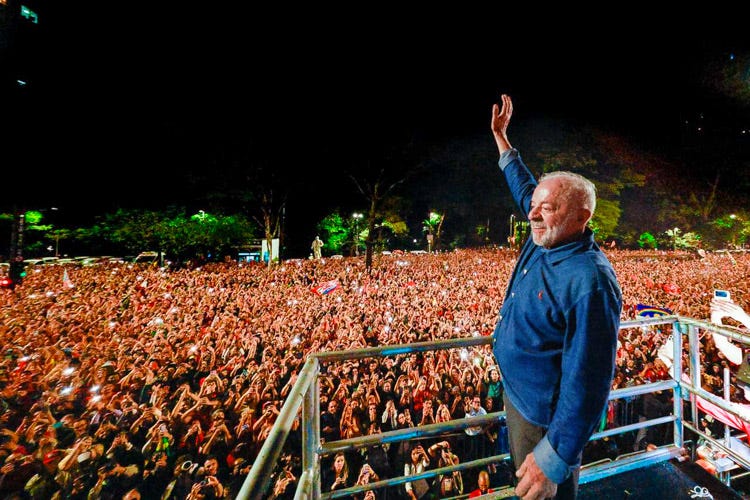
Lula on Paulista Avenue shortly after winning his 4th presidential election (Photo:Ricardo Stuckert)
De-Linking Brazil is a reader-supported publication. To receive new posts and support my work, consider becoming a free or paid subscriber.
It was an election that saw flagrant interference from the U.S. government in the form of tariffs and sanctions, with President Donald Trump personally meeting with a candidate in the White House. It saw massive intervention from Meta, whose owner was one of Trump’s largest campaign donors, and a secret deal for rare earth minerals struck between Vice President J.D. Vance’s Rockbridge Network and the Bolsonaro campaign. It was the first election in Brazilian history in which a candidate, Flávio Bolsonaro, offered to turn supervision of his transition team over to the U.S. government if elected.
The U.S. intervention was so obvious that a group of 31 U.S. lawmakers sent a letter to the State Department officially complaining about it, an act further supported by a public declaration denouncing U.S. intervention signed by 39 British members of Parliament.
Meta manipulation was so flagrant that on two different occasions it was denounced by its own employees. Its failure to obey Brazil’s electoral laws and bar foreign campaign advertising was exposed by Amnesty International, Eko and the Brazilian Supreme Court. Nadia Beller, former girlfriend of international far right bagman Fernando Cerimedo, who is rotting in a Bolivian prison after attempting to murder her, told Mexico’s Channel 14 that Eduardo Bolsonaro had visited Meta headquarters in California with Cerimedo to strike a deal to favor Flávio in the elections. And Meta corporation is now the subject of a Federal Police investigation for election interference in Brazil.
None of this was enough to guarantee a Bolsonaro victory and the dystopian hellscape that would have followed.
Massive grassroots organizing leads to biggest rallies in Brazilian history
Across Brazil, in thousands of towns and cities, millions of people took to the streets to rally for Lula. I witnessed a Lula rally in the small town of Paudalho, Pernambuco (population 55,000), in which over half of the entire population took to the streets to show their support for Lula. I saw 200,000 show up for a Lula rally in Recife, center of a metro area of 3.4 million, and was present at the largest rally in São Paulo’s history, which saw a crowd of 2 million people show up on Paulista Avenue the afternoon before election day.
Drone shot of the crowd that came out to Paulista Avenue in S. Paulo to celebrate Lula’s victory
The one thing these crowds had in common was that, in addition to the legions of first generation PT supporters in their 60s and 70s who fought against the military dictatorship and have never given up on the party, the streets were full of working class youth, including huge numbers of Afro-Brazilians who now make up 52% of Brazil’s public university student body.
João do Boi, a man in his 70s who leads a local Carnival group in Paudalho, told me, “I worked as a street vendor to pay my way through high school. Today these young people, some of whom are still voting for the other side, don’t know anything about our suffering and struggle for these rights that they take for granted. They think they’ve always existed. People gave their sweat and blood and their lives - a lot of people died fighting for these rights.”
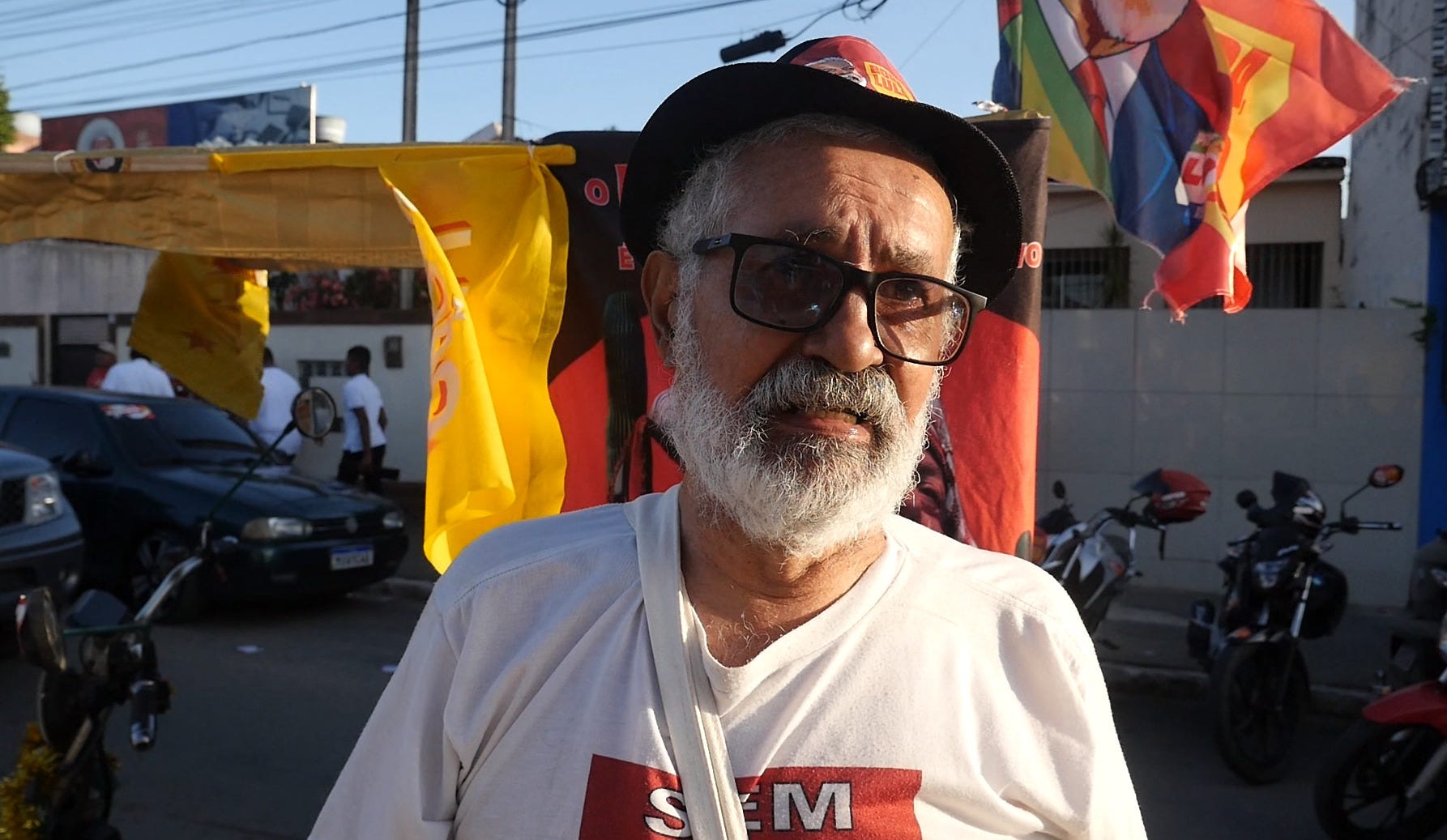
João do Boi (Photo: Brian Mier)
In Recife, Mayllane da Silva, a national director of UNE, the National University Students’ Union, said, “We are out on the streets today because we believe President Lula’s reelection is essential to defending education in our country. We can’t leave education in Flávio Bolsonaro’s hands, given that he wants to take our universities out from the jurisdiction of Education Ministry. He wants to tear down education in our country. That’s why UNE isn’t just out on the streets here in Pernambuco, but all across Brazil, to say: We need Lula reelected president so we can defend our right to education.”
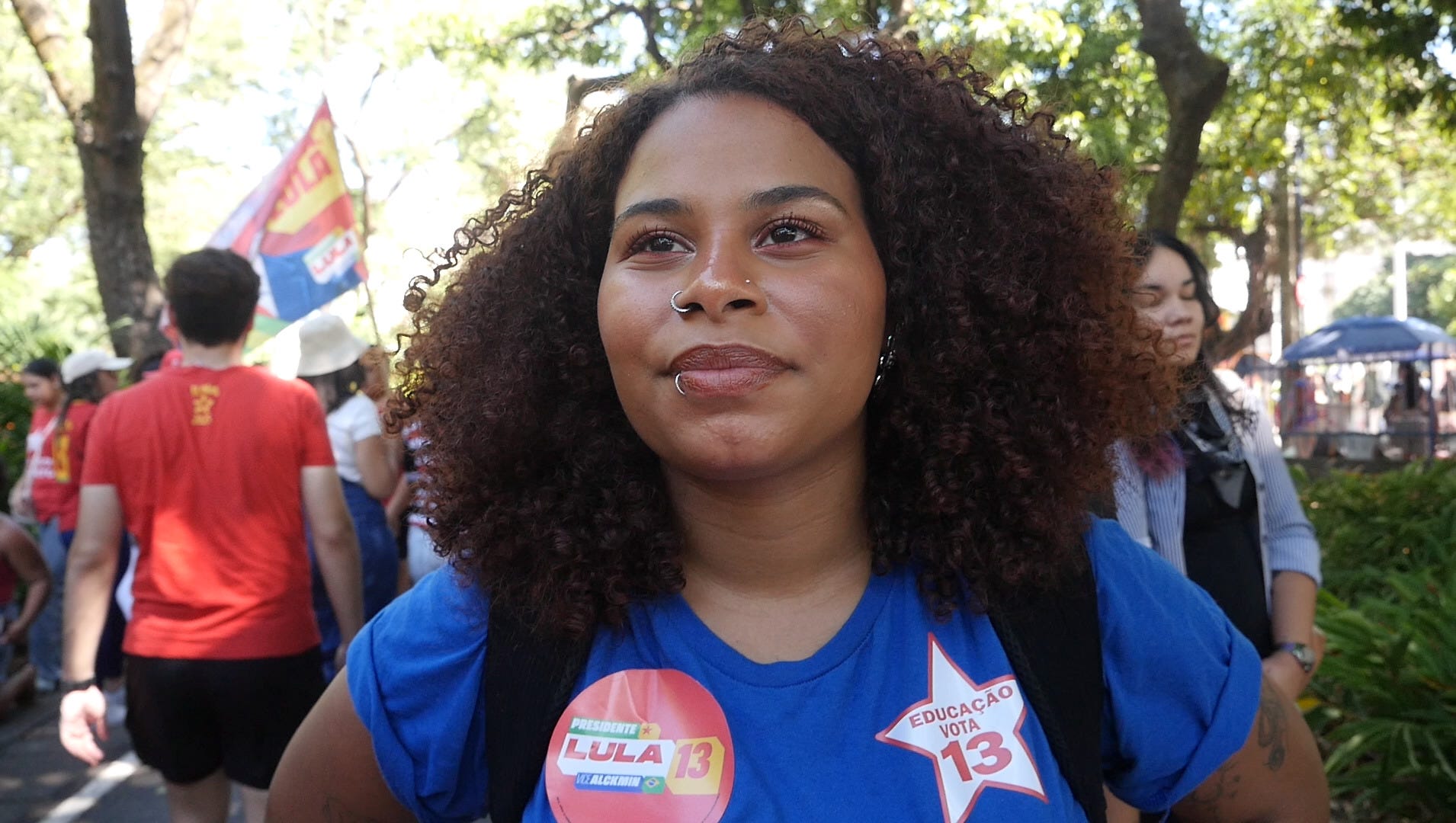
Mayllane da Silva (photo: Brian Mier)
In a rally organized by São Paulo’s city workers and state theater workers unions, actress Flora Sandya said, “I think it’s important that we young people who work in the cultural industry take a side, because we are in a very delicate political moment in Brazil. We have to defend our rare earth minerals, and we have to keep Brazil out of the hands of the United States.”
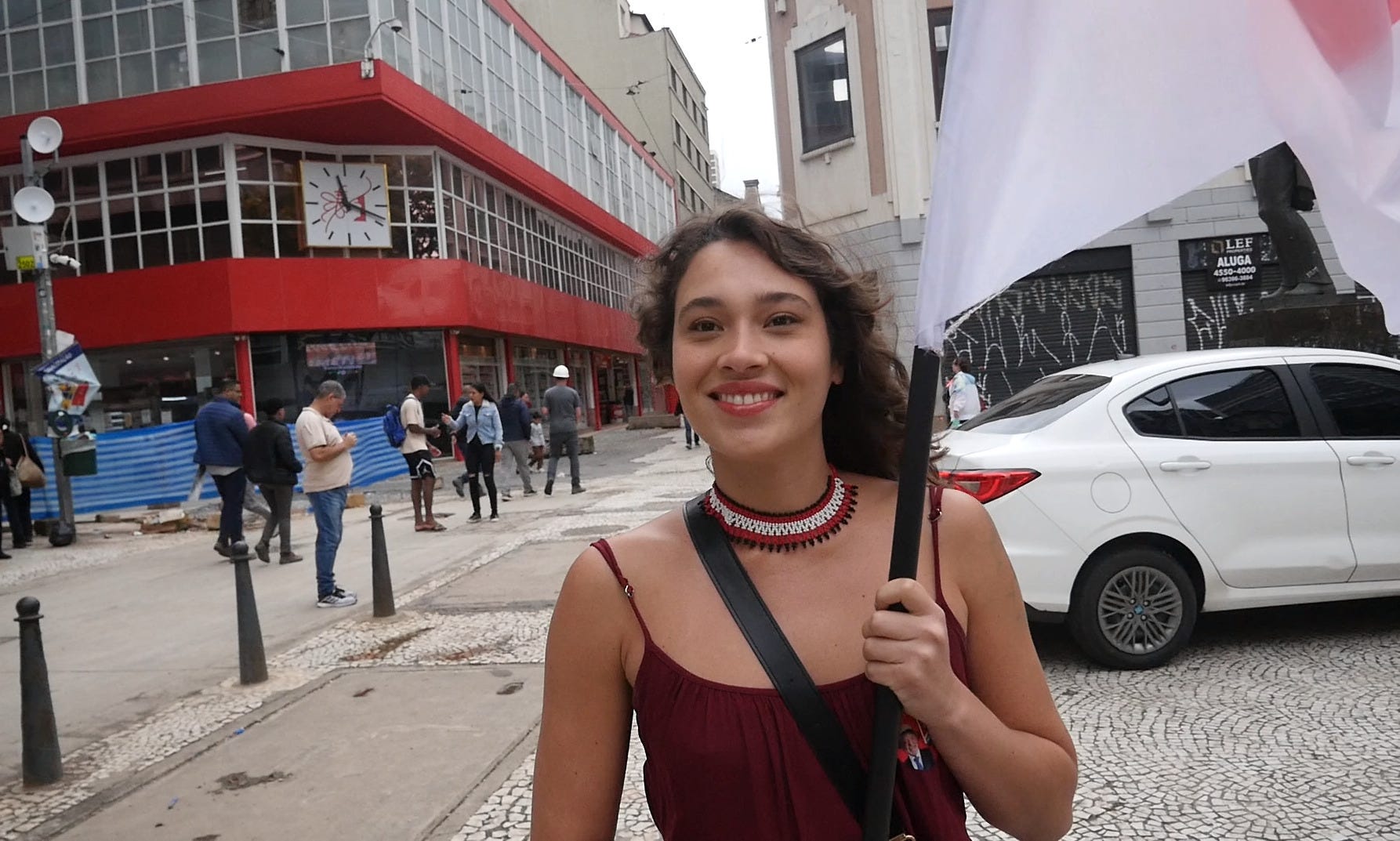
Flora Sandya (Photo: Brian Mier)
In the historic rally on Paulista Avenue, which brought more people to the streets than the entire population of Philadelphia, a young subway system worker named Ricardo Senese told me, “Considering the entire history of the Bolsonaros, they can be viewed as a family that fights against democratic rights. They attempted to stage a coup on Jan. 8, 2023. They nominated top ranking military commanders to head their ministries. We support Lula because we want to strengthen democracy in our country. We are defending democratic freedom.”
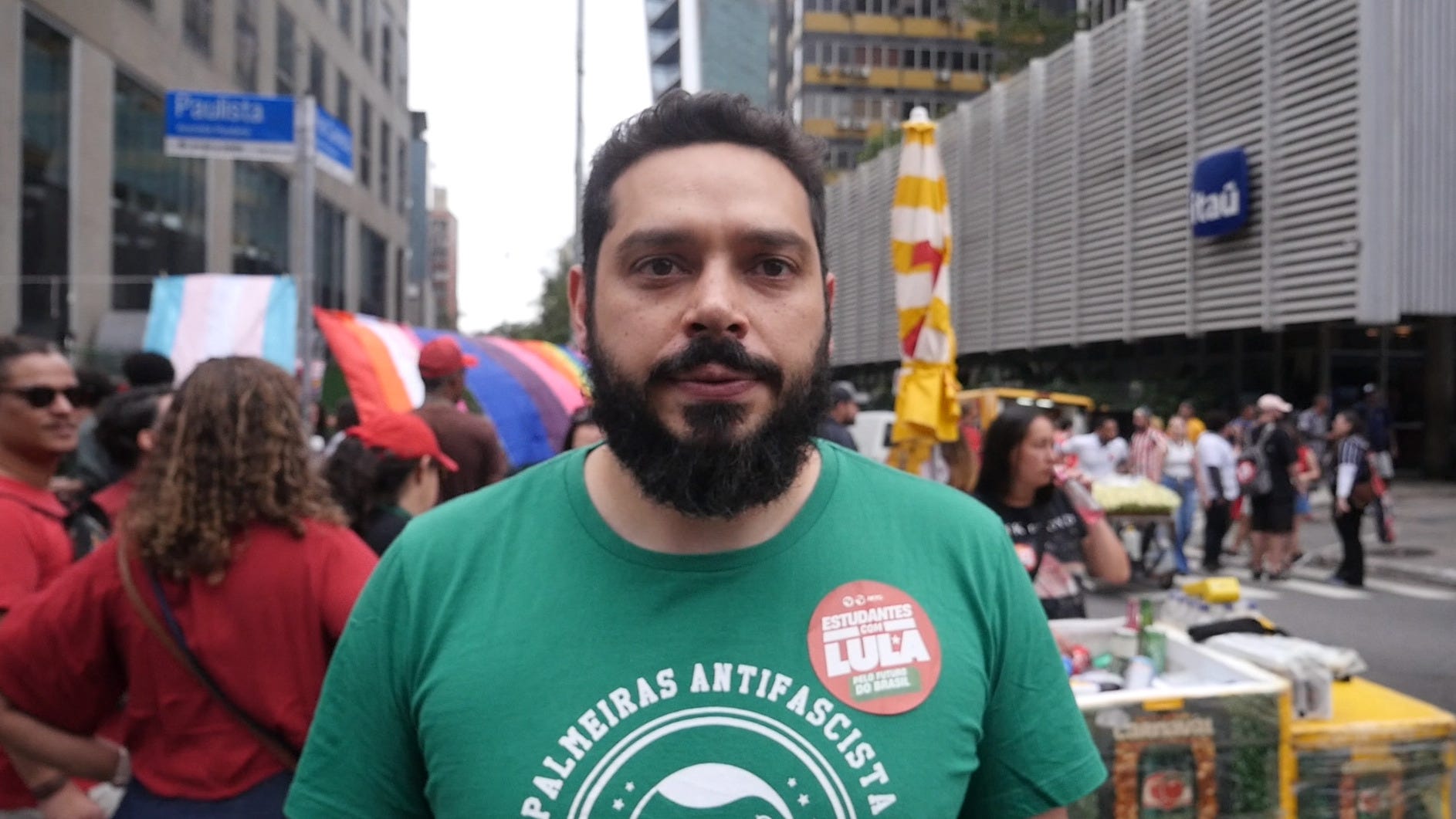
Ricardo Senese (Photo: Brian Mier)
Many people were worried about dirty electoral tricks, and it didn’t take long for news of them to come to the surface. In São Paulo, Bolsonaro aligned Mayor Ricardo Nunes ignored a court order requiring the buses to run at full capacity and had 40% of his fleet parked in city garages, primarily for lines going through the poor neighborhoods on the city periphery where Lula had gotten the most votes in the first round. Similar complaints began to come in from cities like Salvador, Brazil’s sixth largest metro area, and Petrolina, Pernambuco, population 440,000.
After both the Bolsonaro and Lula campaigns issued complaints requesting voting hours to be extended, Supreme Court Justice Cristiano Zanin issued an order for the polling stations to stay open for another two hours. At this exact moment, I was in a São Paulo polling station at FAM, the College of the Americas, and this is what I saw.
The entrance gates to the college were closed at 5 p.m., leaving a middle aged woman in tears because she had just spent one hour and 40 minutes on public transportation after leaving her job as a supermarket cashier on the other side of the city so that she could exercise her democratic right to vote. Fifty minutes later, a guard came out and reopened the gate. Unfortunately, by this time the woman was long gone.
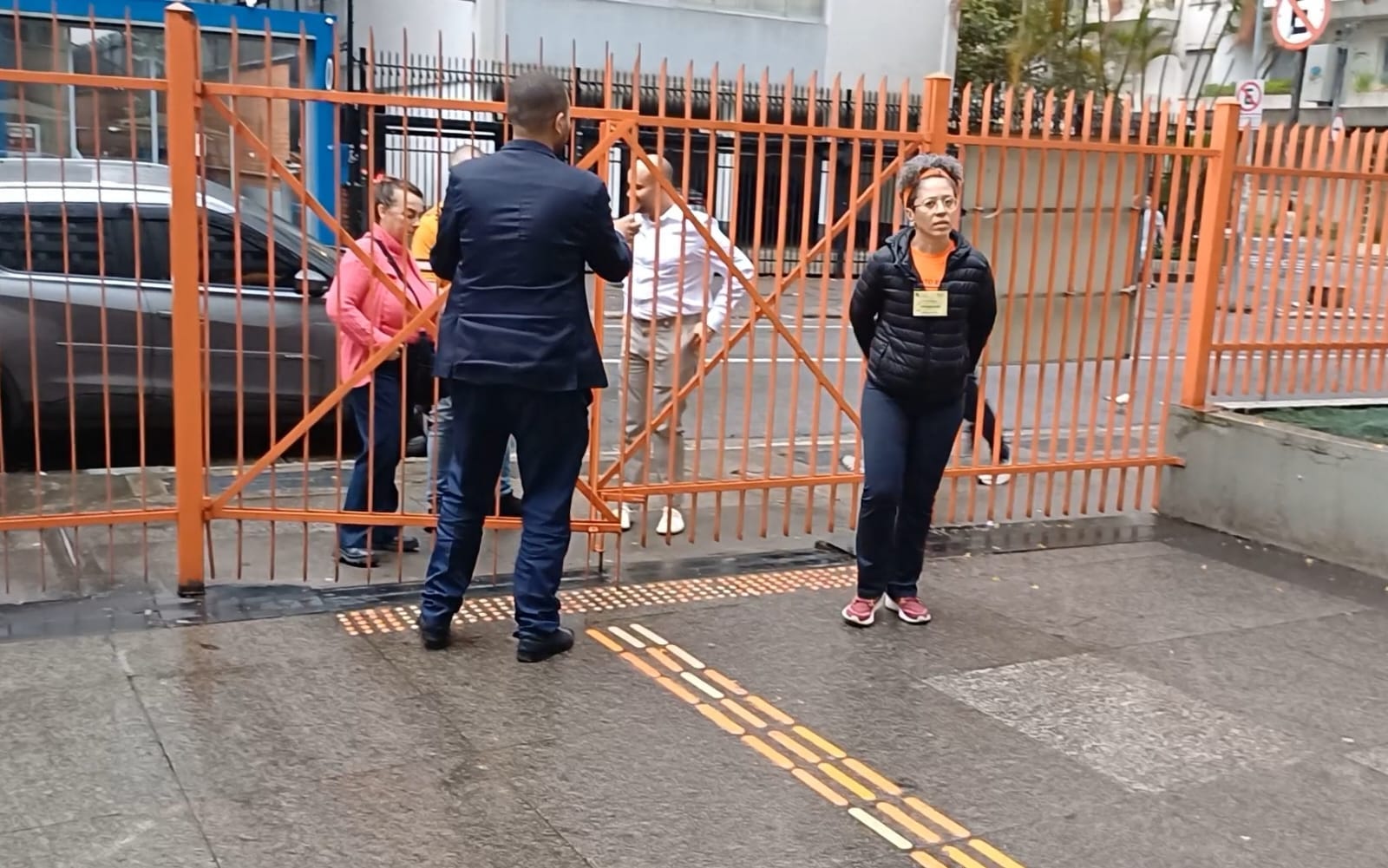
“This isn’t just happening in São Paulo,” the guard said. “It’s happening in several other states. There have been problems with public transportation. There were several locations where people did not have good access to mobility, so both candidates agreed to extend the voting deadline. And they are telling us it has been extended to 7 p.m.”
Heading back into the building, I saw election observers arguing with officials.
“The Workers Party and its coalition partners filed a court request to extend the voting deadline by two hours across the entire country due to problems with public transportation,” a university professor and election observer named Maria Carlotta told me. “The electoral court took a long time to respond, so the Federal Supreme Court intervened and issued the extension, but many voting centers in São Paulo are ignoring the order due to instructions from the [conservative] São Paulo regional electoral court.”
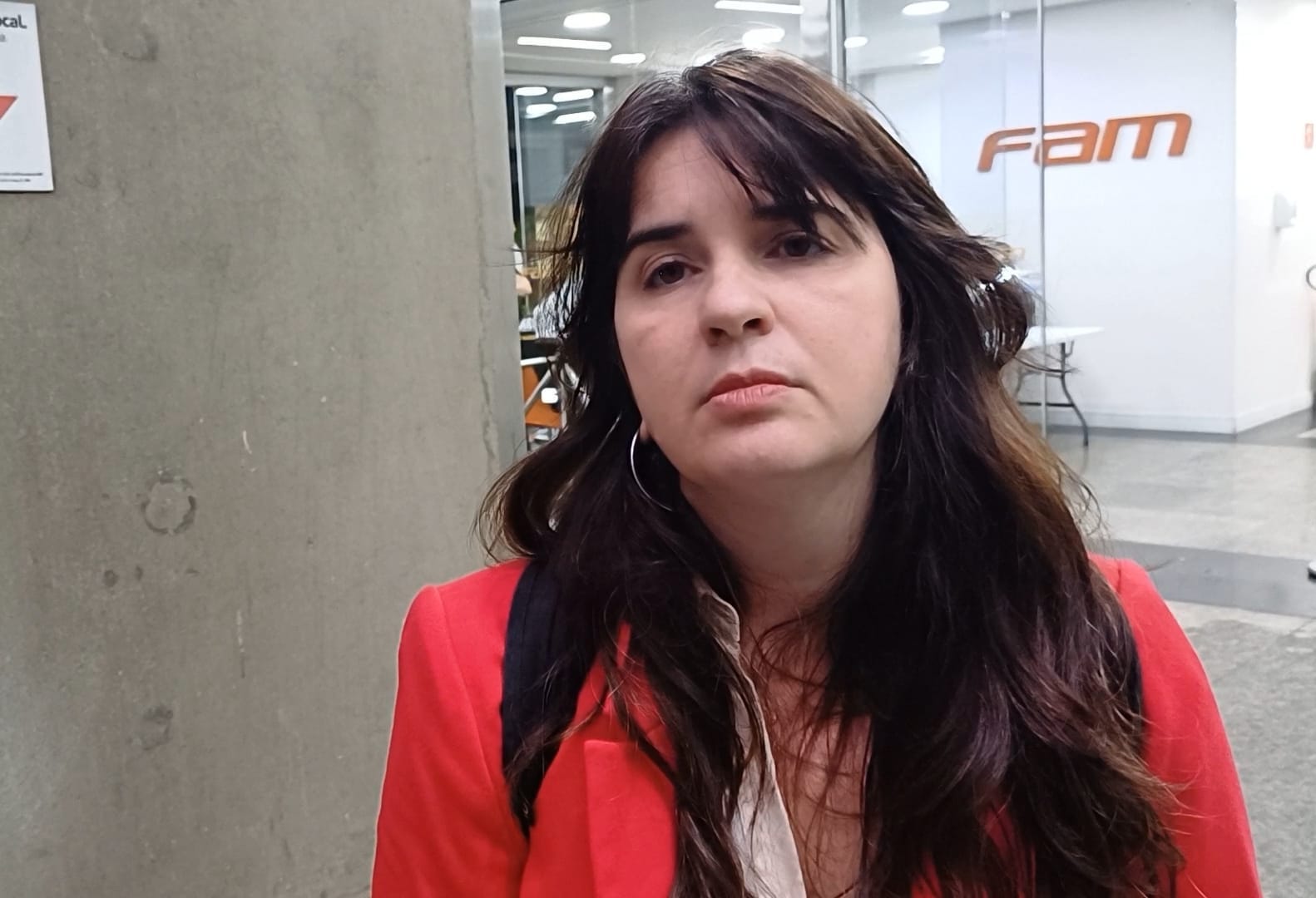
Maria Carlotta (photo: Brian Mier)
A few minutes later, the front gate was closed again. An election official told me that the problem was that the order from the Supreme Court came too late and that all the electronic voting machines had been turned off. Once that happens, he said, they cannot be turned on again.
Another election observer came up to me and contradicted the official. “My name is Marilda Taffarel, and I am an observer from the Workers Party for section 197 on the fifth floor of this voting center. The ballot machines were not all turned off there. Several ballot boxes were still open. On the other floors they were closed very quickly. It was only after a lot of insisting that the gate for voters to enter was reopened at 5:50 p.m. And the issue of one voter who arrived at 5:10 p.m. is still being resolved. They still haven’t let him vote, and he’s here complaining, and they are trying to send him to the notary public’s office.”
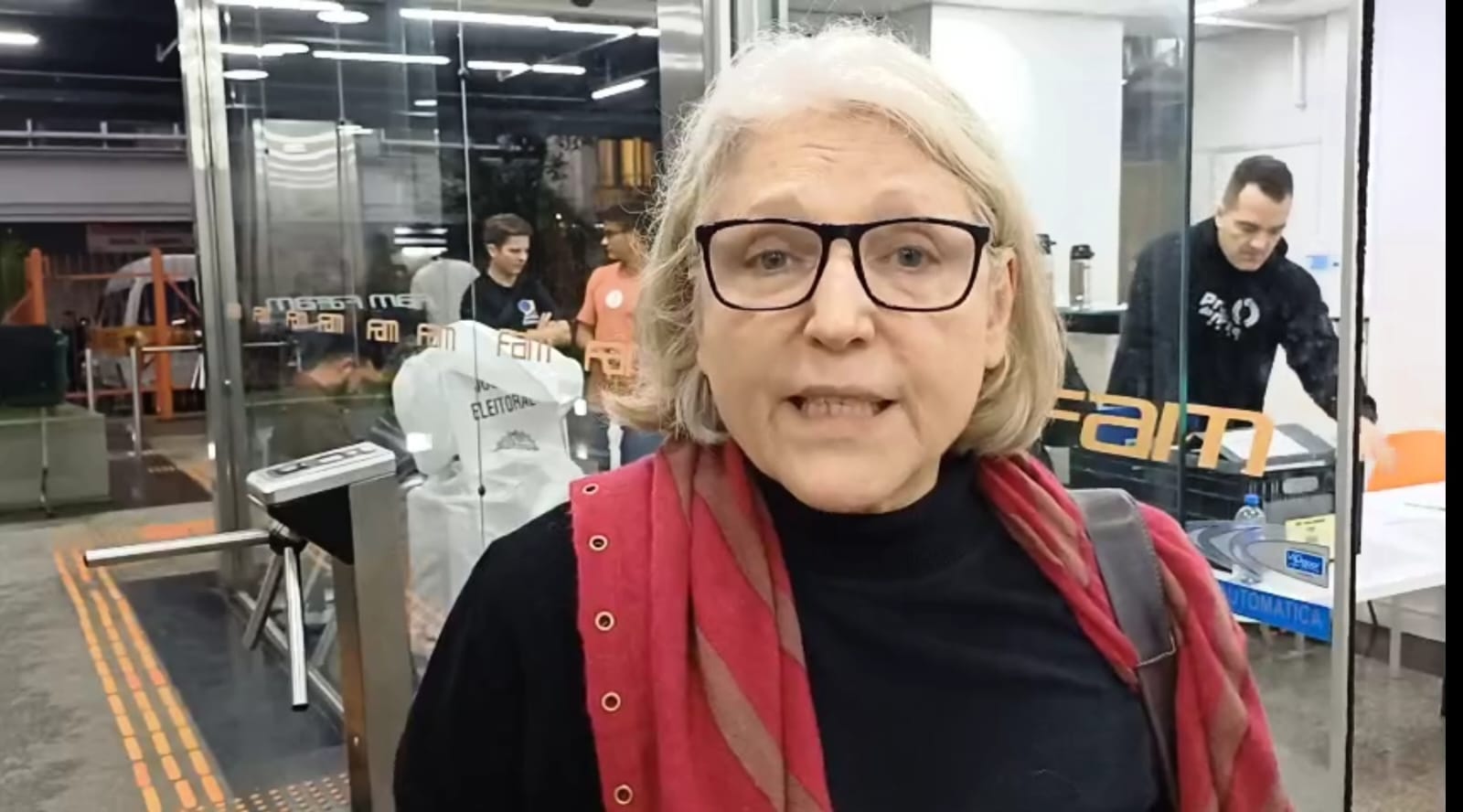
Marilda Taffarel (photo: Brian Mier)
As I was getting ready to leave, the front gate was reopened, and I saw three voters enter the building being told that they would only be able to vote if they were registered for the voting section on the fifth floor.
In the end, it didn’t make any difference. Lula won by 4.4 million votes, and the total number of votes tallied nationwide between 5 p.m. and 7 p.m. was only 35,000.
I waited for the results with a friend in a restaurant during the tallying. When the count hit 80% with Lula still in the lead, the streets broke out with cheers, singing and shouting for Lula. We got onto subway train at República station that was already jam packed with people in red singing and shouting. Our short trip up to Paulista Avenue was like a carnival ride, and when we came up to street level, we were greeted by a crowd of red that stretched as far as the eye could see.
How did Lula stage his comeback?
If it weren’t for Meta and other social media company manipulation, plus the U.S. government using tariffs and sanctions to try to scare and extort voters into supporting their candidate as they did in countries like Honduras, Peru and Colombia, I believe that Lula would have won by at least 10 million votes.
The fact that he managed to double his lead over Jair Bolsonaro from the 2022 election is a testimony to the support he has from Brazil’s working class, which voted for him by a nearly 2 to 1 ratio over Bolsonaro.
Formed by a coalition of working class labor unions and social movements with middle class intellectuals like Paulo Freire, the PT has always relied on grassroots organizing. This has been put to the test in the age of heavily manipulated algorithmic reach pushed by the social media corporations.
It’s also led to bad analysis about the left not knowing how to use social media, as if these Zionist corporations were a democratic commons where everyone had equal freedom to express their ideas, not a field where wealthy elites can pay for reach and build bot armies to advance dystopian fantasies about things like “scientific racism,” “the joys of being a trad wife” and “the climate change hoax.”
After losing the first round, party activists doubled down on the PT’s traditional mobilization techniques of knocking on doors, talking to people on the street and in the workplace, and organizing street rallies. The instructions were to focus on the 33 million people who abstained during the first round election. The party’s logic was that it would be easier to convince people to come out to vote than it would be to convince Bolsonaro supporters to change their votes. The analysis turned out to be correct. Fourteen million people who abstained or cast blank ballots in the first round election voted in the runoff. Of those 14 million, 10.3 million voted for Lula and 3.7 million voted for Flávio Bolsonaro.
Although social media is not an even playing field, successful strategies were employed that made a difference in the election. First of all, from the moment Amnesty International and Eko first published their reports, pressure began to build against Meta. After more reporting by Brazilian journalists exposed Meta’s fraud, protests in front of corporate headquarters kicked off in three countries, and Meta announced that its global policy director and main point man with the Trump administration, Joel Kaplan, was leaving the company.
This pressure on Meta seems to have made a difference in reach for both candidates on the final election day, after the debacle of the first round, where, 12 hours before the voting started, Flávio suddenly had multiple times more engagement than Lula.
Another clear factor that contributed to Lula’s victory was concocted by Minas Gerais congressman André Janones, from the center left REDE party. He successfully built a WhatsApp group called “Lula’s Troops,” which amassed over 10 million followers in less than two weeks. Janones has a lot of charisma, and his hourly pep talks with instructions for online behavior for Lula supporters certainly built momentum for the election.
Right wing journalist and politician Joice Hasselmann, who has a huge social media following, was the bolsonarista liberal party’s first leader in Congress during the Jair Bolsonaro administration. She generated a lot of waves when she announced that even though she dislikes the Workers Party’s policies and will continue arguing with them, she was voting for Lula because of the importance of democracy and sovereignty.
Another factor in Lula’s victory was the Catholic vote. Despite misunderstandings about this in the Global North, there are twice as many Catholics as evangelicals in Brazil. Jair Bolsonaro’s presidency was ushered in in part through a Reaganesque coalition of right wing Catholics, like Jair himself, and conservative evangelical Christians. But when it came out that the pastor who converted Flávio from Catholicism to prosperity gospel evangelism wrote an entire book chapter comparing Brazil’s patron saint, Our Lady of Aparecida, to Satan, and that a large number of Bolsonaro supporters were working to try to have her removed as the patron saint of Brazil, there was a backlash among a significant number of conservative Catholics that certainly made a difference on election day.
What happens now?
Historically, when a U.S.-backed candidate loses an election in Latin America, the next step is to begin working on a coup. This happened most recently in Brazil after the DNC’s beloved and corrupt candidate Aécio Neves lost to Dilma Rousseff.
Flávio Bolsonaro has already fled to Miami. His parliamentary immunity ends in February with the formation of the new Senate, and he is currently under investigation for a series of crimes. There are mountains of material evidence including audio recordings showing tax evasion and money laundering of a $12 million gift from jailed banking fraudster Daniel Vorcaro - a crime that has been admitted by Flávio himself. In other words it was a reasonable assumption that sooner or later, he would be arrested in Brazil. This probably explains why, with Javier Milei and Trump’s help, he snuck out of the country after the Federal Police requested his passport, correctly assessing him as a flight risk.
After Bolsonaro released a statement yesterday declaring himself the “legitimate president of Brazil,” however, his family’s closest allies have begun to distance themselves from him. São Paulo Gov. Tarcísio Freitas said that he knows it must be tough but that Flávio has to accept the election results and move forward. Bolsonaro’s Liberal Party (PL) leadership has issued a statement officially recognizing the election results. Pastor Silas Malafaia, one of the most powerful right wing evangelical leaders in Brazil, has not only recognized the election results but also labeled the Bolsonaro children as a group of “jackasses.”
Actors on the international far right continue to push an “authoritarian Brazil” narrative. This might work in the parallel universe of QAnon, flat earthers and the great replacement theory, but does not hold up to any rational analysis. If Brazil is so authoritarian, how did Bolsonaro’s Liberal Party just elect the highest number of congressmen and senators? How did Jair Bolsonaro’s wife, Michelle, just get elected to the Senate? How did the fraudulent U.S.-trained judge who oversaw kangaroo court proceedings that led to Lula’s arbitrary imprisonment just get elected governor of Paraná? How did Flávio’s own brother Carlos just get elected to the Senate?
There is no doubt in my mind that the Silicon Valley tech giants want to destroy Brazil’s democracy. There is also no doubt in my mind that Secretary of State Marco Rubio and Trump want to transform Brazil into a neocolonial protectorate, as they are trying to do with Venezuela.
The questions at this point are: 1) How high is this on their priority list? 2) How will a possible Democratic victory in the U.S. midterms change their power dynamic?
At this point in the conjuncture, it seems that any future regime change plans coming from the U.S. will be made without the Bolsonaros, who are now, like Maria Corina Machado, firmly placed in the “loser” column on Trump’s mental list of winners and losers.