


By Tadeu Porto
Lula is entering the final stretch of Brazil’s most contested election, showing the intelligence and energy that define the country’s leading political figure, an asset that is beyond dispute in our history and in the history of the working class.
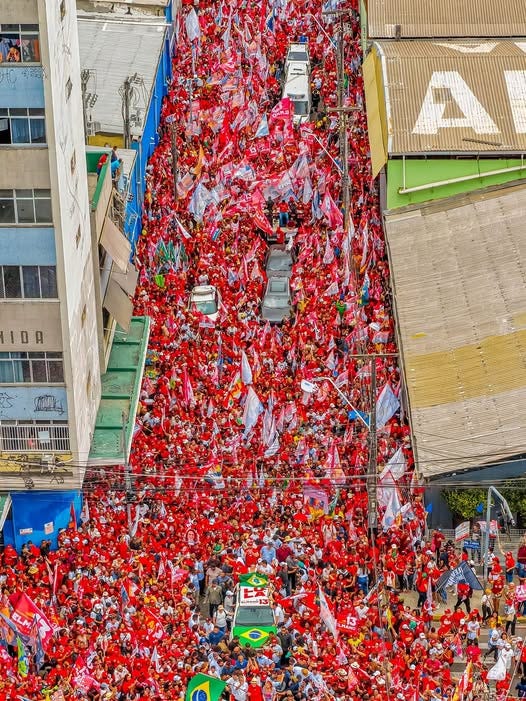
Lula rally in Fortaleza on September 29, 2026 (photo:Ricardo Stuckert)
This moment in the campaign is not just about passion. It reflects the direct result of workers’ ability to steer public debate toward the population’s real needs.
By taking a firm stand and banning online betting, the government showed authority and political courage. It confronted gambling addiction, runaway debt among working families, and money laundering head-on. In doing so, it prioritized protecting family income and family stability, which is what the overwhelming majority of the country’s working class wants.
At the same time, the increase in Bolsa Família payments reaffirms the Lulista hallmark of this project, one that puts the poorest at the center of attention and of the budget, and ensures the state fulfills its essential role of social support.
The impact of these decisions shows up in the most recent polling. According to the BTG/Nexus survey, Lula will win 44% of the vote in the first round, compared with 39% for the second place candidate. In the runoff, the race is a statistical tie, 46% to 44%, leaving no room to be triumphant in victory.
The key data point in the poll is the group of voters who say they might still change their vote. Among them, Lula has taken a clear lead as the second choice, showing that society is moving toward a message of stability. Meanwhile, the backlash against the exploitation of faith has put respect for religion and the defense of democracy back at the center of the debate.
In the end, building the election result in this final stretch cannot depend on naive optimism. It will require steady, concrete work that speaks to the working class’s immediate needs.
This is a time for mobilization and face-to-face dialogue, carried out by workers in the streets, online and in collective spaces. When the national conversation turns back to real life, the popular project reaffirms its decisive strength.
Tadeu Porto is the director of the Unified Federation of Petroleum Workers (FUP).
This article first appeared in Revista Forum and can be read in its original Portuguese here.
The views expressed in this article are those of the author and do not necessarily reflect the position of Panamerican Dispatch.