


By Dafne Ashton Vital Brazil
José Genoino, former national president of the Workers’ Party, urged party activists to keep mobilizing in the streets through the final moments of Sunday’s presidential runoff. In an interview with the program Bom Dia 247 on Friday, he said growing momentum for President Luiz Inácio Lula da Silva’s candidacy should not create a false sense that the race is already decided. For Genoino, the priority now is intensifying direct outreach to voters, winning over the undecided, and pursuing votes from those who cast blank or null ballots, or who abstained entirely, in the first round.
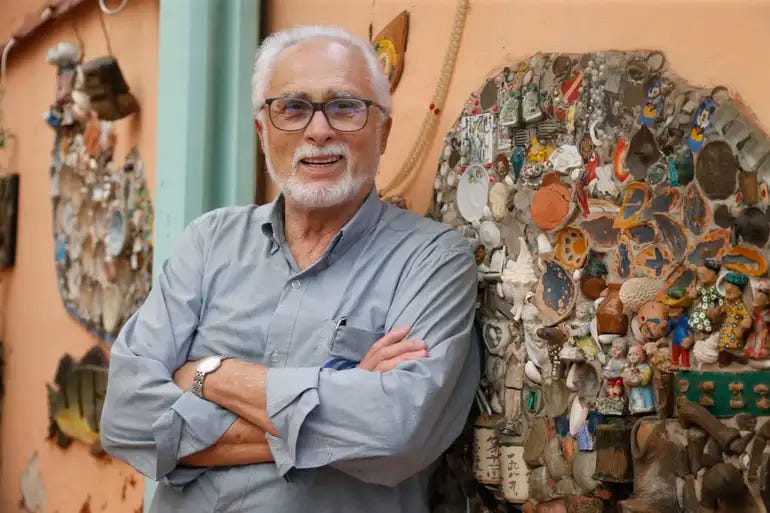
(Paulo Pinto/Agência Brasil)
“I’m keeping a cool head and a warm heart,” he said. “Why? To avoid the trap of thinking we’ve already won, to keep doing door to door work, to target undecided voters and those who abstained in the first round, to do the grassroots legwork. Because in an election, the worst thing you can do is start acting like victory is guaranteed.”
Genoino insisted that the mobilization needs to continue right up until voting closes. “We need to keep campaign intensity up until the moment people cast their ballot, until the moment they punch in 13, Lula’s number,” he said. According to him, the shift in the political climate over the past few weeks represents an opportunity to expand Lula’s vote total, but it doesn’t eliminate the need to fight for every single vote.
The former Marxist revolutionary combatant and founding Workers’ Party member said he has been tracking the campaign’s progress both through social media coverage and through direct contact with the public and said he has noticed a real shift in how voters are receiving Lula’s campaign.
“I walk the streets myself, and I noticed a change in attitude: people more willing to take a flyer, to talk, showing interest in the stickers. That’s been building,” he said. In Genoino’s assessment, that shift gained real momentum after the first round, when the results of the legislative elections and Flávio Bolsonaro’s performance triggered a reaction among parts of society worried about the country’s political direction.
Genoino said the demonstrations in support of Lula played a decisive role in that shift. He pointed to the rally on Paulista Avenue in São Paulo and the growing number of demonstrations in cities of all sizes, including Encantado, the small town in Ceará where he was born.
“I think the whole country woke up, because people recognized the risk,” he said. In his view, voters showing up in the streets created a dynamic capable of influencing people who hadn’t yet made up their minds or who weren’t previously engaged with the campaign.
Genoino also said that voters who had backed candidates that were eliminated in the first round did not automatically shift their support to Flávio Bolsonaro. By his reading, segments that had supported figures like Ronaldo Caiado and other candidates began considering a vote for Lula instead, helping shift the balance of power in the presidential race.
“If we have managed a successful campaign to win over voters, this matters a lot. But what is really decisive in that shift is the broader mood that has taken hold across the country,” he said.
While acknowledging the campaign’s progress, Genoino warned that the fight for votes is far from over. “We have to fight for every single vote. I’ll say it again: we cannot fall into the trap of thinking we’ve already won. This is grounded optimism, campaigning around the clock, seizing every single opportunity, because an election is only decided when the votes are actually counted.”
Another point Genoino highlighted was support coming from figures and sectors that have historically opposed the Workers’ Party. He cited public statements of support for Lula from people associated with the Brazilian Social Democracy Party (PSDB), including Walter Feldman and José Aníbal, as well as members of the Mário Covas and Fernando Henrique Cardoso families.
He argued these expressions of support should be welcomed without demanding explanations for past political disagreements. The priority, he said, is building an electoral majority capable of defeating Flávio Bolsonaro’s candidacy.
“It’s important that we accept these votes without arrogance, without keeping score. We want votes. We want votes cast at the ballot box,” he said.
Genoino argued that the campaign should welcome even voters who previously supported the Bolsonaro movement and are now willing to change their position. In his view, the moment calls for the ability to engage with people from different political backgrounds, leaving debates over the contradictions and lessons of this process for after the election.
“If a voter who abstained or cast a blank ballot comes over to our side, or if a voter who backed fascism in the first round comes over to our side, we need to embrace them and celebrate that. The conversation about the lessons of this process can happen later,” he said.
Genoino said the strategy adopted since the day after the first round, built around demonstrations, direct dialogue and constant mobilization, has helped create the conditions for Lula’s recovery in the race.
“We needed to enter a state of emergency. This is a battle that has to be fought inch by inch. I think we’ve followed that playbook, but it isn’t finished yet. I want to stress that: it is not finished, and we need to keep campaigning around the clock,” he reiterated.
With just days left before the vote, Genoino said he is personally keeping up a routine of activities in neighborhoods and communities across São Paulo. He said he had taken part in outreach efforts in the subway system, in Jaguaré, and in the informal Jaqueline settlement near the Raposo Tavares highway, and said he planned to head to a street market in Rio Pequeno, the neighborhood where he lives, right after the interview.
Being out on the streets, he said, lets him track voters’ mood directly and reinforces his belief that the campaign cannot rely solely on polling or on expressions of support on social media.
“I’m about to go to the street market here in Rio Pequeno, where I live. Yesterday I was in the subway. The day before, I was in a communidade in Jaguaré. Earlier this week, I was in the Jaqueline community, over by Raposo Tavares. Being out on the street is good for me,” he said.
For Genoino, the possibility of a Lula victory should serve as motivation to keep participating, not as a reason to ease up on the campaign. He believes the public reaction seen since the first round has created conditions for an electoral turnaround, but he stressed that the shift will only be confirmed once the votes are actually cast.
Closing out his appearance on Bom Dia 247, the former Workers’ Party president returned to the message that had run through the entire interview: the need to keep working to persuade voters until the very last moment.
“We can’t act like we already won. We have to stay grounded, and fight for every single vote,” he concluded.
This article originally appeared in Brasil 247, has been translated by Panamerican Dispatch with the express authorization of the editor-in-chief, and can be read in its original Portuguese here.