


Brasil 247
President Luiz Inácio Lula da Silva has won reelection to an unprecedented fourth term. The victory capped one of the most dramatic electoral turnarounds in Brazil’s recent political history. In an extended interview with journalist Leonardo Attuch on TV 247, legal philosopher Alysson Mascaro said the reversal of a bad first round did not come from the traditional machinery of campaign offices. He said it came from workers and young people entering politics directly and on their own.
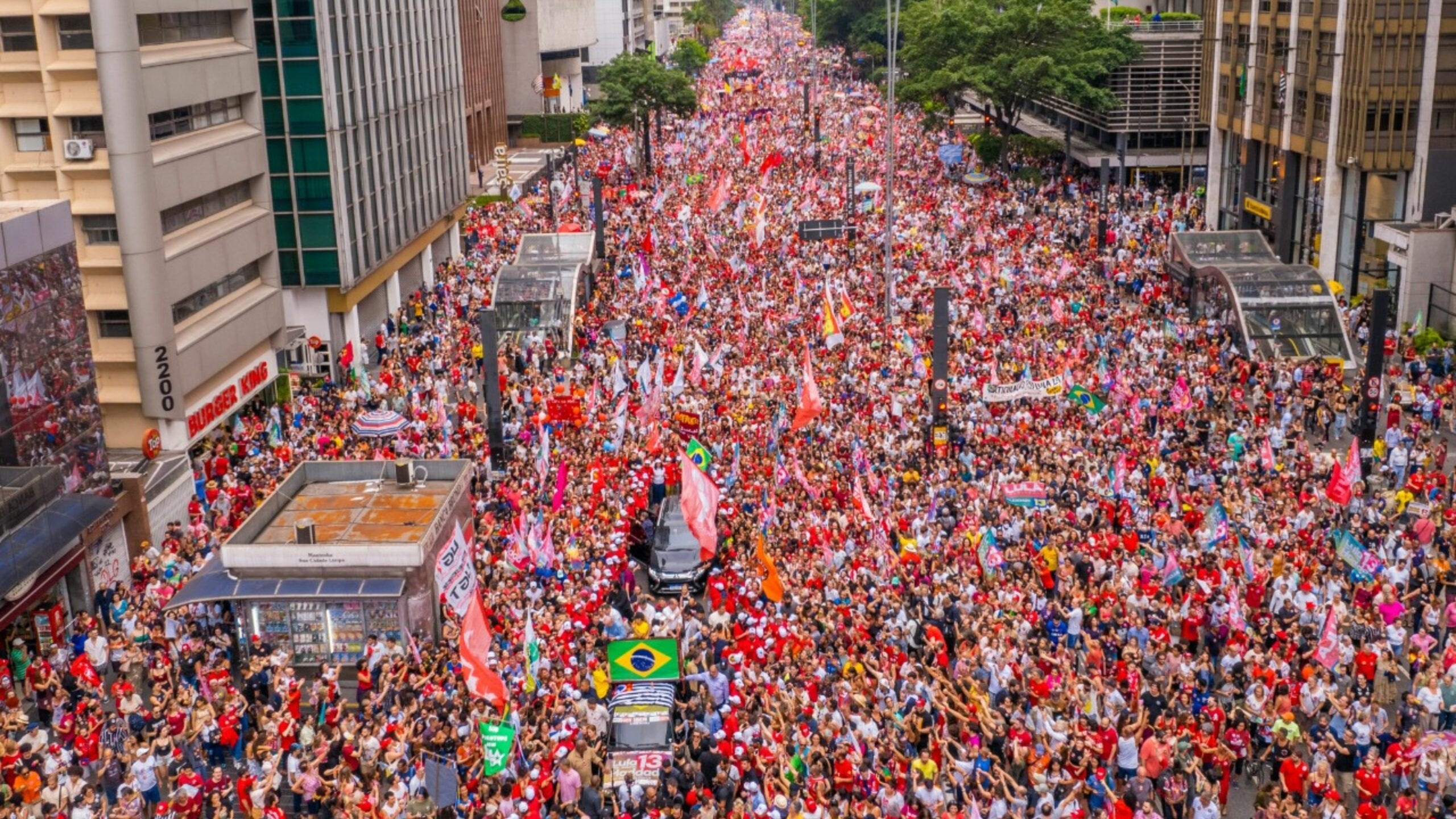
(Photo: Ricardo Stuckert)
Mascaro said the result at the polls exposed the limits of a purely institutional way of governing. When extremism on the right threatened to tear society apart, he said, grassroots networks took the lead.
The bureaucratic approach collapses in the first round
Mascaro said the campaign in the first round was trapped in a bureaucratic logic. It tried to please big business and social demands at the same time. He described a lukewarm stance built around balance sheets, strict fiscal responsibility and conciliation that failed to energize Lula’s base and failed to slow the resentment mobilized by the far right.
According to Mascaro, the first round was run as three bureaucracies at once: the government’s, the campaign’s and the party’s.
“It was backroom work, showing good numbers and trying to signal security in every direction,” he said. “But something that is safe in every direction usually does not truly please anyone. That model revealed enormous social fatigue with Bolsonarista violence and resentment.”
Mascaro, a professor at the University of São Paulo (USP), said the picture changed only when the risk of imminent defeat and of the dismantling of public institutions became real.
The spark in Niterói and the takeover of the streets
Mascaro said the decisive factor began outside government control and without its guidance. A civic jolt turned passive voters into active organizers. As a symbol of that shift, he pointed to an uprising by law students at Fluminense Federal University (UFF) in Niterói. Their spontaneous protest set off demonstrations in several capitals and inland cities.
Mascaro named three features of the movement:
Autonomous initiative: People did not wait for formal calls from party offices. They filled public squares, talked with neighbors and broke through apathy.
The role of regional strongholds: The Northeast’s historic engagement, plus strong vote totals in strategic regions such as northern Minas Gerais, built the margin of victory.
A change of program under pressure: Pushed by the grassroots, campaign leaders had to take up concrete demands of the working class. These included challenging the 6x1 work schedule (six days of work, one day off) and expanding social benefits. The campaign paired them with a guerrilla communication strategy on social media led by Rep. André Janones.
The limits of conciliation and the dilemma of a fourth term
Mascaro celebrated the popular victory but also issued a sharp warning about the new term. He said Lula’s biography casts him as the nation’s “great dealmaker,” a leader built for agreement and for settling conflicts, not for an open break with financial and rentier elites.
Mascaro said the classic strategy of Lula’s Workers’ Party (PT) leaves economic power, interest rates and ownership of strategic sectors untouched. He said it now runs into severe material barriers in contemporary capitalism.
“Lula’s historic logic is to give people consumption, not to confront the exploiters of Faria Lima (São Paulo’s financial district) or renationalize strategic companies that were sold off for next to nothing,” Mascaro said. “That worked in the years of international boom. Today, without deep industrialization and with financial markets sabotaging the economy, the promise of consumption is limited. The government will have to decide whether to keep governing from the top as before or to anchor its term in the strength of an organized people.”
Shielding national assets and geopolitical weight
Mascaro said the election win saved Brazil from a program to speed up the liquidation of its remaining public assets. He cited plans that were in the works to open the way for private and foreign control of public institutions that are over 100 years old, such as the Bank of Brazil (Banco do Brasil) and the Federal Savings Bank (Caixa Econômica Federal).
On the international stage, Mascaro said the far right’s defeat in Brazil protects the country’s autonomy against imperialist pressure. He said it also preserves the strength of the BRICS bloc and gives popular movements across Latin America and the Global South room to resist.
Mascaro closed by stressing that the biggest challenge now is to keep people from leaving the streets after the euphoria of victory. He said a sovereign project will require the people to stay organized permanently. He said great social transformations come not from concessions in government offices but from the continuing ability of the masses to fight.
The full interview between Mascaro and Attuch is available on the TV 247 channel: “Alysson Mascaro: ‘Lula turned the race around because the people stepped in.’”
This article originally ran in Brasil 247, was translated to English by with express authorization of its editor-in-chief, and can be read in its original Portuguese here.