


As I have written several times over the past years (for example in FAIR), Glenn Greenwald has been a key player in building a false narrative that has evolved into a key strategy of the Trump administration about Brazil having a supposedly authoritarian judiciary. This disinformation has centered around attacks against Supreme Court Justice Alexandre de Moraes, who oversaw the criminal conviction of former President Jair Bolsonaro. In 2025, U.S. President Donald Trump Moraes singled out Moraes as one of the justifications in imposing 50% import tariffs against Brazil. The U.S. sanctioned Moraes for carrying out “serious human rights abuse.” This Saturday, investigative journalist Paulo Motoryn published the following article on his blog, Noites Hungaras, exposing Greenwald’s anti-democratic behavior during the lead-up to yesterday’s elections. Motoryn is the journalist who previously released the audio files showing Flavio Bolsonaro's close relationship with jailed banker Daniel Vorcaro, who is at the heart of the money-laundering Banco Master scandal. - Brian Mier
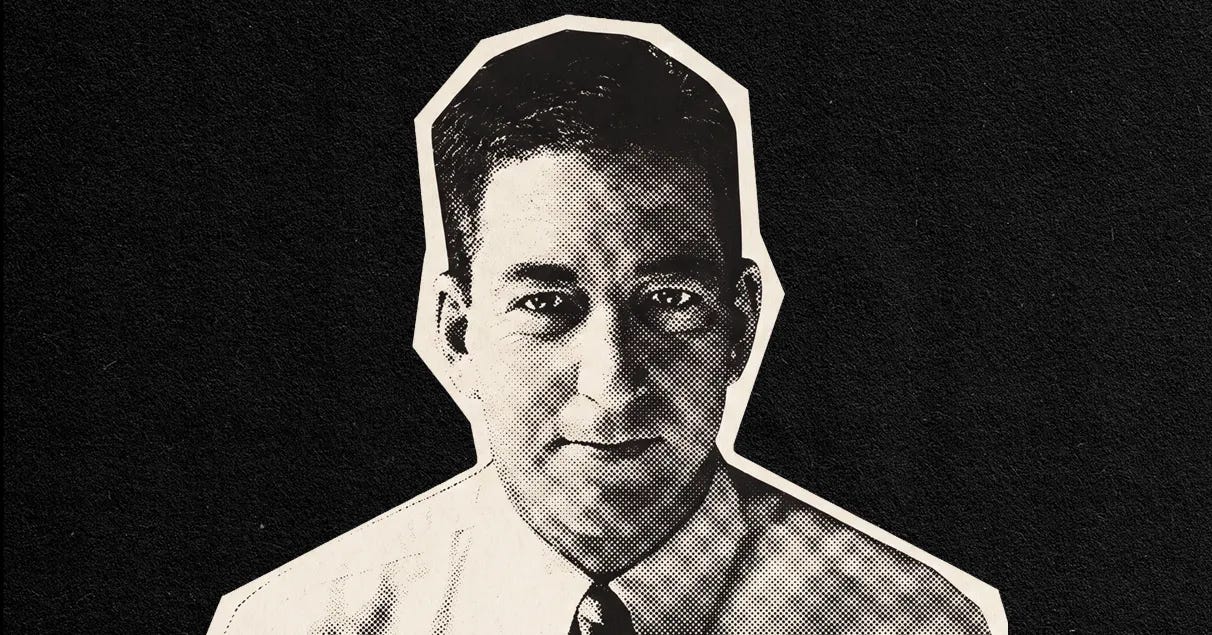
During Final Stretch, Greenwald Tells the Outside World that Elections were Manipulated for Lula
Journalist steps up campaign in election’s final hours, distorts Globo debate episode and amplifies conspiracy theory about U.S. embassy closure
by Paulo Motoryn
Less than 24 hours before the polls opened, Glenn Greenwald stepped up a social media campaign aimed at foreign audiences to frame Brazil’s election as a process at risk of manipulation by the judiciary in favor of President Lula.
Greenwald posted at least ten messages in English on his X account this Friday and Saturday. In them, he went beyond criticizing controversial rulings by Brazil’s judiciary.
He began claiming that a so-called “pro-Lula wing” of the Supreme Federal Court was interfering in the process to prevent a “free election.” He went as far as putting the odds at 50% that, if Flávio Bolsonaro defeated Lula or appeared headed for a win, his candidacy would be blocked or the election result annulled.
Greenwald has presented no evidence to support that prediction. There is also no indication so far that the election cannot proceed normally. On Saturday, the president of the Superior Electoral Court, Kassio Nunes Marques, who was appointed to the Supreme Court by Jair Bolsonaro, said there was no reason for alarm at this point.
There’s no way to measure how far these messages are actually reaching outside Brazil. There’s also no way to know how far this narrative will spread, or what influence it might have on foreign officials and opinion makers. But one thing stands out: Greenwald is writing these posts in English, for an international audience. Some of them had racked up hundreds of thousands of views within hours of being posted.
U.S. Embassy Closure Becomes a Conspiracy Theory
This campaign gained momentum after the United States temporarily suspended services at its embassy and consulates in Brazil, citing security concerns. Australia took similar measures. Greenwald repeatedly highlighted the episode and tied it to warnings from Lula’s campaign about possible interference by the Trump administration in Brazil’s election.
There’s a key piece of information about this episode that Greenwald left out. Brazil’s Federal Police carried out two search warrants, one in São Paulo and another near Brasília, to investigate an alleged plot against American diplomatic facilities.
According to the Federal Police itself, the investigation grew out of “ongoing cooperation with foreign intelligence agencies.” After carrying out the searches, however, police said they hadn’t found anything confirming the risks originally flagged, nor had they identified any suspects tied to criminal organizations. The investigation is still open.
Greenwald did report that this operation existed, pushing back against suspicions raised about the closure of the American offices. But his account emphasized that the Federal Police was investigating possible attacks. He gave far less weight to what the searches had actually turned up by that point: the initial suspicions hadn’t been confirmed.
Globo Debate Cancellation Becomes Fuel for the Narrative
The same pattern showed up in how Greenwald described the cancellation of Globo’s presidential debate. He told his foreign followers that Flávio Bolsonaro had “withdrawn because of censorship.” What actually happened was more complicated. Lula had already decided to skip the debate and give an interview to the Flow podcast instead.
After that, court rulings changed the rules that had previously been agreed on. The Superior Electoral Court barred Globo from showing Lula’s empty podium, and judges issued rulings affecting other candidates’ participation, as well. Flávio Bolsonaro then announced he would also skip the debate, citing “censorship” himself. Faced with this new situation, Globo canceled the debate.
So it’s accurate to say that Flávio claimed he withdrew because of censorship. Presenting that political framing, offered by the candidate himself, as an objective explanation for the cancellation, which is what Greenwald does, is something else entirely.
What the American journalist does is use this controversy as the foundation for a much bigger conclusion: that the judiciary is deliberately manipulating the election to secure a Lula victory.
In another post, he said Brazil was sliding into “illegality” and “tyranny,” describing judges as Lula allies working to secure his reelection. On Saturday, he went a step further. He claimed that major Brazilian outlets were now warning that a “pro-Lula” wing of the Supreme Court was censoring in Lula’s favor and interfering to block a free election.
In Greenwald’s narrative, editorials and critical reporting on judicial rulings end up functioning as a kind of domestic seal of approval. That seal then backs up a far more serious accusation aimed abroad, not just that specific rulings are abusive or mistaken, but that Brazil’s entire electoral process is being manipulated.
Greenwald: From Vaza Jato to Popularity With the Far Right
Few people understand the political power of an international narrative about Brazilian institutions better than Greenwald himself. The American journalist rose to global prominence in 2013, when he published revelations about the U.S. National Security Agency’s surveillance programs, based on documents leaked by Edward Snowden. In 2014, he co-founded The Intercept.
In Brazil, he became a major figure for having received the material that led to the Vaza Jato reporting after Lula’s arbitrary imprisonment during the 2018 election year. At Intercept Brasil, through the work of a skilled team of Brazilian journalists, leaked messages cast doubt on Judge Sergio Moro’s impartiality and his relationship with Car Wash prosecutors, reporting that changed the course of the country’s history. During that period, Greenwald faced threats, deportation demands and attempts to criminalize his journalism.
His break with The Intercept came in 2020. Greenwald left the outlet he had helped found, accusing its editors of censoring a piece he had written about Joe Biden. The Intercept disputed that account, saying the article had factual problems. Since then, Greenwald has become a regular presence in conservative media spaces in the United States and has built an audience of his own, including through his newsletter and social media.
This shift doesn’t mean Greenwald has simply aligned himself with the Republican Party. He rejects that label himself and still holds positions that don’t fit comfortably within the American right. But his public agenda has increasingly converged with core themes of Trumpism: attacks on Democrats, denunciations of what he calls a “censorship regime,” and an increasingly close relationship with the conservative media ecosystem.
That’s the context in which his posts in the final hours of Brazil’s election should be read. The journalist who once became an international symbol for exposing abuses of power is now using his massive English-language audience to present Brazil as a country where judges allied with Lula are willing to manipulate an election.
We don’t know how far this narrative will spread or what impact it will have. What we do know, exactly, is which story Glenn Greenwald chose to tell the world on the eve of Brazilians heading to the polls.
Paulo Motoryn is an investigative journalist. This article was originally published in Portuguese on his blog Noites Húngaras. You can read the original version of this article, in Portuguese, here.