


by La Linea
Earlier this month, an audio message was leaked, revealing a personal conversation between political strategist Fernando Cerimedo and Bolivian President Rodrigo Paz. It refocused attention on Cerimedo’s role in securing the victory for far-right candidate Keiko Fujimori in the second round of Peru's election on June 7, 2026.
It took nearly a month for Fujimori to be declared victor. She eventually won the presidency by less than 50,000 votes or 0.26% of the electorate.
In the message, Cerimedo assures Paz that Fujimori has won the vote, despite trailing in the polls. He says he is using an AI parallel vote-counting system, which can tabulate even votes arriving from abroad. He says it shows him that Fujimori has won.
“And when should I send her a [congratulatory] message?” Paz asks Cerimedo.
“I’ll let you know tomorrow, first thing in the morning,” Cerimedo tells him. “But you can send it to her privately.”
The following article was published by the Peruvian investigative news outlet La Linea in late August, following Cerimedo’s jailing in Bolivia, on charges of hiring hitmen to assassinate his ex-partner, Nadia Beller. Beller would denounce Cerimedo’s role in helping to flip elections for U.S. President Donald Trump across Latin America and his connections with Meta and the Bolsonaro family ahead of this year’s vote in Brazil. - PD
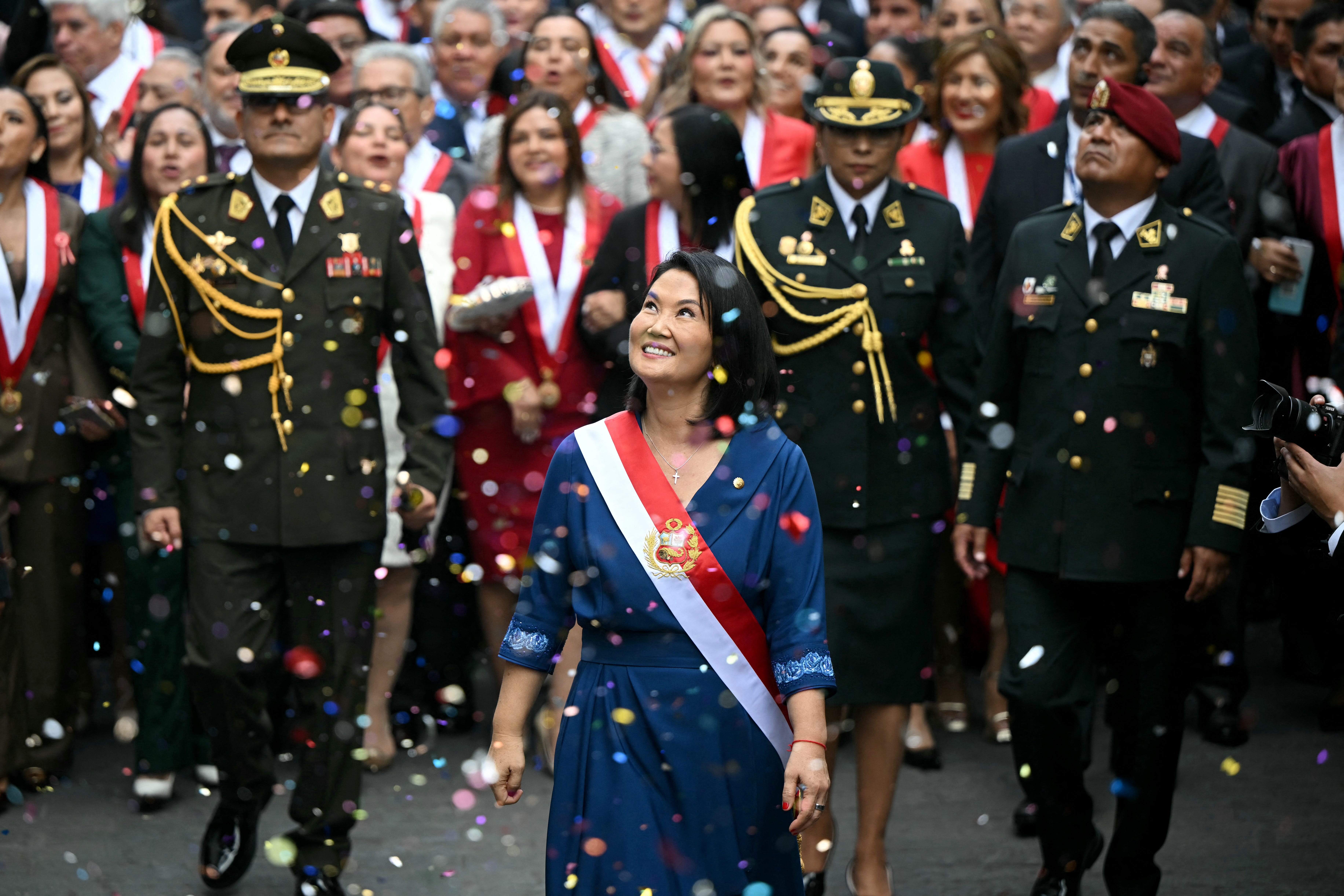
Trump ally, Peruvian President Keiko Fujimori walks toward the Government Palace after leaving Congress following her inauguration ceremony in Lima on July 28, 2026. (Photo by ERNESTO BENAVIDES / AFP via Getty Images)
###
The shock wave of the Fernando Cerimedo scandal has shaken all of Latin America. Following the revelations of Nadia Beller, few countries have escaped the intervention of the Argentine political advisor, who, by using networks of bots and algorithmic manipulation tools, managed to reverse electoral trends and consolidate power among far-right leaders aligned with Washington’s interests.
In February 2026, Fernando Cerimedo received the award of Hispanic Political Consultant of the Year during a gala in Mar-a-Lago. At the event, he publicly thanked Brad Parscale, director of Donald Trump’s campaign.
“Thank you to Brad Parscale for believing in me all the time and giving me your technology,” he said.
This declaration reaffirms his role as a strategic operator of the White House in the region. In a new imperialist stage, the United States seeks to impose its national security strategy through two main forces: continental militarization through the Shield of the Americas alliance and the control of critical minerals through the Project Vault initiative.
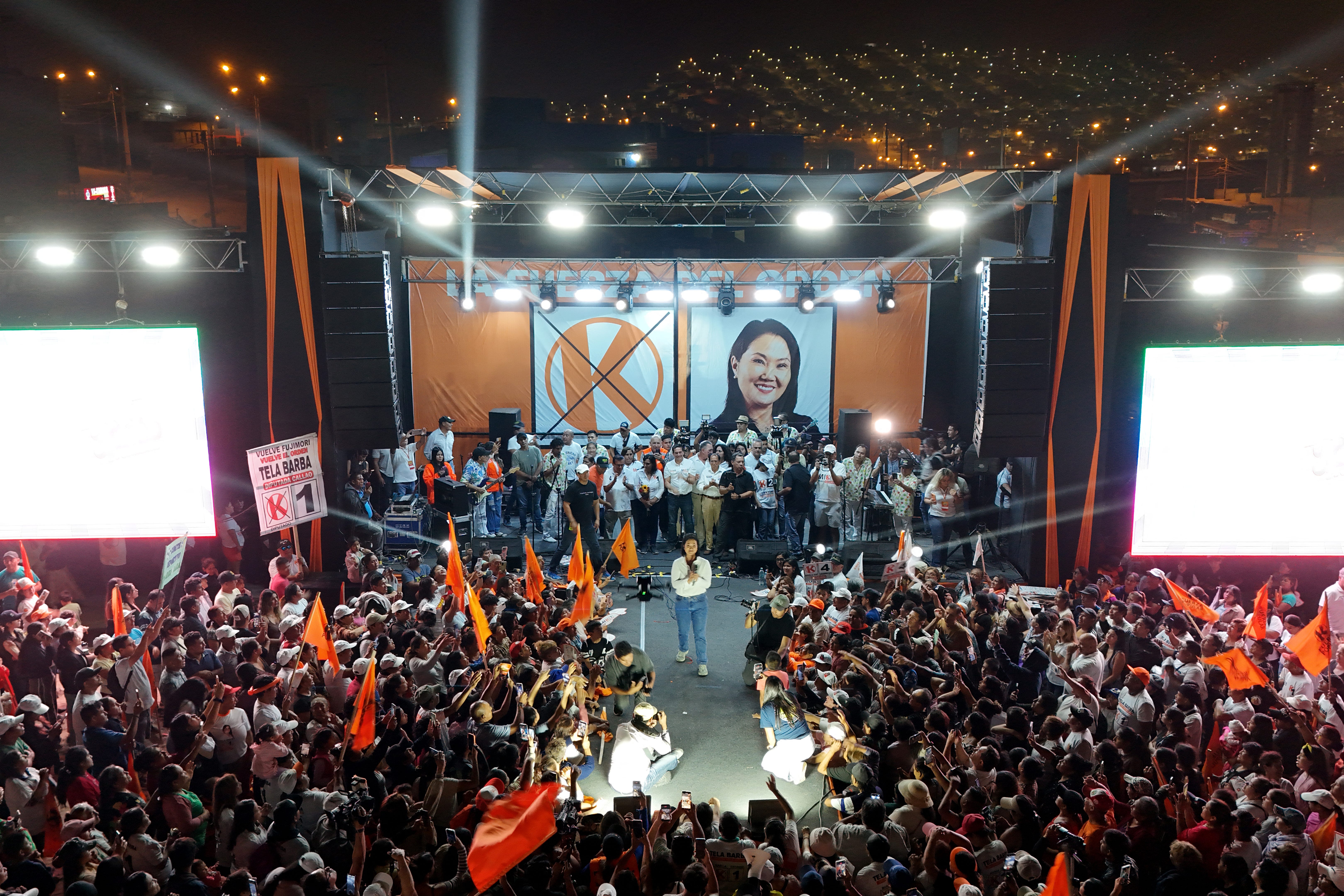
Presidential candidate Keiko Fujimori speaks during a campaign rally in Peru on April 2, 2026. (Photo by Connie FRANCE / AFP via Getty Images)
To implement the so-called “Donroe doctrine,” Washington requires aligned leaders in the region.
Enter Cerimedo and his associates, including the far-right Spanish journalist and media businessman Javier Negre.
Their job consists primarily of using bots and manipulating the algorithm to ensure the electoral triumph of Trump-aligned candidates in areas of geopolitical interest.
As we saw in Bolivia, these operatives assume a supervisory role, ensuring that their partners, once in power, carry out U.S. orders.
The electoral business represents only the visible facet of the problem. The lack of regulation over the use of social networks during electoral processes places algorithmic manipulation in a gray zone that disadvantages candidates without access to these technologies. This is a major difference between social media and the laws that regulate traditional media.
The performance of the Cerimedo-Negre duo in Peru fits into this same logic.
Its articulation in the country was managed through Carlos Díaz-Rosillo, former director of Public Policy for National Security at the White House during Trump’s first term. In May 2024, Díaz-Rosillo, who directed the Adam Smith Center for Economic Freedom, visited the Peruvian Government Palace under Dina Boluarte’s administration. Months later, he coordinated a meeting in New York between the designated representative and a panel of American businesspeople.
Following Boluarte’s removal from office in April 2025, Díaz-Rosillo established ties with Keiko Fujimori, offering her a position as a visiting professor at the Adam Smith Center. In return, Fujimori brought him on as one of her key campaign advisors. The close relationship between Díaz-Rosillo and Cerimedo paved the way for the Argentine operative to gain a foothold in the Peruvian political landscape.
In December 2025, Cerimedo signaled his strategy on the social media platform X.
“We’re continuing in 2026, in Peru, Colombia, and Brazil!” He wrote.
Meanwhile, Javier Negre declared that “Peru will be conquered by La Derecha Diario.”
La Derecha Diario is the right-wing newspaper co-founded by Cerimedo. Negre later acquired part ownership of the outlet
According to journalistic investigations by the outlet El Foco, during the first round of the election, a network of dozens of accounts “systematically promoted casting a null or invalid ballot in regions historically aligned with the left.”
As Keiko Fujimori advanced to the runoff, the Cerimedo and Negre’s operations intensified. La Derecha Diario not only openly backed the candidate but also launched a disinformation campaign targeting the progressive candidate, Roberto Sánchez. Given the narrow margin of the official results, there is little doubt that the “dirty work” carried out by Cerimedo and Negre was decisive in shifting the electoral trend.
The day after the elections, Cerimedo acquired the domain name Ojo de Cóndor (Condor’s Eye), presented as a platform for a “citizen-led parallel vote count.” The site encouraged citizens to upload voting records to validate a victory for Fujimori, even though polls indicated that Sánchez was the winner. The initiative was coordinated by Andrés Salas, a former Peruvian naval officer and member of the Renovación Popular Party.
The amplification of the project through bots, combined with support from commercial media outlets, influenced public perception and helped normalize the fraud that took place at polling stations abroad.
Following the proclamation of Keiko Fujimori as president-elect, the operatives sought to consolidate their influence within the new administration. Negre personally arranged for Fujimori to attend a meeting at Donald Trump’s Mar-a-Lago residence, bypassing formal diplomatic channels. He later attended the July 28 inauguration in Lima as a guest.
Although Nadia Beller’s statements did not explicitly refer to the case of Peru, Cerimedo’s involvement in that process is documented. Unlike in Bolivia, his role following the election was not decisive, due to the presence of other figures linked to the U.S. administration, such as Díaz-Rosillo, and the close relationship Keiko Fujimori maintained with the Argentine advisor Damián Valenzuela.
From the outset of the new administration, Peru aligned its foreign policy with Washington’s geopolitical priorities. On July 31, 2026, Foreign Minister Carlos Espá announced the country’s accession to the Shield of the Americas. On August 27, the Ministry of Energy and Mines signed a joint declaration with Chile, Argentina, and Bolivia to position the region as a strategic supplier of critical minerals.
With this, the agenda set out by Washington was formally implemented in the country.
Mission accomplished for Cerimedo and his accomplices.
This article was originally published by La Línea. It was translated by Panamerican Dispatch. You can read the original, in Spanish, here. The views expressed in this article are those of the author and do not necessarily reflect the position of Panamerican Dispatch.