


By Ivan Longo
BERLIN
President Luiz Inácio Lula da Silva’s victory has derailed U.S. Secretary of State Marco Rubio’s plan for a right wing Latin America. It also showed that Brazilians reject authoritarianism. That is the assessment of Jens Glüsing, a correspondent for Der Spiegel, Germany’s biggest news magazine, in a podcast episode released Saturday.
In a conversation with journalist Juan Moreno on the podcast Acht Milliarden (8 Billion), Glüsing discusses Lula’s electoral comeback, U.S. strategy for the region and Flávio Bolsonaro’s flight to the United States. The magazine’s headline sums up his view: the Brazilian president’s victory is a political defeat for Rubio.
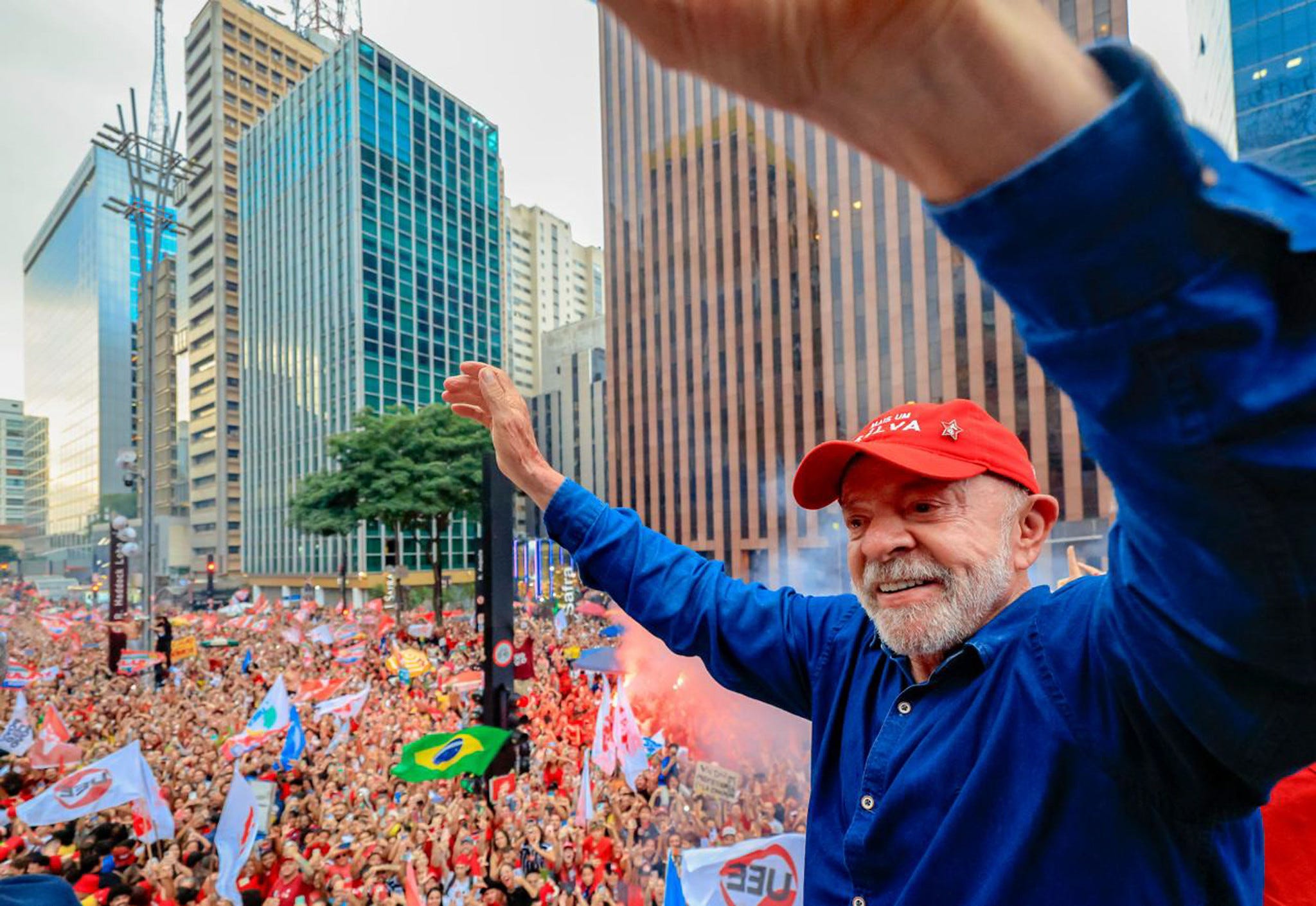
Lula during his final campaign rally on October 24, in S. Paulo (Photo: Ricardo Stuckert)
Brazil and Mexico Block the Right’s Strategy
“Marco Rubio failed,” Glüsing said, discussing the secretary of state’s effort to build an axis of right wing governments across Latin America.
Glüsing noted that Brazil and Mexico, the region’s two largest economies and political heavyweights, are still governed by the left. Lula and Mexican President Claudia Sheinbaum will both remain in office beyond the current Trump administration. That undermines the regional strategy.
Glüsing separates the positions of the U.S. president and his secretary of state, though. He sees Rubio as the main ideological architect of the project and a contact for the Bolsonaros in Washington. He believes Trump has a more pragmatic relationship with Lula.
According to Glüsing, the Brazilian government picked up on that difference and reached out to Trump directly, bypassing Rubio. He expects the two countries to keep talking, despite the tensions involving the Bolsonaro family.
Digital Campaign Helped Lula Turn the Race Around
To explain the win, Glüsing points to Lula’s change in strategy between the two rounds. He said Lula’s early campaign centered on the achievements of his first governments. That approach struggled to reach younger voters.
In the runoff, the president reworked his strategy and put more weight on digital mobilization, with help from Rep. André Janones. Glüsing called the response “a fantastic campaign.”
He described a network of supporters dedicated to persuading voters and getting them to the polls. Short videos, spread mostly through WhatsApp, played a central role.
Glüsing also said the debates undercut Flávio Bolsonaro’s attempt to present himself as a moderate candidate. That image lost credibility as the debates went on, he said, while Lula managed to energize young people and boost engagement.
Voting Hours Argument Doesn’t Hold Up
The episode also covers Bolsonaro’s attempt to blame his loss on the extension of voting hours. Glüsing recalled that both campaigns had asked for more time for voters, though their requests differed in scope.
According to the figures Glüsing cited, about 35,000 Brazilians voted during the two extra hours. Lula won by more than 4 million votes. For Glüsing, the comparison shows the longer hours did not decide the election.
He also noted that politicians from Bolsonaro’s own camp recognized Lula’s win. That undercut the defeated candidate’s effort to keep contesting the result.
Flight and Letter Deepen Bolsonaro’s Isolation
Glüsing said he believes Bolsonaro fled Brazil to escape the courts. He linked the flight to investigations into money laundering and corruption, and to Justice Alexandre de Moraes’ order that Bolsonaro hand over his passport.
Glüsing contrasted that with Bolsonaro’s attempt to portray himself as an insurgent fighting the institutions. “He’s part of the system,” Glüsing said.
Bolsonaro had won a strong vote total and could have taken over as opposition leader, as he had promised, Glüsing argued. Instead, the flight and the letter released in the United States have deepened divisions among his allies.
Glüsing pointed to a change in the letter. At first, Bolsonaro called himself the president-elect. Later, the document described him as the political leader of Brazil. Part of the right accepted Lula’s victory and sought dialogue with the government. The circle around the senator kept pushing the challenge.
Commenting on the Bolsonaro camp’s response to defeat, Glüsing concluded:
“They’re not democrats. That’s their problem.”
This article first appeared in Revista Fórum, was translated to English by Panamerican Dispatch with express authorization of the editor-in-chief, and can be read in its original Portuguese here.
Good. That man needs all the defeats coming his way. He’s an entitled brat of a man, who needs to look in the mirror to identify the criminality he’s projecting onto everyone else.