


by Por Cleber Lourenço e Jamil Chade
Brazil’s Federal Police are preparing to open a formal investigation into possible foreign interference in the country’s elections. According to ICL Notícias, the case is currently with the Federal Police’s intelligence unit, known as the DIP, and should be formally opened soon.
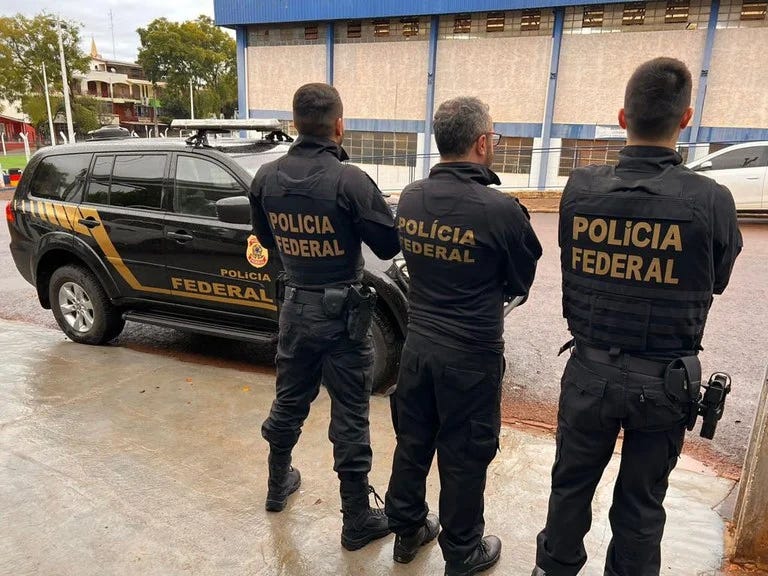
Agência Brasil
This new investigation will cover more ground than the one revealed Friday about a possible threat to U.S. diplomatic facilities in Brazil. The DIP’s inquiry focuses specifically on possible foreign actions tied to the broader election process.
This concern isn’t new. ICL Notícias has learned that Brazil’s intelligence agency, Abin, has been warning federal officials and election authorities about the risk of foreign interference since last year.
One scenario officials are watching closely: a buildup of foreign actions that could create or reinforce an international narrative that Brazil’s elections are unstable, insecure or illegitimate.
Inside the presidential palace, officials have mapped out another scenario, that this kind of interference could intensify between the first and second rounds of voting.
An intelligence source told ICL Notícias that one major concern is that steps first taken by the United States could be copied by other governments.
“The biggest worry is that countries aligned with the U.S. State Department start backing up what it does,” the source said.
According to the source, this risk was already being discussed before this week’s events. “This is the warning the agency has always given,” the source said.
That concern gained new urgency just two days before the first round of voting, after both the United States and Australia took security measures inside Brazil.
Foreign Warning Prompted Federal Police Searches
The United States temporarily suspended consular services in Brasília, São Paulo, Rio de Janeiro, Recife and Porto Alegre, citing security concerns. Australia also closed its embassy in Brasília.
On Friday, Brazil’s Federal Police confirmed they are running a confidential investigation into an alleged plot that could have put American diplomatic facilities at risk.
Police carried out two search warrants, one in São Paulo and another near Brasília. The Federal Police said this preventive action came out of “ongoing cooperation between foreign intelligence agencies.”
Police haven’t publicly identified which foreign services provided the information that triggered the searches.
Sources inside Brazilian intelligence told ICL Notícias that the CIA was involved in sharing the information that led police to investigate the possible threat. The Federal Police haven’t officially confirmed the CIA’s involvement.
So far, the searches haven’t confirmed the risk that was originally reported.
“The appropriate measures were promptly taken. So far, we have not verified anything that supports the risks initially flagged, nor have we identified any suspects connected to criminal organizations,” police said in a statement.
The investigation continues, with police now analyzing seized communication devices and media. The fact that nothing has confirmed the threat so far doesn’t mean police have ruled it out.
Federal Police and CIA Maintain Ongoing Cooperation
Information sharing between the Federal Police and the CIA happens through established channels and didn’t start with this week’s events.
On January 28 of this year, Federal Police Director General Andrei Rodrigues met with CIA Deputy Director Michael Ellis at police headquarters in Brasília. That meeting focused on strengthening cooperation and information sharing between Brazilian and American agencies in the fight against transnational crime.
Who attended that meeting matters here. Leandro Almada, the Federal Police’s director of intelligence, was among the Brazilian representatives present. His unit, the DIP, is the same one now handling the case expected to lead to a formal investigation into possible foreign election interference.
Representatives from the Federal Police’s international cooperation and counterintelligence divisions also attended.
Officials Are Considering a “False Flag” Possibility
A detail in the Federal Police’s own public statement caught the attention of Brazilian intelligence officials who spoke with ICL Notícias. After receiving the warning from foreign agencies and carrying out two searches, police said they still hadn’t found anything confirming the risks they were originally told about.
“The appropriate measures were promptly taken. So far, we have not verified anything that corroborates the risks initially flagged, nor have we identified any suspects connected to criminal organizations,” police said.
Police noted that the investigation is ongoing, with communication equipment and seized media still being analyzed, and said further action could follow.
That gap, between the warning police received and what they actually found in the searches, is exactly what has Brazilian intelligence officials pointing to another possibility worth examining: the deliberate use of false or distorted information to provoke a reaction from authorities and shape public perception.
One theory sources mentioned is known as a “false flag” operation.
That term describes operations where the real source of an event is hidden or deliberately blamed on someone else. In influence operations, an event, whether real, staged or falsely attributed to a third party, can be used to reinforce a particular narrative or justify actions taken afterward.
An intelligence source told ICL Notícias that this is one of the scenarios that needs to be considered given the risk of foreign interference in Brazil’s election.
This doesn’t mean the Federal Police knowingly received false information, or that a false flag operation is currently underway. There’s no evidence right now to support either conclusion. The point sources are making is that in a situation involving possible foreign interference, the source, reliability and motives behind shared information need to be examined too.
In the case involving the American diplomatic offices, here’s what’s known for certain: information received through cooperation with foreign intelligence agencies led to an investigation and two searches. So far, according to the Federal Police itself, those searches haven’t confirmed the risks originally reported.
Police acted preventively. Faced with information about a possible threat to diplomatic facilities, they carried out the searches and kept the investigation open.
Abin Had Warned of a Chain Reaction
Brazilian intelligence’s concern goes beyond the possibility of a single isolated incident.
According to sources who spoke with ICL Notícias, one risk Abin has flagged since last year is that a series of foreign actions or statements could build an international perception that Brazil is unstable or can’t guarantee a normal election process.
That concern grows if different countries start adopting similar measures or making similar statements.
“If it’s just the United States speaking up, that’s one thing. But if this turns into geopolitical pressure, with other countries saying the election wasn’t fair, that it needs to be redone, that Brazil isn’t safe, and that’s done by Canada, done by Australia, that changes everything,” one source said.
So far, there’s no evidence that the warnings and measures taken by different governments were coordinated, or part of a joint effort to interfere in Brazil’s elections.
Whether or not there are foreign efforts aimed at interfering in the election is exactly what the Federal Police’s new investigation is meant to dig into.
The case is still with the DIP and had not been formally converted into a full investigation as of this report’s publication.
This article originally appeared in ICL Notícias, which has authorized Panamerican Dispatch to translate and publish it in English. It can be read in its original Portuguese, here.