


By Jamil Chade
The Brazilian government views the fall of Paraguayan President Santiago Peña as another defeat for Latin American leaders who bet everything on political alignment with the United States.
The Lula administration has no interest in instability in a neighboring country. Likewise, it has no illusions that leftist forces could govern Paraguay in the near future. One concern is that the crisis could take on social proportions. After all, a bank that reportedly held the savings and pensions of nearly half of the country’s population has collapsed.
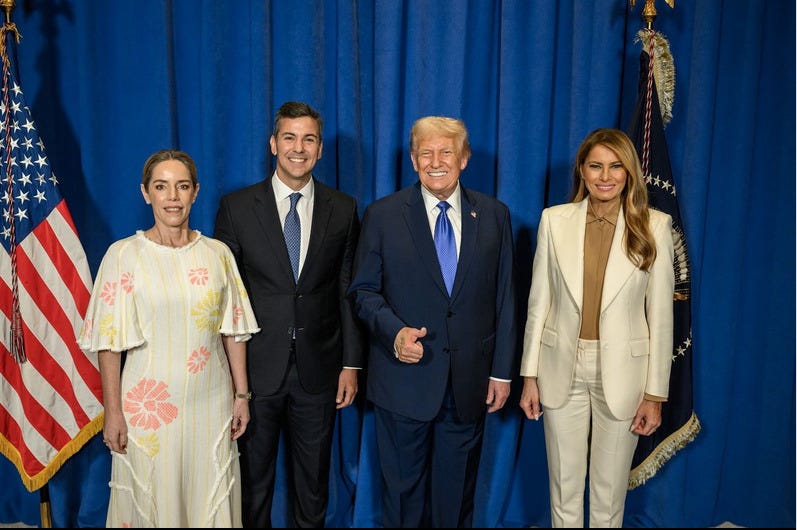
(Photo: Social Media)
The urgency, therefore, is to avoid political chaos. Brazil is expected to appeal in the coming hours for calm to be restored.
Still, sources in Brasília said the government in Asunción had adopted the “complete recipe” of submission to American interests.
In recent years, Peña authorized a military agreement with President Donald Trump that called for the possible creation of a foreign base in the country. Paraguay also signed pacts allowing American companies based there to use free energy from the Itaipú hydroelectric plant. It also signed investment agreements and deals for foreign exploitation of natural resources.
Under Peña, Paraguay nominated itself as a candidate to lead the Organization of American States (OAS). It officially recognizes Taiwan, and has voted with the United States on unpopular measures at the United Nations.
Despite a possible ideological shift in Paraguay, Brazil does not yet expect a progressive wave in the region. The Brazilian government believes that disputes with the far right will last for years, both in Brazil and across the region.
However, it is well known that far right governments in the region are suffering drops in popularity and turbulence.
Part of the strategy for a new Lula term in 2027 is to revive integration projects that interest both the right and the left.
The Brazilian government plans to persuade other governments in the region to join a project of “possible integration.” It would rest on pragmatism, even among governments with deeply divergent ideologies.
One topic to explore would be cooperation on public security. Lula is also expected to step up meetings with South American heads of state. He hopes to send clear signals that he wants to resume the process of rapprochement.
Brazil has not ruled out inviting Venezuelan officials or making bilateral visits.
This article first appeared in ICL Notícias, was translated with express authorization from its editor by Panamerican Dispatch, and can be read in its original Portuguese here.