


By Cleber Lourenço
Brazil’s Office of the Attorney General (AGU) has requested that the Federal Police and the Office of the Prosecutor General (PGR) investigate who in Brazil may have benefited from $1 million that the U.S. government directed to a program designed to delegitimize Brazil’s judiciary.
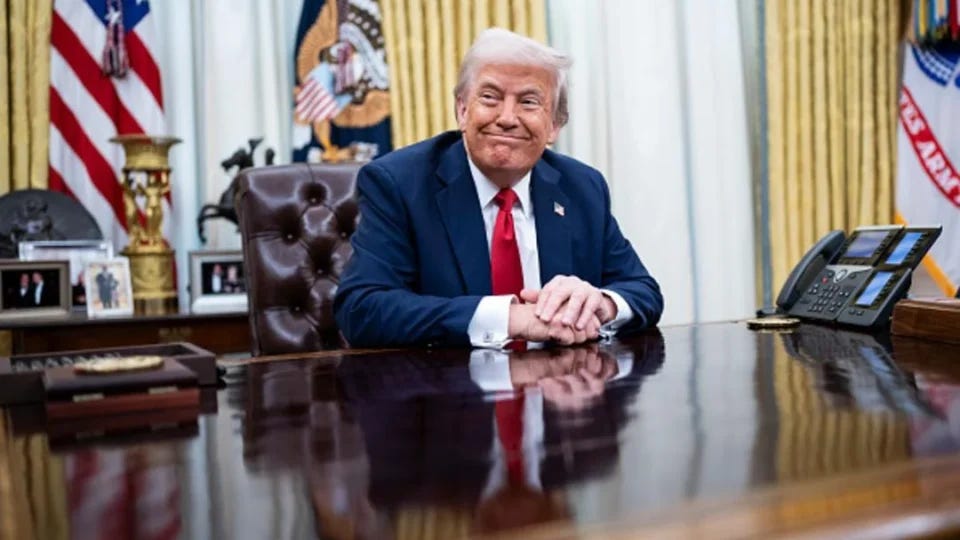
(Photo: ICL)
The criminal complaints ask investigators to identify the possible recipients of the money in Brazil and to look into whether foreign interference affected the country’s political debate and electoral process.
Attorney General Jorge Messias told ICL Notícias that any attempt at foreign interference in how Brazilians vote is “repulsive.” He said the AGU’s involvement in the case stems directly from its duty to “safeguard the integrity of democratic institutions” in the country.
The AGU's decision came after a Wednesday report in the British newspaper The Guardian. The newspaper reported that the U.S. State Department had directed $1 million from the Human Rights and Democracy Fund to a program called "Countering Lawfare and Censorship in Brazil." The AGU cited that reporting in the documents it sent to the Federal Police and the PGR.
According to the report cited in the complaints, the funds were meant for civil society organizations and groups mobilized against what the American program describes as “judicial overreach” and “censorship” attributed to the Supreme Federal Court.
The AGU says this information raises the need to investigate whether foreign public funds were directed to networks operating in Brazil in order to influence the country’s political and institutional environment.
AGU Seeks to Identify Possible Beneficiaries in Brazil
The AGU sent two criminal complaints. Document 07681/2026 went to Federal Police Director General Andrei Rodrigues, while Document 07684/2026 went to Prosecutor General Paulo Gonet. The two documents are part of the same case and contain largely the same content.
The request is explicit: identify “any recipients of the funds within national territory” and, based on that, assess the potential criminal liability of everyone involved.
Explaining to ICL Notícias why the AGU decided to involve investigative bodies, Messias pointed to the agency’s institutional role in protecting Brazil’s democratic system.
In its request to the Federal Police and the PGR, the AGU acknowledges freedom of expression and the right to criticize as guarantees of the democratic rule of law. But it also notes that the constitution protects national sovereignty and establishes the principles of independence and nonintervention.
As an example of existing safeguards against foreign influence, the document cites the ban on political parties being financed by or subordinated to foreign governments or entities. The AGU does not claim that any Brazilian political party received the $1 million.
Messias Calls for “Urgent and Rigorous” Investigation
In the complaint’s strongest passage, the AGU says that if it turns out foreign money paid for “coordinated and systematic” attacks on the sovereignty and functioning of Brazil’s justice system, that would point to a “structure of foreign interference in the internal affairs of the Brazilian state.”
Brazil’s 2026 election is also cited among the reasons the AGU considers the case serious. The agency notes that the country is in an election period and points to recent instances of foreign pressure on Brazilian institutions, including sanctions imposed on national officials and a Supreme Court Justice.
It is precisely the potential impact on the election that Messias emphasized in his statement to ICL Notícias. For the attorney general, the complaint involves a suspicion of “foreign funding aimed at destabilizing” Brazil’s electoral process.
Messias’ statement brings together the three points the AGU is using to justify its action: rejecting “foreign interference” in how voters express their will, the duty to protect the “integrity of democratic institutions,” and the need for an investigation given the suspicion of foreign funding directed at the electoral process.
The complaints are signed by Messias; Raphael Ramos Monteiro de Souza, the national prosecutor for the Union for the Defense of Democracy; Rogaciano Bezerra Leite Neto, coordinator general for the Union for Defense of Democracy; and government attorney Socorro Janaína Maximiano Leonardo.
Based on these complaints, it will now be up to the Federal Police and the PGR to determine next steps to identify the possible recipients of the funds, clarify how the money was intended to be used, and determine whether any conduct carries criminal consequences.
Cleber Lourenço is an investigative journalist
This article originally appeared in ICL Noticias, has been translated by Panamerican Dispatch, and can be read in its original Portuguese here.