


by Renato Rovai
Luiz Carlos Trabuco, chairman of the board and former president of Bradesco, Latin America’s third largest bank, will be the next finance minister in Lula’s fourth government.
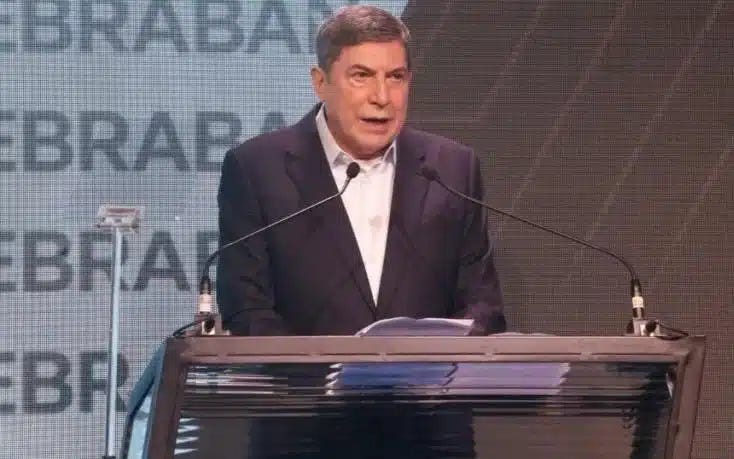
Luiz Carlos Trabuco (photo: Paulo Pinto/Agência Brasil)
Before Trabuco accepted, I exchanged messages with people in the Workers’ Party (Partido dos Trabalhadores/PT), including lawmakers and former ministers, to try to understand what lies behind this appointment and what risks it carries. I wanted to hear something beneath the surface. After all, not everyone in the financial market is the same, and not everyone in the market is an ultra neoliberal.
Who Is Luiz Carlos Trabuco?
Trabuco, 75, was born in 1951 in Marília, a small city in the interior of São Paulo state. Oddly enough, he studied philosophy at the University of São Paulo and did graduate work in sociopsychology, so he is a former liberal arts student who ended up in finance. He joined Bradesco in 1969, at 17, as a clerk, and built his career inside the bank, rising through a series of posts to position of bank President, which he held from 2009 to 2018. Today he chairs its board of directors.
Trabuco was invited to be Finance Minister by President Dilma Rousseff in 2014, at the start of her second term. Lula reportedly suggested his name to Rousseff as a way of signaling to the market that the government would make fiscal adjustments seen as necessary at the time. Trabuco turned it down. At the time he was still the president of Bradesco, a job he had spent his whole life working toward. He turned down the offer and reccomended Joaquim Levy instead, and we all know how that turned out.
Levy arrived in government like a bulldozer, carrying out an austerity policy that pushed the country into recession. The opposition took advantage of the weakening economy to push ahead with Rousseff’s impeachment. Many people who oppose a Trabuco appointment see Lula’s move as a replay of the 2014 strategy. In some ways it really is very similar.
Now, is Trabuco the same as Levy? Honestly, at first glance I don’t think so, and I will explain why below. But the fact remains that he was the one who recommended Levy, and that can’t be brushed aside.
What Does Trabuco Think About the Economy?
In a 2025 interview with Folha, Trabuco did not present himself as a representative of the most dogmatic economic orthodoxy. He defended what is known as the macroeconomic tripod of a floating exchange rate, inflation targets and fiscal responsibility, but with an important caveat: fiscal adjustment cannot be a goal in itself, cut off from economic growth. That is exactly what Lula has been saying.
Trabuco argues that Brazil should reach an investment rate of 20% of GDP, up from the current 16%, and that the country needs to grow more to reduce inequality. He also sees the high cost of capital as one of the main obstacles to development. With high interest rates, companies struggle to finance themselves and end up steering money into the financial market, which weakens the economy’s capacity to grow.
In that interview, at least, Trabuco does not come across as someone who favors shrinking the state or social programs. That is not the calling card he presented. Could he end up doing the opposite of what he said? He could.
What Does Lula Want From This Nomination?
The people I spoke with made similar assessments: Lula wants to send a signal to the market in the hope that Brazil’s independent Central Bank will lower interest rates within the next six months. That would lessen the weight of interest on the public debt, which would tend to improve the ratio of debt to GDP and, in turn, public finances. There is also a bet on better dialogue with the productive sector, since Trabuco presents himself as someone concerned with economic growth and national development. His appointment would signal as well that Lula and the left are committed to fiscal responsibility.
But there is an important risk in this strategy. One person I spoke with pointed out that, having named someone like Trabuco, Lula could hardly fire him in less than two years, even if the signal to the market did not produce the results he wanted. In that scenario, the president could be held hostage to new spending cuts and a more austere economic policy. That would put Lula’s political capital at risk.
As regular readers know, I don’t talk only to the market, the way most of the press does. I talk to people in the financial world too, but mostly to people in the progressive camp, and many of them worry that the appointment could be read as a betrayal by Lula of the movement that built his victory. If that political capital is spent badly, how much strength will Lula have left to push back later?
On the other hand, there is something in Trabuco’s favor. At 75, he is not going to the ministry to build a career but to end one. Depending on the job, I am an ageist in reverse. Younger executives may see a stint in government as a chance to boost their own careers, and to do that they may play to the market. With Trabuco, that risk looks smaller to me.
The big question is whether Lula’s Trabuco gambit can deliver the economic results he expects, or whether it will end up draining the political capital won at the polls within the first months of the term.
Renato Rovai is founder and editor-in-chief of Revista Fórum.
This opinion piece, which does not necessarily reflect the opinions of Panamerican Dispatch, first appeared in Revista Fórum, was translated with express authorization from its editor-in-chief, and can be read in its original Portuguese here.