


by Nicole Froio
Maré is a group of 16 favelas in Northern Rio de Janeiro. The region is a maze of informally built houses that is squeezed between a major highway and a mangrove swamp.
It’s marked by inequality and police violence, and it’s home to 60,292 eligible voters.
But thousands of people didn’t vote in the first round on October 4. The abstention rate was much higher than elsewhere around the country. That, according to experts, is in part because polling stations were moved ahead of the vote, creating confusion.
“Everyone was stressed, confused, tired,” Maré resident Gizele Martins said, in an Instagram post. “And many people couldn’t vote. At 5pm the gates closed.”
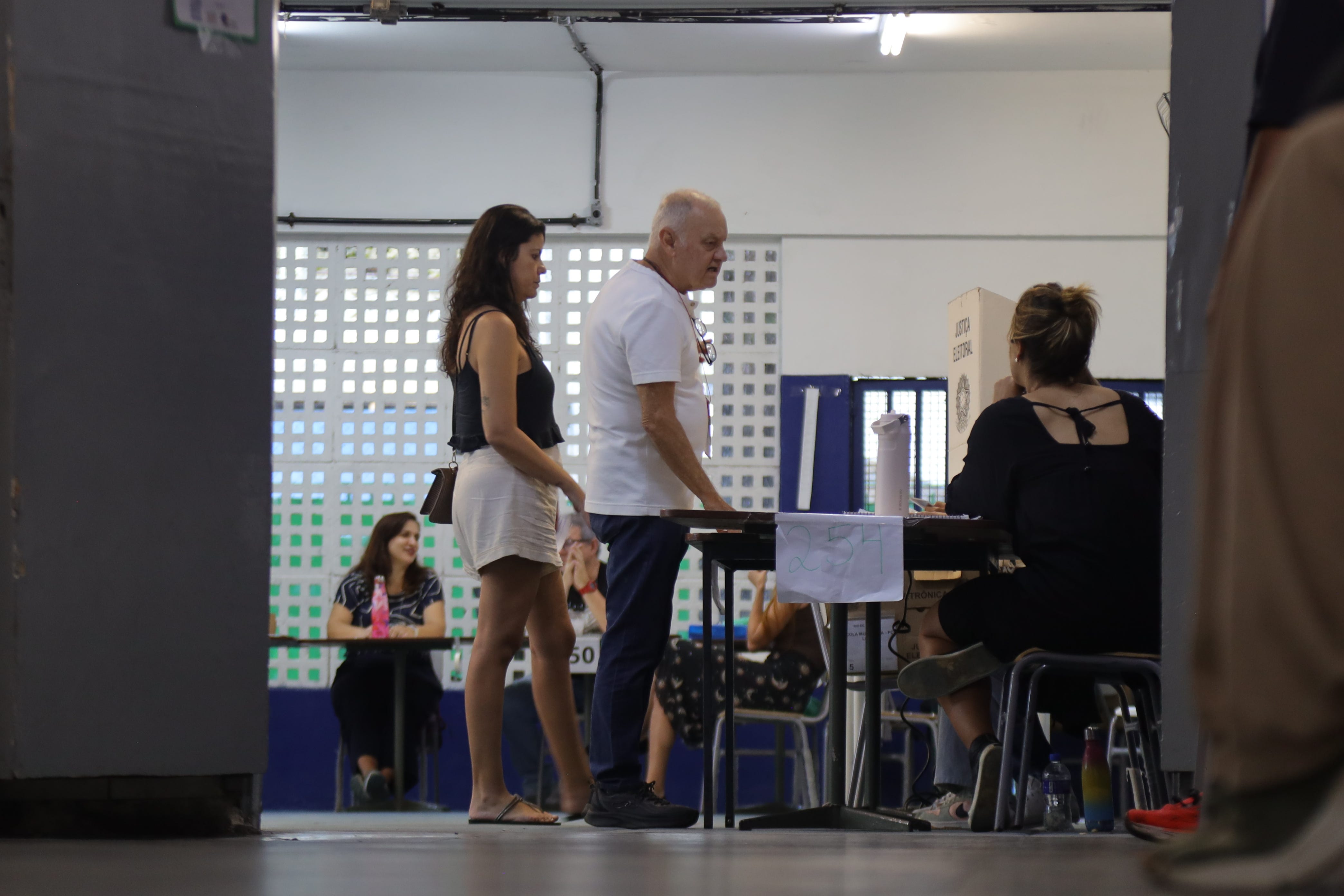
Brazilians vote in a Rio de Janeiro polling station in the first-round election, on October 4, 2026. (Michael Fox)
Now, according to reports, the Superior Electoral Court is again moving hundreds of polling stations across Brazil ahead of the second round vote on October 25.
With Brazil’s electoral court overseen by two appointees of former far-right President Jair Bolsonaro, many are concerned these measures are a move to benefit his son, Senator Flávio Bolsonaro.
Flávio is running against left-wing President Luiz Inácio Lula da Silva. Polls show the race is now very close, though Flávio appears to have a slight lead.
Meanwhile, some communities have spoken out about a chaotic first round of elections where many were unable to vote due to changes in polling locations, lack of transportation and long lines.
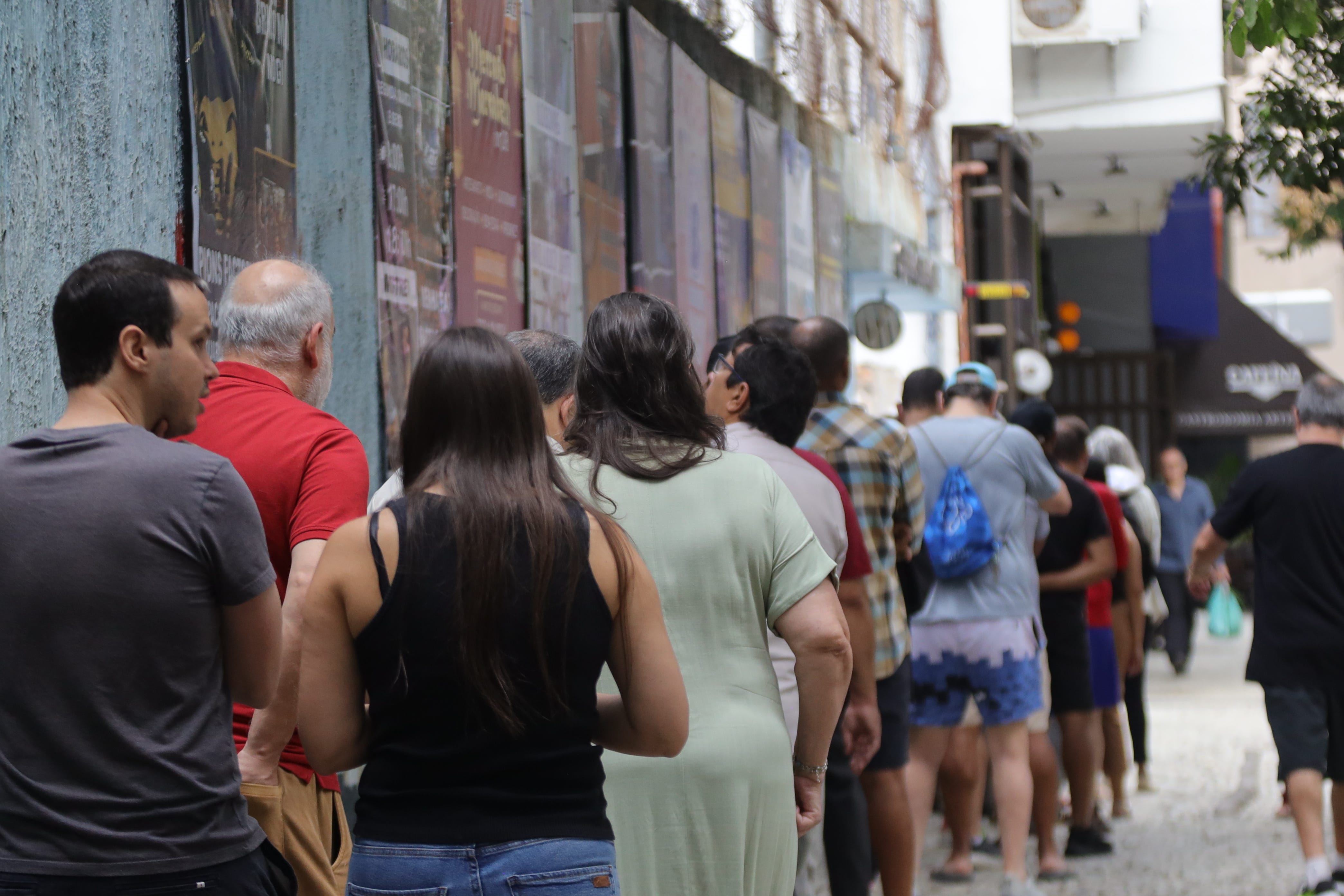
Brazilians in Rio de Janeiro wait in line to vote in the first-round vote on October 4, 2026 (Michael Fox)
First Round Abstentions
On October 4, millions of Brazilians voted in the country’s elections. But the abstention rate was the highest since 1998. Over 33 million Brazilians did not turn up to the polls. Some voters say they were not able to reach the polls.
This was the case, particularly in poorer communities. In Rio de Janeiro, Complexo da Maré and Rocinha are two favelas that historically vote for the Workers’ Party candidate Lula. Residents in both areas reported issues reaching the polls.
In Maré, the change of six polling stations and long lines created confusion among the local electorate, resulting in an abstention rate of 28%.
Three of the polling stations had been changed in the municipal elections in 2024. Three others were changed earlier this year.
Abstention rates in both Rocinha (27%) and Maré (28%) surpassed the national abstention rate of 21%. Lula received a majority of support in both regions. In Rocinha, he won 58% of votes. In Maré, he won 53%.
According to Redes da Maré, a non-profit organization that defends the rights of Maré residents, the changes affected 31,650 people, or over half of the electorate in the community. Part of the voting stations were moved outside of the region, which they say created economic and logistical barriers for voters. But the bigger problem, according to Lidiane Malanquini, coordinator of Redes da Maré, was the lack of communication with the community.
“There was no dialogue with the residents to make those decisions, nor was there active, direct and broad communication between the Rio de Janeiro Electoral Court with these voters,” Malanquini told Panamerican Dispatch. “Voters had to go on the website of the Electoral Court to see if something had changed.”
Malanquini said some banners were placed at polling places in some parts of the favela the week before the first-round vote. But, on average, “the new polling places were more than 3 kilometers away from the old ones, making them difficult for residents to access.”
Voters were not informed of changes via notifications from the official app of the Superior Electoral Court.
The Supreme Electoral Court oversees the election and determines where each voter casts their ballot, along with the judges and electoral offices in each district.
The court said the changes took place due to security concerns. Redes da Maré disputed this in a research document obtained by Panamerican Dispatch. According to the document, there have been no reports of armed violence or any other incident in Maré that interfered in the elections in the last 10 years.
In Rocinha, the country’s largest favela, nearly 27,000 of the approximately 100,000 eligible voters did not cast their ballots. At the closest polling station to the community, in Electoral Zone 211, a 1.5-kilometer-long line formed on the morning of election day, on October 4.
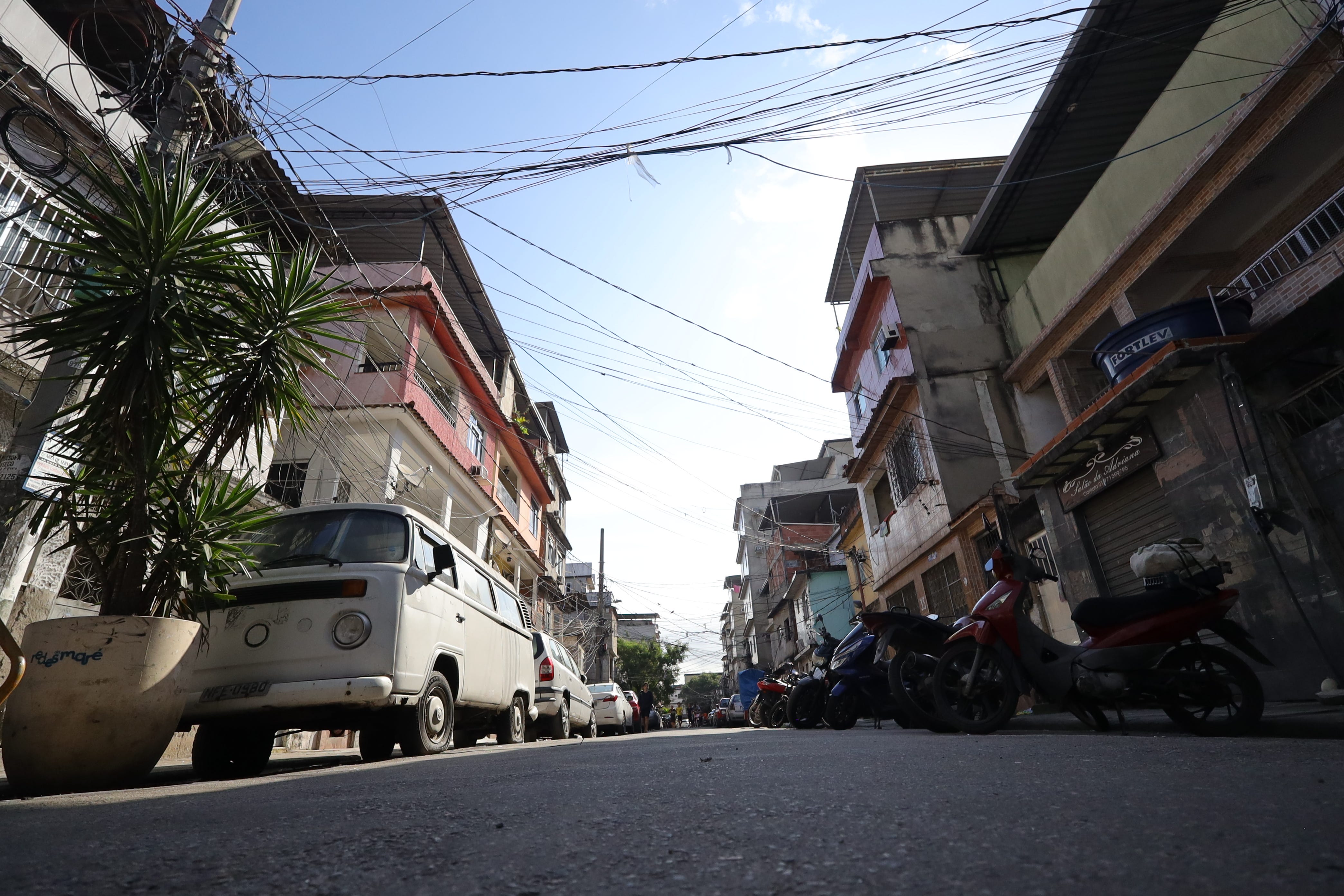
Cars and motorcycles sit along a street in Maré on October 6, 2026 (Michael Fox)
Logistical Issues
In Maré, according to local journalist and researcher Gizele Martins and other residents, many voters only found out their voting station had changed on the day of the election. They said the electoral court notifications of the changes to individual voters.
“Imagine people who are elderly or use wheelchairs having to vote outside of the community, and being informed that they need to leave their community to vote last minute,” Martins said in a video she posted on Instagram. “There should be a logistical plan for transportation.”
According to Brazilian electoral law, the government has the obligation to make voting as accessible as possible on election day.
In the state of Rio de Janeiro, public transportation is free on voting day, but communities like Maré and Rocinha don’t have easy access to public transportation, because of the informal nature of how these communities are built and where they are located. Changes to poll locations can mean longer walks, having to cross large roads, paying for car-hailing apps, and walking in unsafe zones. These issues impact young people, women, people with disabilities and the elderly who live in these communities, Malanquini said.
“Guaranteeing free public transportation on election days is essential for reducing economic barriers to voting, but free transportation does not, in and of itself, mean territorial accessibility,” said Eliana Sousa Silva, executive director of Redes da Maré, told Panamerican Dispatch. “This distinction is especially important in Maré, where public transportation is concentrated on the major roads that run along the perimeter of the neighborhood.”
Community leaders in Maré met with the electoral court before the elections to speak about the lack of communication with voters and the lack of public transportation within the community, but the problems were not resolved.
“The electoral court offered to give residents transportation, which could be requested through online registration for only ten days, which created another barrier,” Malanquini said. “And even then, the extra transportation was only available through the usual public transport locations, which means people still had to leave Maré, walk 15 to 20 minutes to access the transportation.”
Residents also faced long lines to vote even when they reached the voting station, with many giving up before casting their ballots.
Other marginalized communities around the country were also unable to vote in the first round of the elections due to a lack of transportation. On October 8, indigenous congressional lawmakers Sônia Guajajara and Célia Xakriabá reported that indigenous people from different regions of the country, were allegedly prevented from voting in the first round mainly due to transportation difficulties. The issue affected people from the states of Minas Gerais, Pará, Mato Grosso, Amapá, Pernambuco and Amazonas.
In Lábreas, a municipality in Amazonas, 7,000 indigenous people were unable to vote, because they couldn’t get to the polling station. Guajajara and Xakriabá have requested that the Electoral Court guarantee transportation across affected territories for the second round of the elections.
The high number of abstentions was decisive for the presidential race. Flávio Bolsonaro won the first round with 47,03% of votes, and Lula trailed with 45,16% of votes, a difference of just over 2.2 million votes. In the first round vote, Lula lost in municipalities with the highest abstention rates.
Polling Station Moves Ahead of 2nd Round
In recent days, information from Brazil’s Superior Electoral Court about polling station moves has been confusing and changing daily. Last week, the official website reported that polling stations were being moved in over 4,000 locations. A couple of days later, that number dropped to 2,000. As of October 20, it was at 441, impacting 126,000 voters.
According to the electoral court’s most recent announcement, the recent changes to voting locations for the second round are allegedly due to climatic dangers determined by local electoral courts. The official statement points to “extreme rain and wind in the interior of Mato Grosso,” as an example of climatic danger.
According to reporting by the Brazilian outlet ICL News, Lula’s campaign will likely be the most impacted by the moves. The majority of votes in the polling stations that are expected to be changed went to Lula, 50.7%, compared with 42.8% for Flávio Bolsonaro.
Ahead of the second round, the electoral court has been posting information about the polling station changes to its official website, but not communicating directly with voters.
Lula’s campaign in Rio de Janeiro has requested that the electoral court communicate any changes to individual voters in advance, citing the difficulties Maré residents had voting.
“The campaign warns that providing an online search tool is not enough to guarantee access to information, especially in places where part of the population faces difficulties accessing technology,” a statement from the campaign said.
The drop in the polling station moves came after pressure from congressional representatives, including leftist LGBTQ lawmaker Erika Hilton. She requested that the electoral court communicate the changes “effectively with cell phone notifications and announcements on radio, TV and social media.”
Fragile Democracy in Marginalized Communities
While some residents of vulnerable communities speculated that the changes to voting locations were made on purpose to stop Lula supporters from casting their votes, Eliana Sousa Silva, the executive director of Redes da Maré, cautions against speculating. She points to structural issues that have repeated over the last two elections.
“It’s not possible to establish a causal relationship between the change in locations and abstention, especially since the electorate grew in 2024,” said Silva, “but this information reinforces concerns about the barriers to access created by having to travel outside the territory.”
For Silva, there have always been structural problems in ensuring that people in marginalized communities have easy access to voting.
“Maré’s electoral strength must be transformed into tangible influence,” she said. “The quality of democracy is also measured by the ability of working-class neighborhoods to participate in decisions about their present and future.”
Threats from the Far Right
Brazil has a world-class electoral system, which has run decades of free and fair elections. But over the last eight years, the Bolsonaro family and its allies have consistently tried to cast doubt on Brazil’s electoral process.
In 2022, Jair Bolsonaro publicly attacked the country’s voting system, planned a coup d’état and instigated supporters to violently storm the country’s three powers in Brasília. The former president is currently under house arrest, after the Supreme Court sentenced him to 27 years in prison for plotting a coup after he lost the 2022 election.
This year, many fear Bolsonaro’s appointed judges on the Superior Electoral Court have been making biased decisions to favor Bolsonaro’s son, Flávio.
On October 11, one of them, Kássio Nunes Marques’ suspended a million-member pro-Lula WhatsApp group for 48 hours. He issued his decision, despite technical analysis from the court that determined the group in question was not spreading fake news. Meanwhile, a similar pro-Bolsonaro WhatsApp group was left online, despite independent reports that showed it was being used to spread fake news.
“It’s important to improve our electoral system,” São Paulo state lawmaker Maria Izabel Azevedo Noronha, from the Workers’ Party, told Panamerican Dispatch. She’s known as Professora Babel for her work as the president of São Paulo state teachers’ union.
Babel also witnessed long lines and technical issues with the electronic voting system in Piracicaba, São Paulo, but she cautioned against questioning the system as a whole.
“We have to improve the system we have rather than question it or cast doubt on our democratic system,” she said.
Nicole Froio is a writer, researcher and journalist currently based in Brazil. She writes about women’s rights, digital cultures and popular movements.